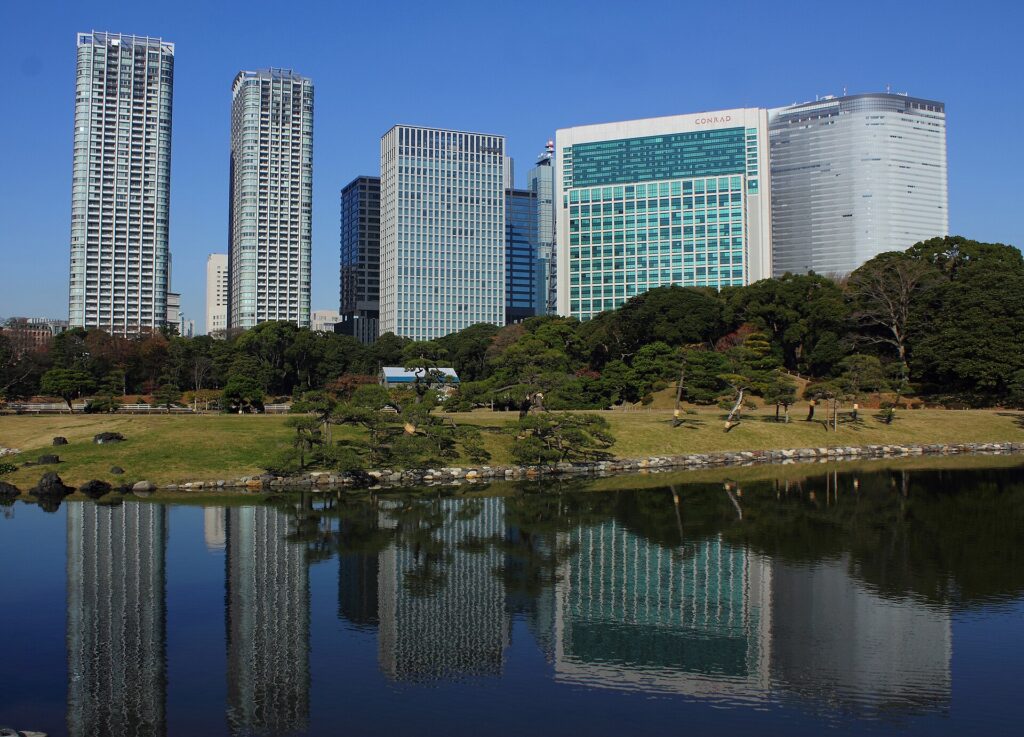
Shinbashi, known as a sacred place for salaried workers, is the birthplace of Japan’s railways and was home to one of the largest black market areas (yami-ichi) after the war.
That surprising chain of events explains why Shinbashi and Shiodome look like two different cities divided by a set of railway tracks. West of the station, narrow streets, bars, lunch counters and small offices preserve a dense postwar commuter district. East of it, elevated walkways and towers occupy land once covered by platforms, warehouses and freight sidings.
Modern Shinbashi and Shiodome exist because the same strategic corridor repeatedly changed its function. Edo-period bridges and waterways made it a southern gateway. Japan’s first railway turned it into a national passenger terminal. The terminal then became one of Tokyo’s largest freight centers, while a newer station created the salaryman district to the west. When the freight yard closed, its vast railway property made coordinated high-rise redevelopment possible. The contrast visible today is therefore the physical record of two different forms of transport-driven urban growth.
Quick Facts
- Japanese names: 新橋・汐留
- Municipality: Minato City, Tokyo
- Main access: Shimbashi Station, Shiodome Station and Uchisaiwaicho Station
- Key historical layers: Edo gateway, waterways, Japan’s first railway, freight logistics, postwar markets, office culture, media companies and high-rise redevelopment
- First public railway: Shimbashi–Yokohama, officially opened in 1872
- Shiodome Freight Station closed: 1986
- Old Shimbashi Station reconstruction opened: 2003
Why Shinbashi and Shiodome Look So Different
The west side of Shimbashi Station developed on smaller urban plots. Shops, restaurants and offices were rebuilt individually, producing narrow streets and a fine-grained commercial landscape. The east side remained railway land for more than a century. Because the freight yard was controlled as one large operational site, it could later be redeveloped into broad blocks, towers, plazas and pedestrian decks.
The contrast is therefore not simply “old Tokyo” versus “new Tokyo.” Both sides are modern, but they were shaped by different property systems. Shinbashi grew incrementally around commuters. Shiodome was replanned after a vast transport facility disappeared.
Before the Railway: Edo’s Southern Gateway
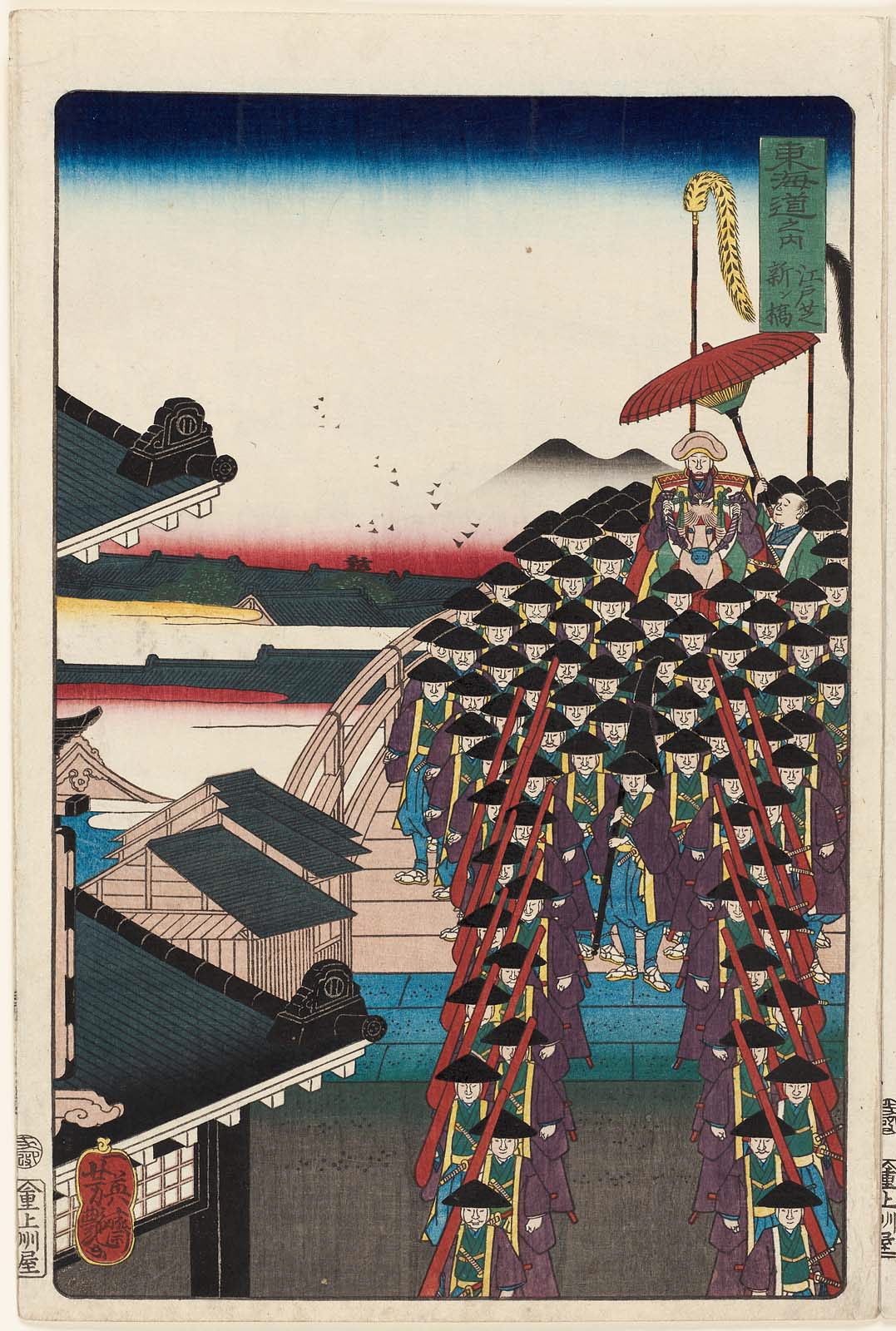
During the Edo period, the shoreline lay closer to present-day Shiodome than it does today. Canals, moats and bridges organized movement between the castle city, the waterfront, Shiba and the Tokaido highway leading toward western Japan. The area around Shiba-guchi—literally the “entrance to Shiba”—functioned as a threshold between central Edo and its southern approaches.
The name Shinbashi means “new bridge.” Like many Edo place names, it originally described infrastructure rather than a railway district. Waterways carried heavy goods, while roads and bridges moved travelers, porters and carts. This existing transport geography later made the area attractive to the Meiji government.
1872: Japan’s First Public Railway
Japan’s first public railway officially opened between Shimbashi and Yokohama on October 14, 1872. The line connected the political capital with the international port and became one of the most visible symbols of the new Meiji state.
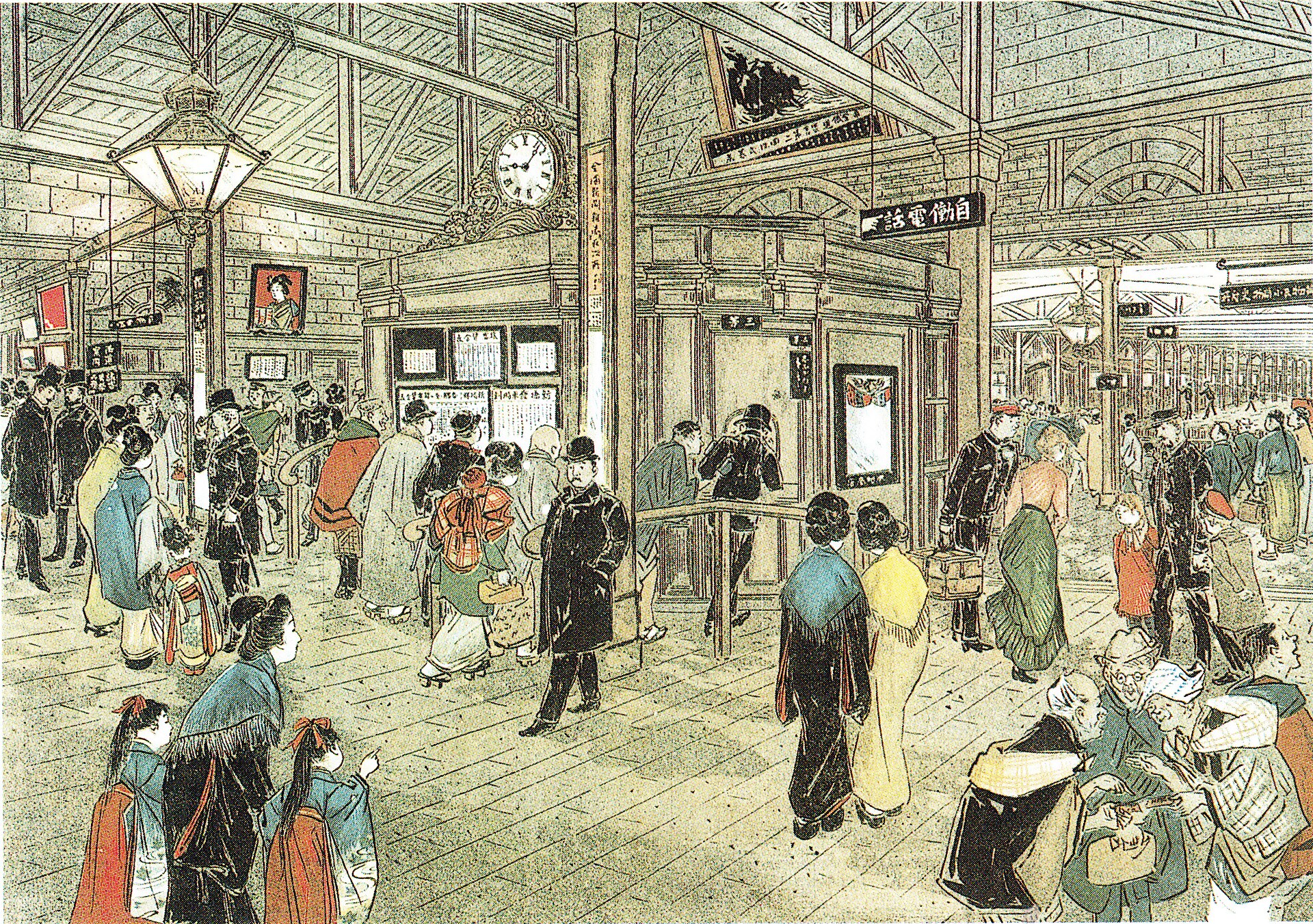
The original Shimbashi terminal stood east of today’s JR station, within present-day Shiodome. It concentrated passengers, rickshaws, baggage, inns and commercial services around a new system governed by timetables and tickets. The railway shortened travel, but it also changed how people understood distance and punctuality.
Why Today’s Station Is Not the Original
A second station called Karasumori opened west of the original terminal in 1909. When Tokyo Station opened in 1914, the city’s passenger network was reorganized. Karasumori Station was renamed Shimbashi Station and became the ancestor of the present JR station.
The original Shimbashi terminal was renamed Shiodome and assigned mainly to freight. The famous station name moved west, while the original site remained railway land. This decision created the basic east–west division that still shapes the district.
From Passenger Terminal to Freight City
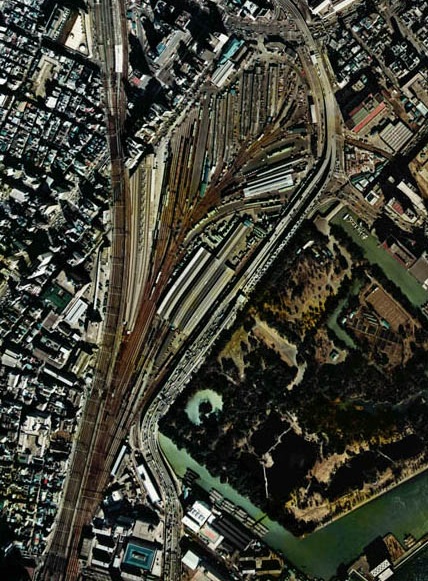
Shiodome developed into one of Tokyo’s major freight terminals. Sidings, sheds, offices and loading areas spread across the former passenger station and surrounding land. Trains brought food, manufactured goods and parcels from across Japan; carts and later trucks carried them onward into the city.
The terminal’s importance came from transfer. Rail connected national producers with Tokyo, while roads, warehouses and nearby waterfront infrastructure connected the yard with local markets and businesses. For decades, Shiodome was less a neighborhood than a vast logistics machine beside central Tokyo.
Earthquake, War and Postwar Recovery
The Great Kanto Earthquake of 1923 destroyed the original station building by fire. Freight operations continued after reconstruction, but the architectural memory of the first terminal became increasingly difficult to see beneath later railway facilities.
Air raids in 1945 devastated surrounding neighborhoods. After the war, temporary markets and small businesses gathered around the functioning passenger station. Commuters created immediate demand for food, drink, tickets and everyday services, encouraging a dense commercial landscape west of the tracks.
How Shinbashi Became the Salaryman District
Shinbashi became closely associated with the Japanese salaryman: the white-collar company employee who symbolized postwar corporate life. The image grew because the district combined heavy commuter traffic, nearby offices, affordable restaurants and bars, and public spaces where workers were highly visible.
The label does not describe everyone who uses Shinbashi, nor is it an ancient local identity. It emerged from postwar employment patterns and media representation. Yet it remains convincing because office life still reaches the street here. Lunch counters fill quickly at noon, and narrow drinking streets become busy after work.
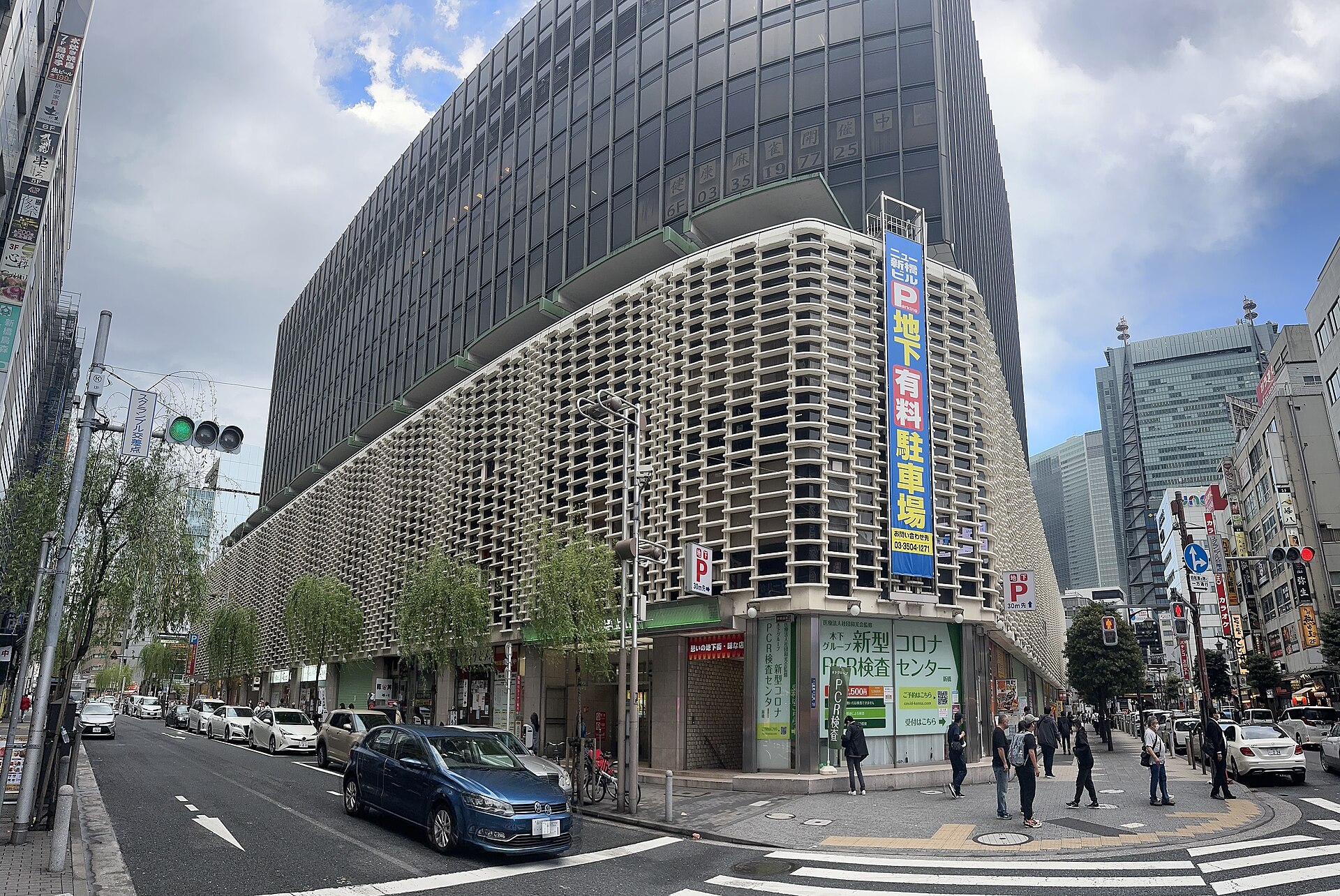
The New Shimbashi Building, completed in 1971, gathered many small restaurants, shops and services into a large station-front structure. Its interior preserves the fine-grained commercial character of the surrounding streets even though the building itself was a redevelopment project.
News, Communications and Media
Shinbashi also attracted newspapers and communications businesses. Government offices, corporations, railway distribution, telegraph and telephone networks were all nearby. News organizations needed rapid access to information, printing labor and national transport.
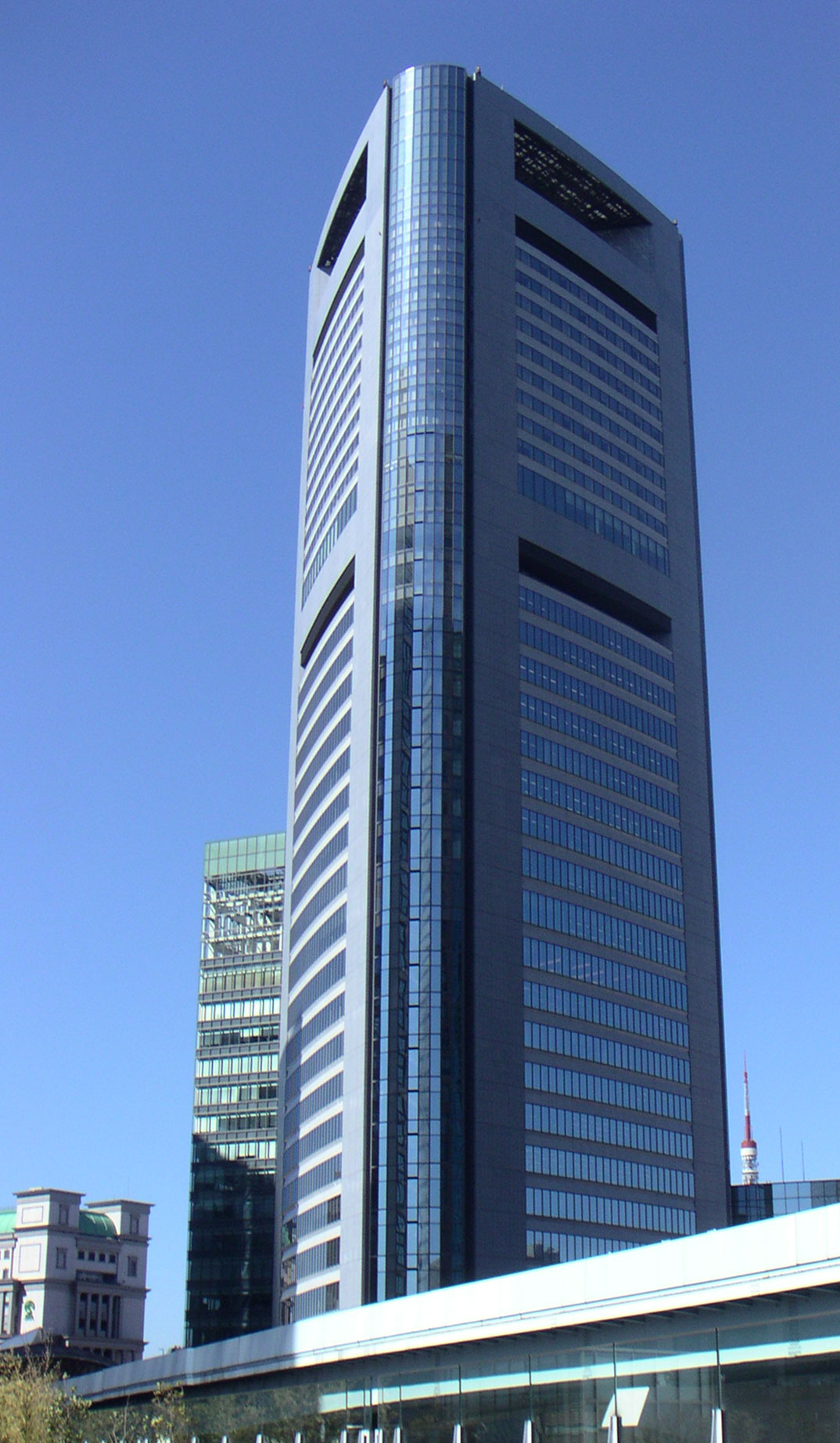
When Shiodome was redeveloped, media companies returned in a new architectural form. Instead of printing and distribution buildings spread through low-rise streets, large organizations occupied high-rise offices connected by modern transit and digital communications.
Why the Freight Yard Closed
By the late twentieth century, urban logistics had changed. Trucks, expressways, containers and larger peripheral terminals reduced the need for a conventional freight yard in the center of Tokyo. Shiodome Freight Station closed in 1986.
The closure released an enormous tract of land beside the central business district. Because railway operations had kept the property consolidated, planners could reorganize streets, parcels and infrastructure at a scale impossible in the smaller blocks west of the station.
Archaeology and the Return of the First Station
Redevelopment excavations uncovered remains of the original railway terminal, including foundations and platform structures. These discoveries allowed the site to be protected and interpreted.
The Old Shimbashi Station building seen today is a reconstruction, not the original 1872 structure. It opened in 2003 above the historic site and contains exhibitions about Japan’s early railway history. Archaeological remains and a reconstructed section of platform mark the place where the national railway story began.
From Rail Yard to High-Rise Shiodome
The former freight land was reorganized through a large land-readjustment and redevelopment project. New roads, underground passages, elevated pedestrian decks and transit connections supported offices, hotels, residences, theaters and commercial facilities.
The result is a vertically layered district. Railways and roads run below, plazas and walkways connect buildings at several levels, and towers rise above. Although the freight tracks have disappeared, the size of the blocks still reveals the scale of the former yard.
What to Look For Today
- Old Shimbashi Station: a reconstruction on the site of Japan’s first Tokyo railway terminal.
- Platform and zero-mile area: evidence of the railway’s original starting point.
- Shiodome’s broad blocks: the surviving urban scale of the freight yard.
- Hama-rikyu Gardens: a reminder that the old shoreline once lay much closer.
- West-side alleys and railway arches: the fine-grained landscape of commuter commerce.
- New Shimbashi Building: a 1971 redevelopment that preserved many small commercial units inside.
- Elevated decks: the circulation system of the high-rise Shiodome redevelopment.
Timeline
| Date | Turning point |
|---|---|
| Edo period | Bridges, waterways and the southern gateway organize movement through the area. |
| 1872 | Japan’s first public railway officially opens between Shimbashi and Yokohama. |
| 1909 | Karasumori Station opens west of the original terminal. |
| 1914 | Karasumori becomes Shimbashi Station; the original station becomes Shiodome Freight Station. |
| 1923 | The Great Kanto Earthquake destroys the original station building. |
| 1945 | Air raids devastate surrounding districts. |
| Postwar decades | Commuter commerce and office-worker culture expand west of the station. |
| 1971 | New Shimbashi Building opens. |
| 1986 | Shiodome Freight Station closes. |
| 1990s–2000s | Land readjustment and high-rise redevelopment transform Shiodome. |
| 2003 | The reconstructed Old Shimbashi Station opens. |
Frequently Asked Questions
Was today’s Shimbashi Station Japan’s first railway station?
No. The original 1872 terminal stood east of today’s JR station in present-day Shiodome.
Why did the station name move?
When Tokyo Station opened in 1914, passenger services were reorganized. Karasumori Station became Shimbashi, while the original terminal became Shiodome Freight Station.
Is Old Shimbashi Station original?
No. The original burned after the 1923 earthquake. The present building is a reconstruction on the historic site.
Why is Shinbashi famous for salarymen?
Heavy commuter traffic, nearby offices, affordable restaurants and bars, and repeated media coverage made white-collar workers especially visible around the station.
Why are Shiodome’s blocks so large?
They occupy land once consolidated for the railway terminal and freight yard, allowing redevelopment at a scale impossible in the smaller plots west of the tracks.
Conclusion: One Railway, Two Cities
Shinbashi and Shiodome grew from the same transport corridor but inherited different urban forms. The west side became a dense district of commuters, offices, restaurants and small businesses. The east side remained railway land until freight operations ended, then reappeared as a coordinated high-rise quarter.
Crossing the station today is therefore a journey through two outcomes of railway history. Shinbashi shows how a city accumulates through countless small commercial decisions. Shiodome shows what becomes possible when a single enormous piece of infrastructure disappears.
Related Stories and Neighborhood Histories
- Japan’s First Railway: How the Shinbashi–Yokohama Line Changed the Country
- How Standard Time and Railways Changed Time in Japan
- The History of Marunouchi
- The History of Ginza