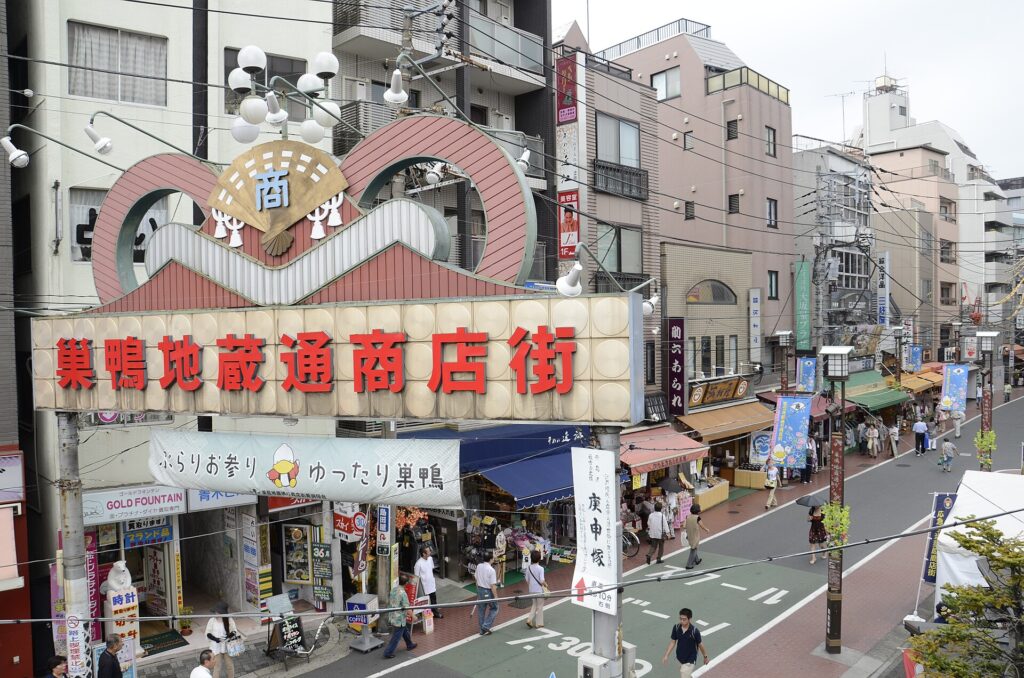
Tokyo has a “Harajuku for grandmothers”—a shopping street born from an Edo highway, a healing cult and more than a century of pilgrim commerce.
Walk from Sugamo Station into Jizo-dori and the city changes scale. Traffic gives way to a long pedestrian-friendly street lined with red underwear, traditional sweets, practical clothing, food stalls and shops whose staff still talk directly with customers. At its center stands Koganji Temple, where visitors pray to Togenuki Jizo and wash the Arai Kannon while asking for relief from illness and pain.
Foreign media often describe Sugamo as “Grandma’s Harajuku,” but the nickname is only the newest layer. The district first grew along the Nakasendo highway out of Edo. Roadside religious sites gave travelers reasons to stop. Koganji’s relocation in 1891 created recurring pilgrimage crowds. Railways, trams and the subway widened access, while postwar merchants learned to serve visitors seeking comfort, health, affordability and conversation. Modern Sugamo exists because an old travel route evolved into a pilgrimage economy—and that pilgrimage economy became one of Tokyo’s most recognizable shopping cultures.
Quick Facts
- Japanese name: 巣鴨
- Municipality: Toshima City, Tokyo
- Main stations: Sugamo, Koshinzuka, Shin-koshinzuka and Nishi-sugamo
- Historic route: the former Nakasendo highway
- Best-known site: Koganji Temple and its Togenuki Jizo tradition
- Modern nickname: “Grandma’s Harajuku”
- Important distinction: Sugamo was a roadside settlement and rest area, not an official Nakasendo post town
Why Sugamo Became What It Is Today
Sugamo’s identity was produced by five systems that reinforced one another: the old highway, roadside faith, recurring temple fairs, metropolitan transport and merchant adaptation.
The Nakasendo created a linear stream of travelers. Religious sites encouraged those travelers to pause. Koganji later generated repeat visits on regular fair days. Trains and trams turned pilgrimage into an easy journey from across Tokyo. Merchants observed what visitors wanted and specialized in practical goods, familiar foods and personal service.
The result was not simply a neighborhood with many older residents. It became a destination designed around the habits of older visitors: walking slowly, browsing small shops, talking with sellers, eating inexpensive food and combining shopping with prayer.
The Old Highway beneath Jizo-dori
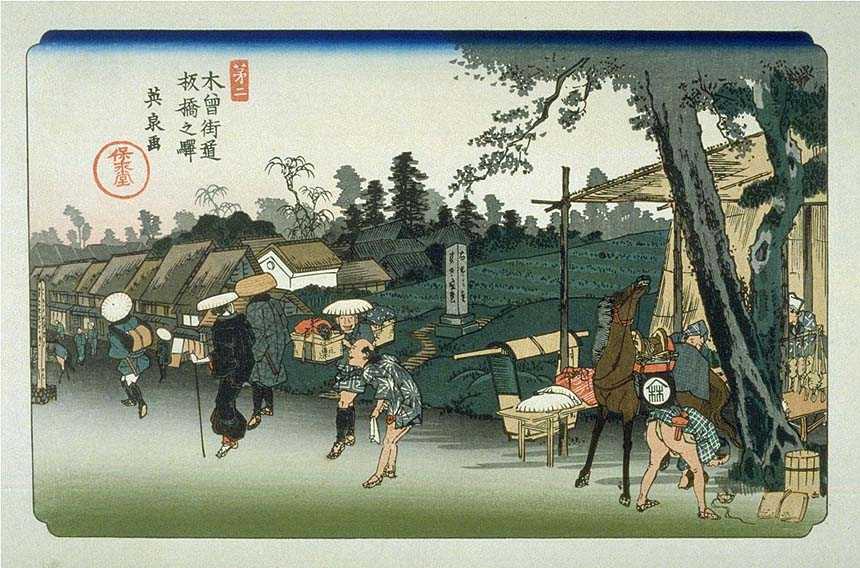
The Nakasendo was one of the five major highways organized under the Tokugawa shogunate. It began at Nihonbashi and ran northwest through Itabashi before crossing the mountains toward Kyoto.
Sugamo lay before Itabashi-juku, the first official post station on the route. It was not itself a regulated post town. Instead, it developed as a roadside settlement with tateba—places where travelers could rest, eat and prepare for the next stage of the journey.
This explains the shape of Jizo-dori today. Commerce follows a long line because customers once moved along a long line. Shops, tea houses, religious markers and later fair stalls all benefited from the steady flow of people on the highway.
Roadside Religion before Togenuki Jizo
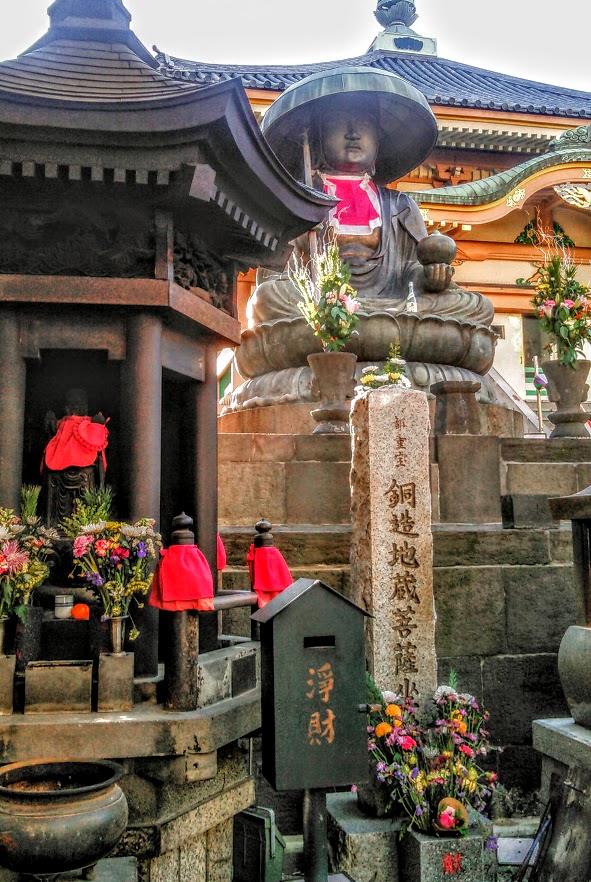
Religious landmarks shaped the road before Koganji arrived. Near the southern end of Jizo-dori, Shinsho-ji preserves one of the Edo Six Jizo, a group of large bronze statues placed on important approaches to the city.
The statue marked both movement and boundary. Travelers leaving Edo passed a protective Buddhist figure before continuing toward Itabashi and the interior. At the northern end of the district, Koshinzuka preserved another kind of roadside devotion associated with Koshin belief, communal vigils and stone monuments.
Koganji Moves to Sugamo
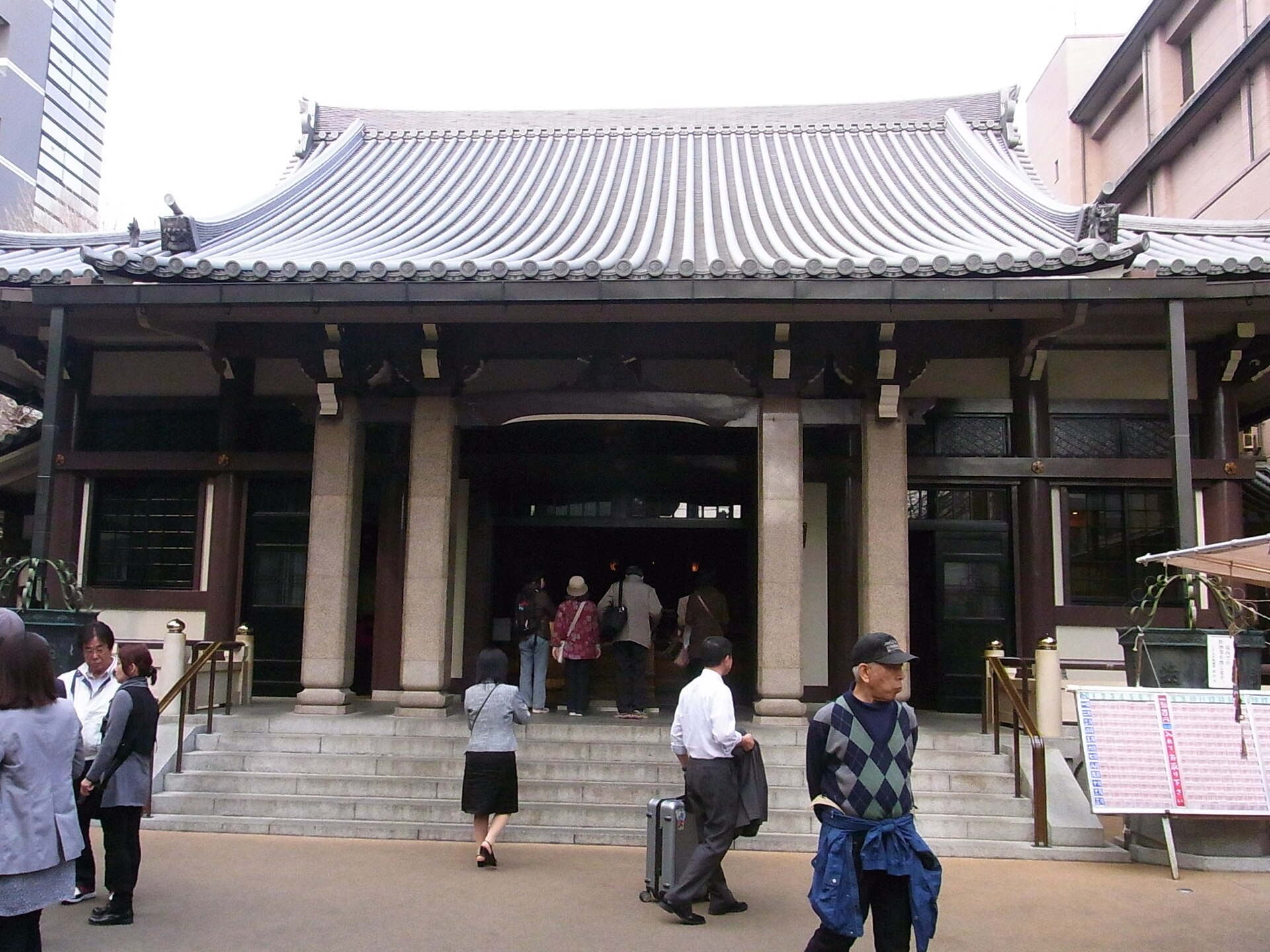
Koganji did not originate in Sugamo. The temple was founded in 1596 near Kanda Myojin, moved after the Great Fire of Meireki in 1657 and eventually relocated to Sugamo in 1891.
The temple was already associated with the Togenuki Jizo tradition. According to temple history, devotional paper images became connected with healing after a woman swallowed one and later coughed up a needle that had been troubling her. The name togenuki means “thorn-removing” or “splinter-removing.”
After moving to Sugamo, the temple and street vendors promoted recurring ennichi, or fair days. These events transformed religious devotion into a regular commercial rhythm. Worshippers came on predictable dates, stalls gathered around them, and permanent shops learned to serve the same crowds.
Togenuki Jizo and Arai Kannon Are Not the Same
Several devotional objects at Koganji are often confused. The principal Togenuki Jizo is a hidden sacred image. Worshippers also receive small paper impressions called omikage, which are connected with the temple’s healing tradition.
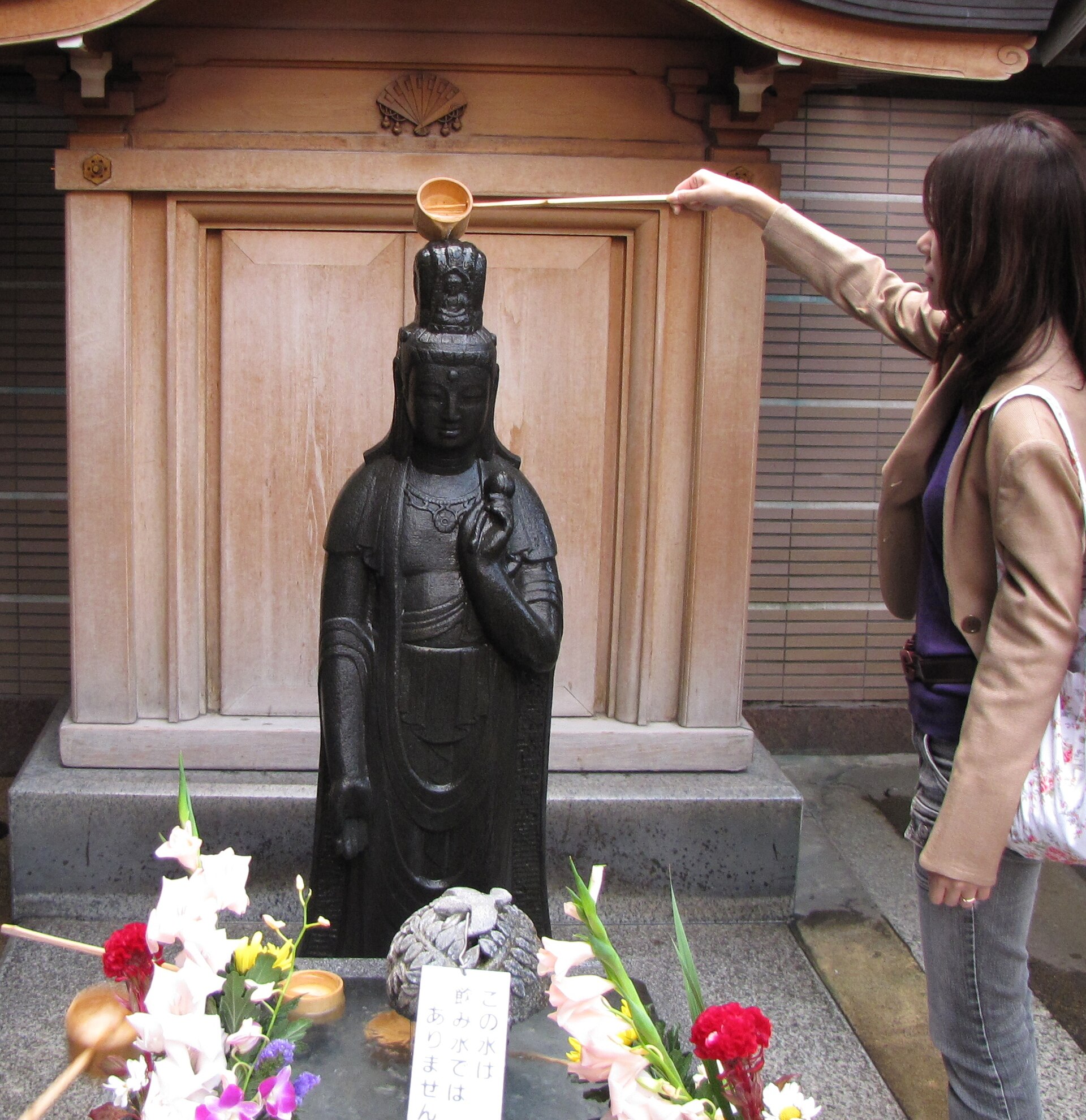
The Arai Kannon is a separate statue. Visitors wash the part of the statue corresponding to the part of their own body they hope to heal. The current statue was installed in 1992 after the earlier one became heavily worn through repeated washing.
Railways Turn Pilgrimage into a Day Trip
Sugamo Station opened in 1903 on the line that became today’s Yamanote Line. Tram service followed, and Koshinzuka remains a stop on the surviving Toden Arakawa Line, now branded as the Tokyo Sakura Tram.
Modern transport changed the scale of pilgrimage. Visitors no longer needed to approach Sugamo on foot along the highway. They could arrive from across Tokyo, leave the station and continue slowly along the old road.
This transfer between fast and slow movement remains central to the neighborhood. The railway delivers crowds quickly; Jizo-dori then encourages them to walk, stop, browse and talk.
War Damage and Postwar Rebuilding
Air raids in 1945 destroyed Koganji’s buildings and damaged the surrounding district. A temporary hall was built in 1946, and the present main hall was completed in 1957.
Postwar rebuilding restored more than architecture. Temple fairs resumed, shopping streets reorganized and the neighborhood again served both pilgrims and local residents. Stores selling food, clothing, household necessities and modest gifts fitted the needs of a recovering city.
Koganji opened a free counseling service in 1959. This connected the temple’s older healing reputation with modern psychological and social support, strengthening Sugamo’s image as a place where visitors could discuss bodily, emotional and practical concerns without embarrassment.
Why Older Visitors Felt Comfortable Here
Sugamo’s senior-oriented identity did not appear because merchants made a single marketing decision. It developed gradually through observation and adaptation.
Older worshippers already came to Koganji for healing prayers and fair days. Small shops allowed customers to inspect goods closely and speak directly with staff. Merchants increasingly offered comfortable clothing, affordable food, health-related products and familiar everyday items. The street’s compact scale allowed visitors to pause often and combine prayer, eating and shopping in one trip.
Each element reinforced the others. Pilgrimage created a customer base. Merchants adapted to that base. The specialized shops attracted more visitors. Media coverage then made the pattern nationally recognizable.
How “Grandma’s Harajuku” Became a Brand
Comparisons between Sugamo and youth-oriented Harajuku appeared in the late twentieth century. A prominent 1998 newspaper headline helped popularize the phrase “Grandma’s Harajuku.”
The nickname worked because overseas and domestic audiences already understood Harajuku as a place where fashion and identity become visible in the street. Sugamo seemed to offer an older generation’s equivalent: a destination where clothing, food, health, faith and sociability formed a distinctive public culture.
The label is memorable but incomplete. Sugamo remains a residential neighborhood, a religious destination, an old highway district and a shopping street used by several generations. The nickname describes one powerful layer; it does not explain the whole place.
Sugamo beyond Jizo-dori
East of the station, Somei Cemetery and nearby temples create a quieter landscape of larger plots and institutional grounds. The wider Somei area is also closely connected with the horticultural history of the Somei-yoshino cherry.
This side of Sugamo should not be treated as an extension of the shopping street. It represents a different historical pattern shaped by nurseries, burial grounds and relocated temples. Together, the two areas show how modern Sugamo grew from several overlapping landscapes rather than from a single commercial center.
What to Look For Today
- Jizo-dori: the former Nakasendo route whose long, narrow form still organizes commerce.
- Shinsho-ji’s Edo Six Jizo: a roadside guardian distinct from Koganji’s Togenuki Jizo.
- Koganji: the pilgrimage center that moved to Sugamo in 1891.
- Arai Kannon: the statue visitors wash while praying for physical relief.
- Koshinzuka: the northern roadside marker and tram-side threshold.
- Tokyo Sakura Tram: a surviving layer of early twentieth-century transport.
- Somei Cemetery: part of the quieter temple, cemetery and horticultural landscape east of the station.
Timeline
| Edo period | Sugamo develops as a roadside settlement and rest area before Itabashi-juku. |
| 18th century | Roadside Jizo and Koshin beliefs shape the Nakasendo approach. |
| 1891 | Koganji relocates to Sugamo. |
| 1903 | Sugamo Station opens. |
| Early 20th century | Tram service and recurring temple fairs expand visitor flows. |
| 1945 | Air raids destroy Koganji’s buildings and damage the district. |
| 1946 | A temporary temple hall is completed. |
| 1957 | The present main hall is completed. |
| 1959 | Koganji opens its free counseling service. |
| 1968 | The present Mita Line opens through Sugamo as Toei Line 6. |
| Late 1980s–1990s | Comparisons with Harajuku spread through the media. |
| 1998 | A prominent newspaper headline helps establish “Grandma’s Harajuku.” |
Frequently Asked Questions
Why is Sugamo called “Grandma’s Harajuku”?
The phrase became popular because Sugamo developed a visible concentration of older temple visitors and merchants serving their needs. It is a modern media nickname, not an old official name.
Was Sugamo an official Nakasendo post town?
No. It was a roadside settlement and rest area on the way to the official post town of Itabashi-juku.
What is Togenuki Jizo?
It is Koganji’s healing Jizo tradition, centered on a hidden sacred image and devotional paper impressions called omikage.
Is Arai Kannon the same as Togenuki Jizo?
No. Arai Kannon is a separate statue used in washing rites.
Is Sugamo only for older visitors?
No. It remains a residential shopping street, pilgrimage destination and historical district used by many generations.
Related Neighborhood Histories
Compare Sugamo with Ikebukuro, another Toshima district shaped by transport, war and postwar commerce. Browse more places through Tokyo Neighborhood Histories.
Sources and Further Reading
- Koganji Temple: History
- Sugamo Jizo-dori Shopping Street: Sugamo in Five Minutes
- Toshima City and Toshima City Local History Museum
- Tokyo Metropolitan Bureau of Transportation
- National Diet Library
Conclusion: An Old Road Rebranded for a New Generation
Sugamo did not become famous by abandoning its history. Its modern identity grew by reusing an old highway, strengthening a healing pilgrimage and adapting small-scale commerce to the needs of repeat visitors.
That is why “Grandma’s Harajuku” is more than a playful nickname. It describes a rare Tokyo street where faith, health, fashion and sociability were built on a route first shaped by travelers leaving Edo.