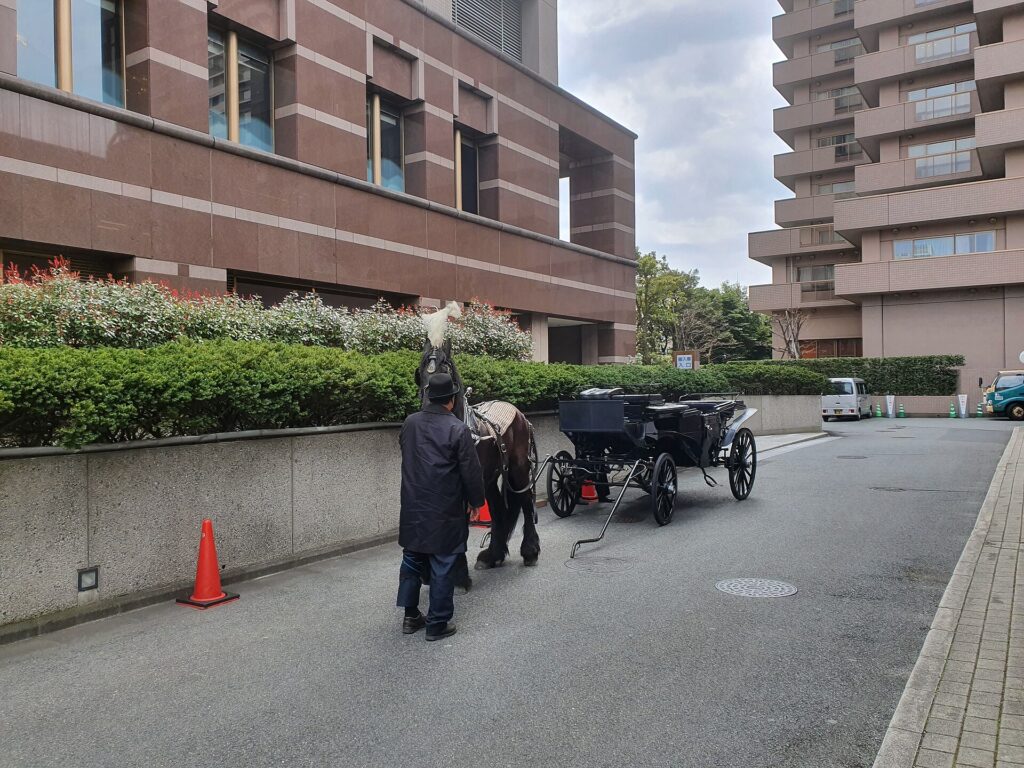
The beer came first. The station, the neighborhood name and one of Tokyo’s most fashionable districts all followed.
Walk east from Ebisu Station through the moving walkway toward Yebisu Garden Place and the district seems to announce itself as polished late-twentieth-century Tokyo: brick-colored plazas, offices, apartments, restaurants and cultural facilities arranged on a broad former industrial site. Yet the route follows the footprint of a brewery that existed before “Ebisu” was a passenger station—or an official local place name.
The sequence is unusually literal. Yebisu Beer was launched here in 1890. The brewery then requested a freight facility to ship it, and the railway gave that stop the product’s name. Passenger service followed, the name spread onto maps and addresses, and the surrounding district eventually became Ebisu. When large-scale brewing ended, the former plant was transformed into Yebisu Garden Place, converting industrial land and corporate memory into a lifestyle destination.
Modern Ebisu therefore owes its identity to a product that became infrastructure and then geography. The fashionable neighborhood did not simply replace the factory. Its station, land pattern, brand image and redevelopment all grew from the brewery that came first.
Why Ebisu Became What It Is Today
Modern Ebisu grew through several overlapping forces: the conversion of rural land on Tokyo’s southwestern edge, the rise of a large brewery, the railway infrastructure required to move beer, the opening of a passenger station, metropolitan residential and commercial growth, wartime destruction and postwar rebuilding, and finally the redevelopment of the brewery site. Calling it simply a fashionable neighborhood hides the chain that made the fashionable district possible.
The brewery did not create every street or household, and Ebisu was never an isolated one-company settlement. Still, the plant’s land, employment, freight demand and brand were unusually powerful. They supplied a center of gravity around which transport, housing and commerce accumulated.
Geography Before the Brewery
Before industrialization, the wider area belonged to Shimo-Shibuya and neighboring rural settlements. The landscape was not a uniform plain. Valleys cut between uplands, cultivated plots and scattered houses occupied usable ground, and roads connected villages with the expanding city to the east. The present station sits in a corridor where rail construction could pass along lower ground, while the brewery site spread over a large tract immediately beside that corridor.
This combination mattered. A brewery required water, production buildings, storage yards and room for expansion. It also needed access to Tokyo’s growing consumer market without paying the costs of a central-city location. Land near the edge of the built-up area, but close to a railway, offered both scale and connection.
From Shimo-Shibuya to an Industrial Edge of Tokyo
In the late Edo and early Meiji years, Shimo-Shibuya remained outside the dense commercial core of Tokyo. That position changed as the capital expanded, municipal boundaries shifted and railway lines cut through former village land. In 1889, the modern Shibuya village was created by combining Upper, Middle and Lower Shibuya with nearby areas. The same period brought factories and urban services into landscapes that had previously been organized around agriculture and village roads.
Industrial development did not erase the older terrain. Slopes, narrow approaches and uneven street patterns continued to divide the station’s east and west sides. Later redevelopment would be most dramatic on the former brewery land east of the tracks, while the west side evolved through smaller commercial lots, entertainment streets and residential neighborhoods.
The Yebisu Beer Brewery Built a New District
The Japan Beer Brewery Company began brewing in this area in 1889, and Yebisu Beer was launched in 1890. The brand name referred to Ebisu, the deity associated with prosperity and commerce, but the later neighborhood name came through the beer rather than from an ancient local place name.
Brewing at industrial scale required far more than a single brewhouse. The complex included production buildings, warehouses, yards and transport connections. Its physical footprint helped establish a large industrial zone beside the railway, while workers and related businesses increased demand for housing, shops and services nearby.
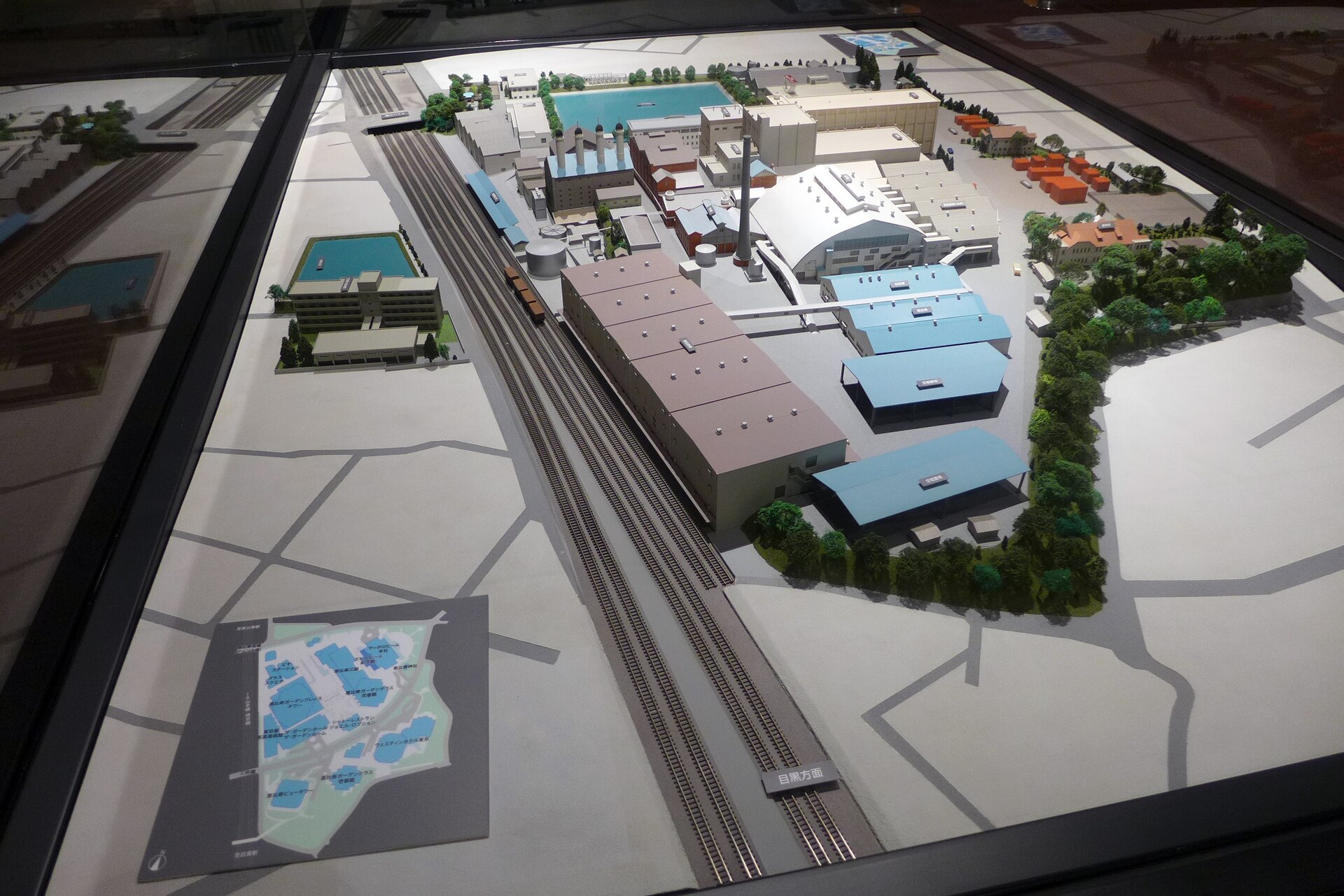
The model above represents the brewery as a connected industrial system rather than a picturesque single building. Its warehouses and rail access explain why the plant became an urban organizer. The factory’s influence extended beyond its boundary because every shipment, shift change and supply delivery tied the site to surrounding streets and the regional railway.
Freight Came Before the Familiar Station
The railway sequence is central to Ebisu’s history. In February 1901, Nippon Railway opened a dedicated freight facility at the brewery’s request to ship Yebisu Beer. The freight stop carried the product name. Passenger service came later: in October 1906, a station opened for the growing population around the brewery. Today’s JR Ebisu Station therefore developed from an industrial transport need before it became a major everyday passenger stop.
This was not simply a private siding hidden inside a factory. The freight operation linked the brewery to a national distribution network and fixed the name “Ebisu” onto railway geography. Once printed on timetables, freight documents and maps, the name gained a public life beyond the beer label.
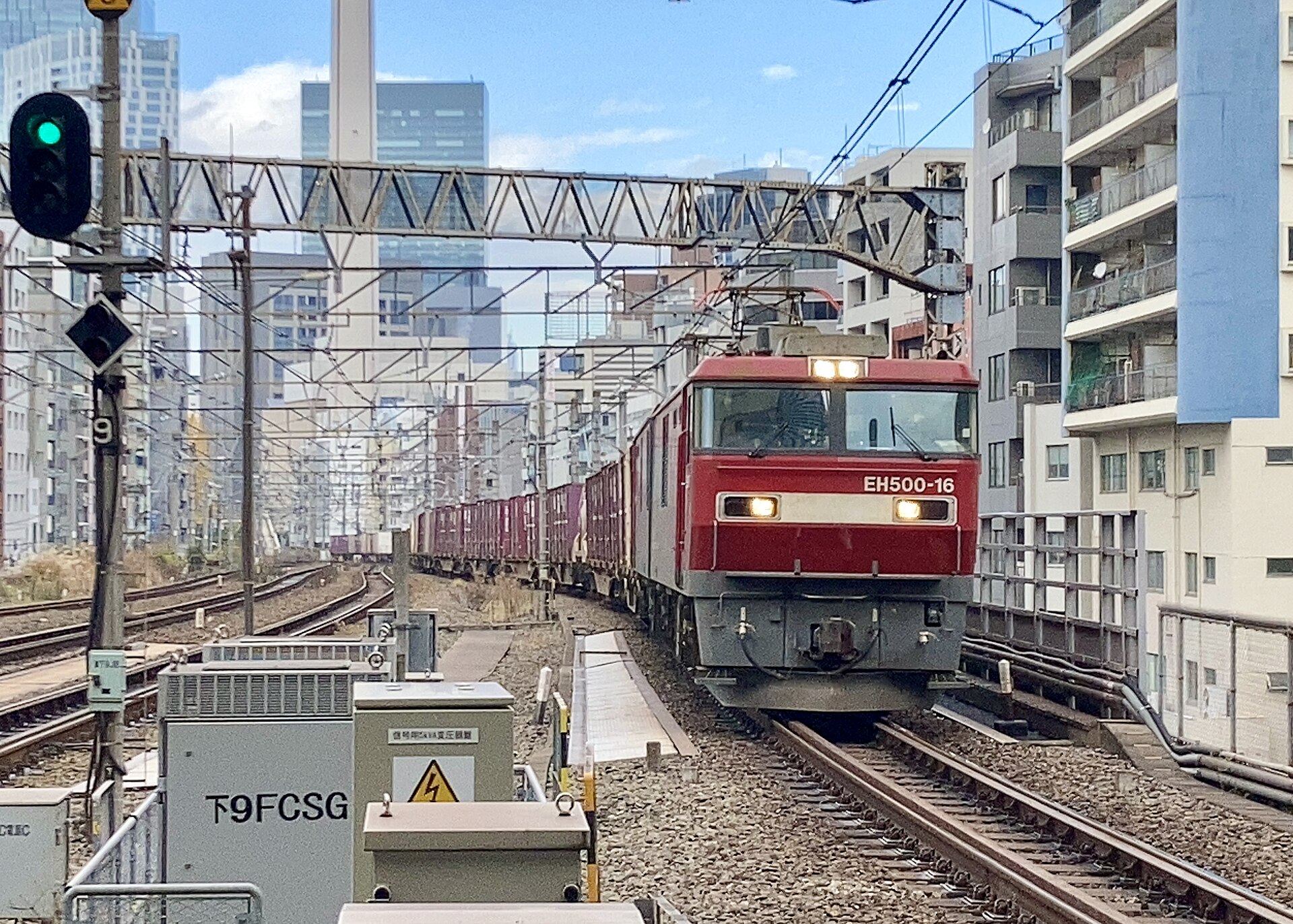
The train shown here is modern, not a surviving image of the old beer freight station. It nevertheless makes the continuity visible: Ebisu still sits beside an active freight corridor. Passenger platforms, through trains and freight movements continue to occupy the same narrow north–south railway space that once connected the brewery to its markets.
How a Beer Brand Became a Station and a Place Name
The naming sequence was extraordinary: Yebisu Beer came first, then the freight facility, then the passenger station, and finally official place names using Ebisu. Shibuya’s 1928 reorganization introduced names including Ebisu-dori, and later postwar address changes expanded the use of Ebisu into the present neighborhood names.
The English spellings preserve two histories. “Yebisu” is the traditional brand spelling used by the beer company. “Ebisu” is the standard romanization used for the station and neighborhood. They refer to the same Japanese reading, but their different spellings help distinguish the corporate brand from the urban district.
Was Ebisu Really a Company Town?
Ebisu can be described as company-town-like, but with qualifications. The brewery controlled a major site, generated employment, required freight infrastructure and gave the district its name. Those are unusually strong corporate influences.
At the same time, Ebisu was part of metropolitan Tokyo rather than a remote settlement owned and managed by one employer. Railway passengers, independent shops, landlords, surrounding farms and residences, municipal roads and later office development all shaped the area. The most accurate description is a brewery-centered industrial district that diversified into a metropolitan station neighborhood.
Earthquake, War and the Industrial City
The 1923 Great Kanto Earthquake accelerated movement and rebuilding across Tokyo, including districts outside the most heavily burned central zones. Ebisu’s growing rail access and available land made it part of a wider redistribution of population and industry. The neighborhood continued to urbanize in the following decades.
War brought a different rupture. Air raids damaged large parts of Shibuya, and the postwar government designated an Ebisu land readjustment area. Reconstruction altered streets, property lines and building patterns around the station. The brewery remained a major presence, but the district that emerged after 1945 was increasingly a mixture of factory, housing, rail transport and small-scale commerce.
Postwar Growth around the Station and Brewery
After the war, the station became more important to daily urban life while the brewery continued production and distribution. Shops clustered around the exits, homes filled surrounding slopes and side streets, and the railway divided distinct urban environments. East of the tracks lay the large brewery estate; west of them, smaller plots supported a denser network of restaurants, bars, shops and residences.
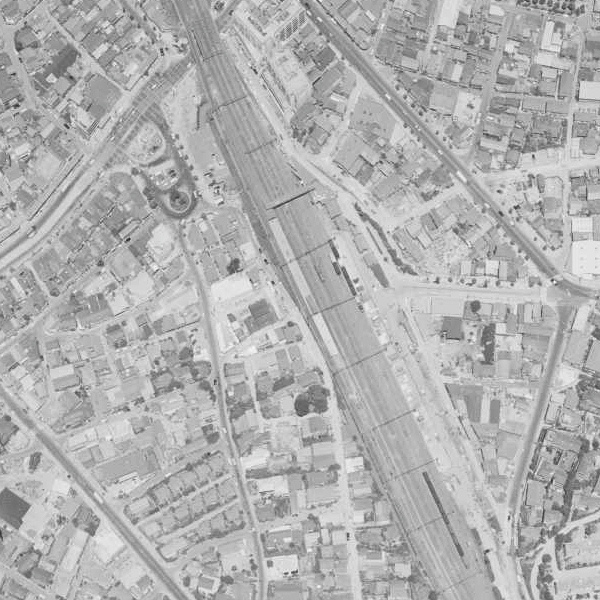
The 1963 aerial view shows the railway as the district’s spine and the brewery as a large landholding beside it. Individual structures should not be overidentified from this image, but the contrast in scale is clear: industrial parcels and rail facilities occupied broad areas, while surrounding neighborhoods were subdivided into finer-grained streets and buildings.
This contrast later shaped redevelopment. A single large industrial site could be planned comprehensively, whereas the established station streets evolved incrementally. The difference remains visible today in the spacious plazas of Yebisu Garden Place and the compact commercial fabric around the station’s other exits.
When Large-Scale Brewing Left Ebisu
By the late twentieth century, metropolitan land values, logistics and industrial production had changed. Large-scale brewing no longer depended on remaining at the historic inner-Tokyo site. The Ebisu plant closed in June 1988 and production moved elsewhere, ending roughly a century of industrial brewing on the site.
The closure created both a void and an opportunity. What disappeared was not only a factory but the district’s largest organizing land use. What remained was an exceptionally large, rail-adjacent site carrying one of Japan’s best-known product histories.
From Factory Site to Yebisu Garden Place
Yebisu Garden Place opened in October 1994 on the former brewery grounds. The redevelopment combined offices, apartments, retail, restaurants, hotel and cultural uses within an 83,000-square-meter site. Its planning used generous open spaces and brick-toned architecture to evoke European brewing imagery and the memory of Yebisu without claiming that the entire old factory had been preserved.
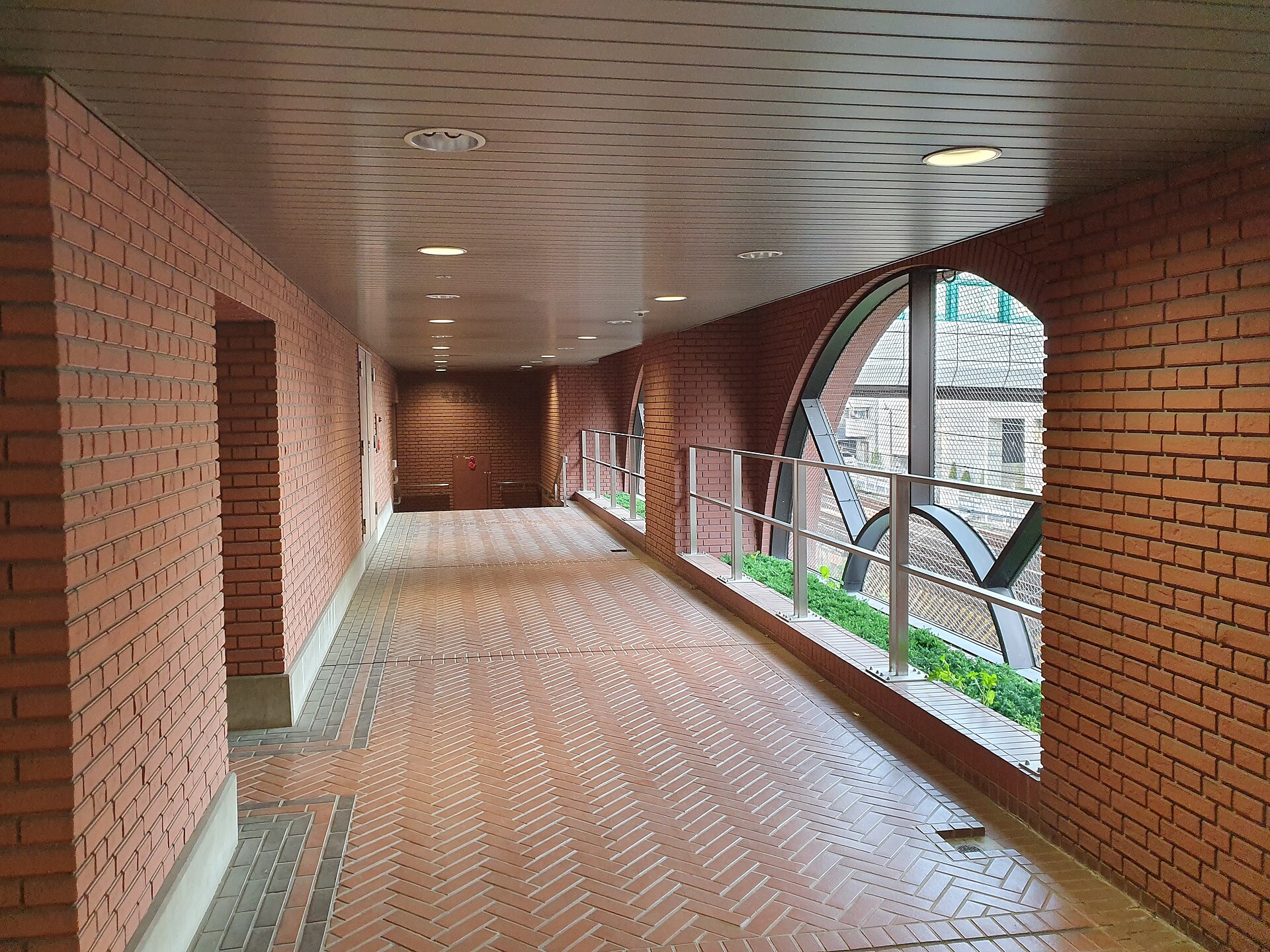
The railway relationship survived the change of use. The former plant had depended on rail access for freight; the new complex depended on rail access for workers, residents and visitors. The moving walkway from Ebisu Station converted that industrial adjacency into a pedestrian connection, making the station the gateway to the redevelopment.
The project also changed Ebisu’s image. The district’s restaurants and residential appeal had multiple roots, but Garden Place supplied a large, coherent symbol of lifestyle consumption, office work and urban culture. The old brand identity was not discarded. It was translated from manufacturing into place marketing, design and memory.
The Railway Still Shapes Ebisu
Stand near the station and the district’s geography becomes legible. The north–south tracks form a hard edge, concentrating crossings and channeling pedestrian movement. Garden Place lies to the east and southeast on the former industrial land. The west side opens into a finer network of shopping streets, nightlife and housing. These areas share a station name but not a single urban texture.
Freight trains still use the broader Yamanote freight corridor, while JR passenger services and the Tokyo Metro Hibiya Line make Ebisu a metropolitan interchange. The railway that once served beer distribution now supports a mixed residential, commercial and office district, but it continues to determine where people cross, gather and invest.
Brewing Returns in a Different Form
YEBISU BREWERY TOKYO opened at Yebisu Garden Place in 2024. It combines a museum, small-scale brewing and a taproom where visitors can learn about the brand and sample beer made on site. This is a contemporary experience and production facility, not a restoration of the former mass-production plant.
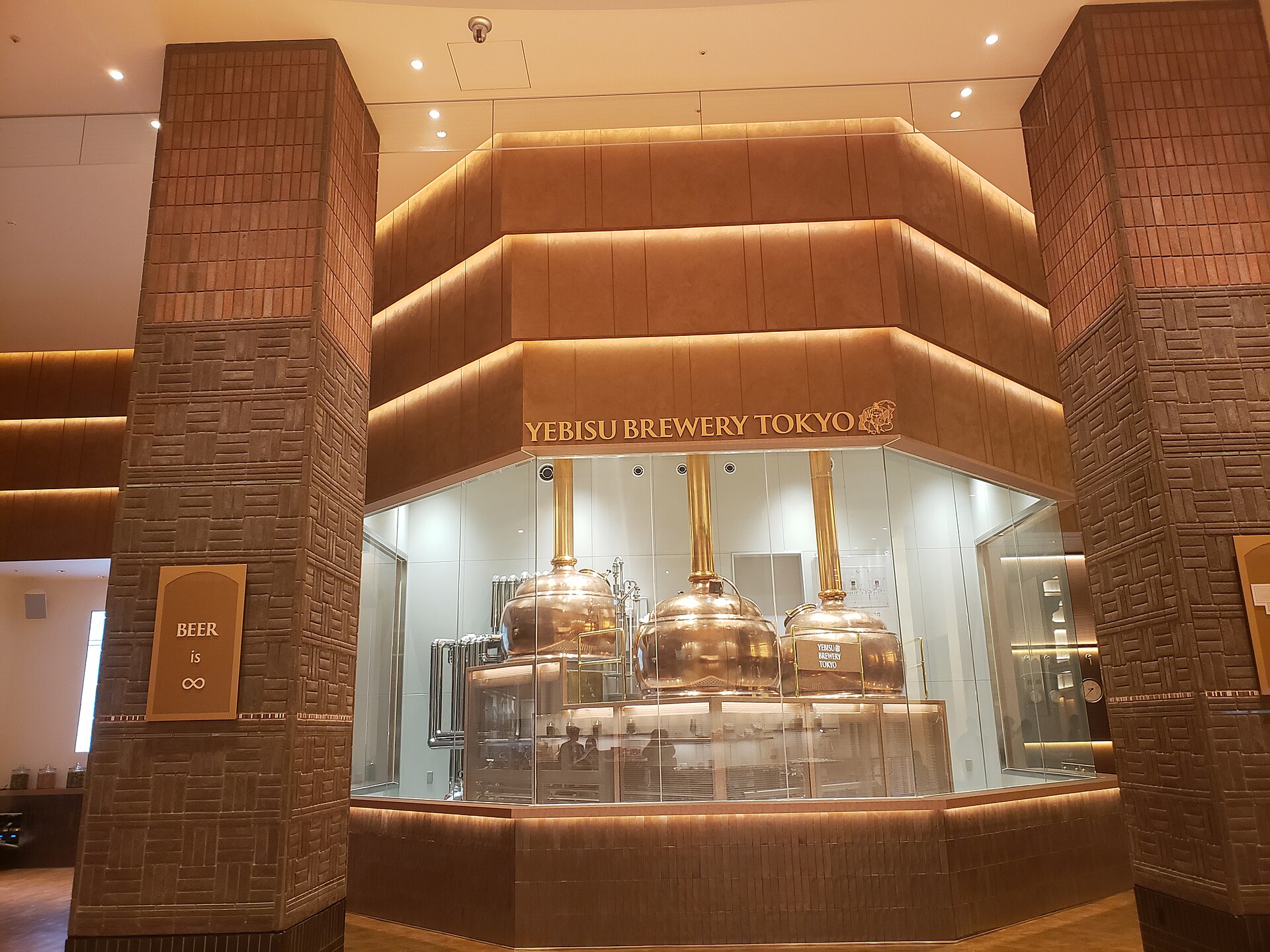
Its significance lies in reinterpretation. Brewing has returned to the birthplace of the brand, but at a scale and purpose suited to a cultural and visitor destination. The facility turns industrial history into an encounter with process, taste and corporate memory while the large-volume brewery remains elsewhere.
Ebisu Today: More Than a Fashionable Neighborhood
Today’s Ebisu combines several urban layers. Around the station are transit, retail and dense restaurant streets. Beyond them are quieter residential slopes. On the old brewery site, Garden Place offers broad plazas, offices, apartments and cultural institutions. Along the tracks, rail infrastructure preserves the corridor that first made industrial growth possible.
The fashionable image is therefore a late chapter, not the district’s timeless identity. It emerged from railway accessibility, postwar commerce, high land values, redevelopment and the reuse of a powerful brand. Ebisu became attractive partly because its industrial past left behind a site large enough to be remade at metropolitan scale.
Historical Traces You Can Still See
The most important trace is spatial rather than architectural: Yebisu Garden Place occupies the brewery site immediately beside the railway. The scale of its blocks and open spaces reflects the former industrial parcel. The station name preserves the beer’s transition into public geography, while the brand spelling “Yebisu” remains visible throughout the redevelopment.
Visitors can also read the district through contrasts. The moving walkway links station and former factory land; the tracks separate large-scale redevelopment from smaller station streets; modern freight trains recall the corridor’s logistics function; and YEBISU BREWERY TOKYO presents a curated return of brewing to the historic site.
Timeline
| Year | Change |
|---|---|
| 1889 | Brewing begins at the future Yebisu site; modern Shibuya village is formed. |
| 1890 | Yebisu Beer is launched. |
| 1901 | A dedicated Yebisu freight facility opens for beer shipments. |
| 1906 | Ebisu passenger station opens. |
| 1928 | Ebisu appears in official local place names during Shibuya town reorganization. |
| 1946 onward | Postwar land readjustment reshapes the station district. |
| 1988 | The Ebisu brewery closes. |
| 1994 | Yebisu Garden Place opens on the former brewery site. |
| 2024 | YEBISU BREWERY TOKYO opens with museum, small brewery and taproom functions. |
Frequently Asked Questions
Why is the neighborhood called Ebisu?
The name spread from Yebisu Beer to a dedicated freight facility, then to the passenger station and surrounding official place names. It was not an ancient neighborhood name.
Did the beer brand come before the station name?
Yes. Yebisu Beer was launched in 1890. The dedicated freight facility opened in 1901, and the passenger station followed in 1906.
Where was the original Yebisu Beer brewery?
It stood on the site now occupied by Yebisu Garden Place, east of Ebisu Station and immediately beside the railway corridor.
Was Ebisu a company town?
It had company-town characteristics because the brewery dominated land use, employment, freight and naming. But it remained an open metropolitan district shaped by many residents, businesses and transport networks.
What replaced the brewery?
Yebisu Garden Place, a mixed-use complex of offices, residences, retail, hospitality, restaurants, cultural facilities and open spaces, opened in 1994.
Are original brewery buildings still standing?
The redevelopment preserves the site’s identity and visual references to brewing, but it should not be understood as wholesale preservation of the old industrial complex.
Does beer brewing still take place in Ebisu?
Yes, on a small contemporary scale at YEBISU BREWERY TOKYO. The historic mass-production brewery did not return.
What traces can visitors see today?
The former brewery site, the railway adjacency, the station and place name, brand references in Garden Place, modern freight movements and the brewery museum all reveal different parts of the district’s formation.
Sources and References
- Sapporo Breweries, “1901: How a product gave its name to a station and a town.”
- Sapporo Breweries, “1988: Ebisu plant closes.”
- Sapporo Breweries, “1994: Yebisu Garden Place opens.”
- Sapporo Breweries, YEBISU BREWERY TOKYO official information.
- Shibuya City, “History of Shibuya City.”
- Shibuya City, “Origins of Place Names.”
- Shibuya City Library, changes in town names and lot numbers.
- Shibuya City, designated urban redevelopment and land readjustment projects.
- JR East, Ebisu Station guide.
Walk the Layers of Tokyo
Ebisu rewards a slow walk because its history is still organized in space: station, tracks, former industrial land, redevelopment plazas and surrounding residential streets. TimeWalk Japan explores how Tokyo’s ordinary routes preserve the causes of the city we see today.