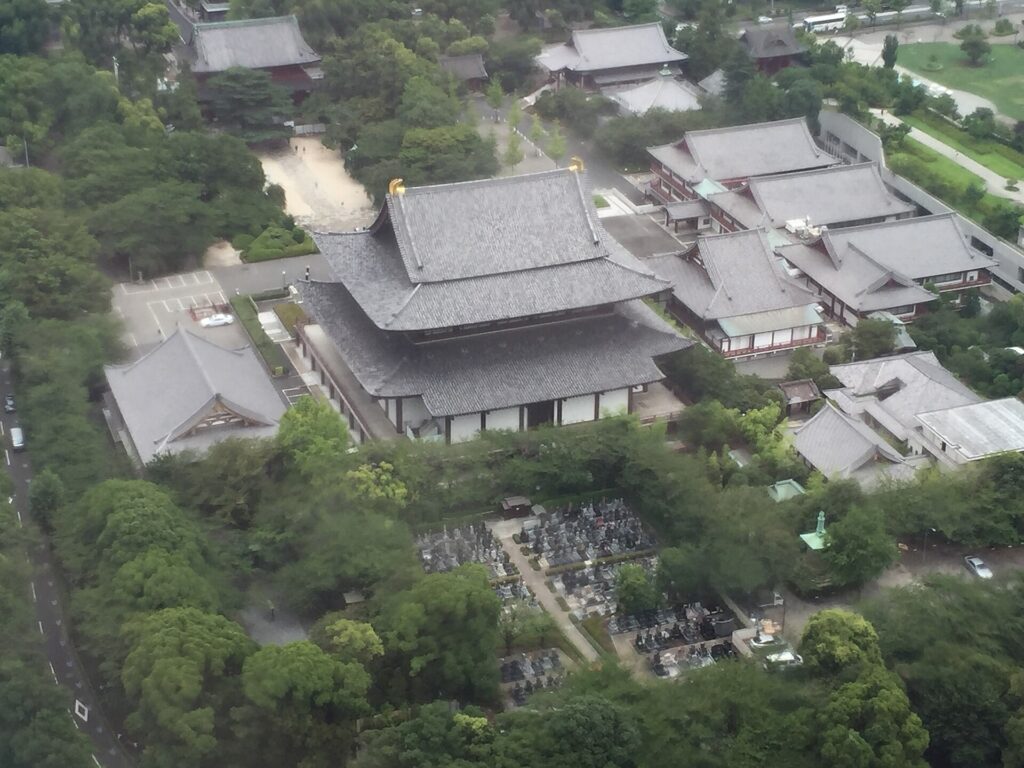
Most visitors know this part of central Tokyo for Tokyo Tower. Few realize that the streets below it were shaped by one of Edo’s largest Buddhist temple districts.
That district was called Shiba. At its center stood Zojoji, a major temple closely tied to the Tokugawa family—the shoguns who ruled Japan from 1603 to 1868. Much of the temple city disappeared, but its main route still survives in the modern street plan.
This is the key to reading Shiba today: Tokyo Tower, Zojoji, Shiba Park and the surrounding roads are not separate attractions. They occupy the broken remains of one historical landscape.
Before Tokyo Tower, Shiba Was a Temple City
Zojoji was founded in 1393 as a temple of the Jodo school of Pure Land Buddhism. It moved to Shiba in 1598, shortly before Tokugawa Ieyasu established the shogunate in Edo, now Tokyo.
The Tokugawa family made Zojoji one of its principal ancestral temples. That connection transformed the area. The temple expanded far beyond the grounds visible today, with halls, gates, schools, monks’ residences, kitchens, storehouses, subtemples and mausoleums.
Shiba was therefore not simply a place with a famous temple. It functioned as a religious city inside Edo.
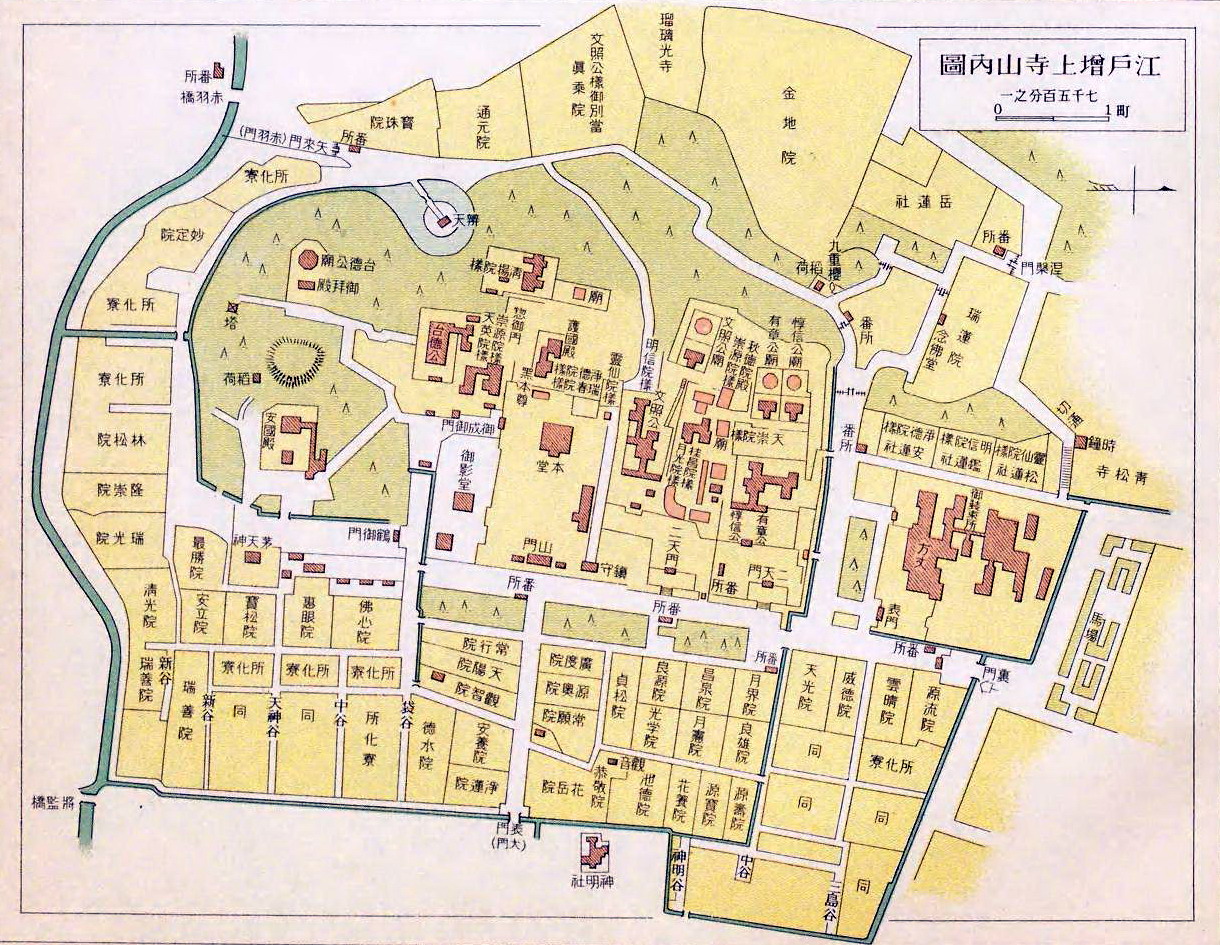
The map above is a later reconstruction rather than an Edo-period survey, but it shows the scale of the lost precinct. Much of the land now divided among Shiba Park, roads, hotels, schools and public institutions once belonged to the temple complex.
Why the Temple Was Built Here
Shiba stood between higher ground to the west and the old shoreline of Edo Bay to the east. The Tokaido, the main highway linking Edo with western Japan, also passed nearby.
This location gave Zojoji several advantages. The temple occupied prominent ground, travelers could reach it easily, and the road and waterfront brought a steady flow of goods, visitors and labor.
Over time, shops, inns and workshops gathered around the temple. In Japanese, this kind of commercial district was called a monzenmachi, or temple-front town. Monks and pilgrims needed food, candles, paper, clothing, lodging and transport, and local businesses supplied them.
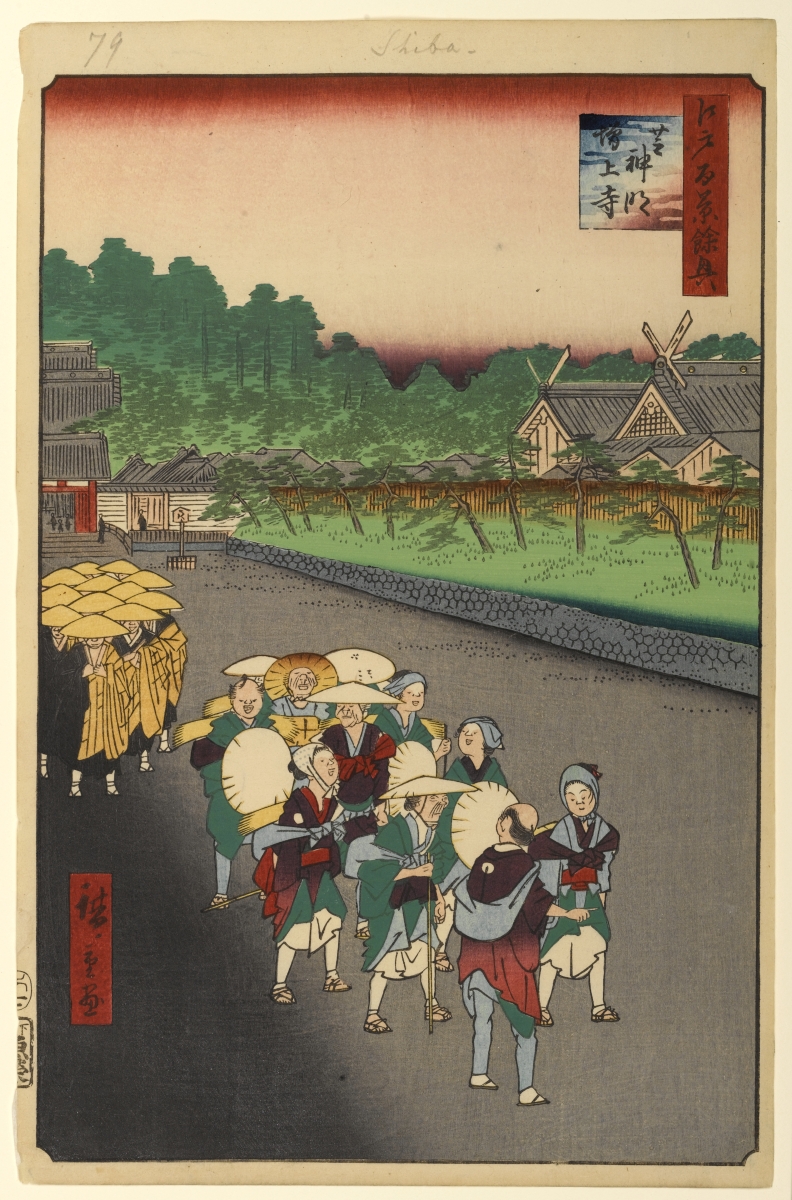
The Road from Daimon Became Shiba’s Main Axis
Walk west from Daimon Station today and the street still leads directly toward Zojoji’s great gate, Sangedatsumon. Tokyo Tower rises behind it.
This alignment is not accidental. In the Edo period, it was the formal approach into the temple city. It organized processions, ceremonies and daily movement through the precinct.
Most of the surrounding buildings are gone, but the direction of movement survived. That is why Shiba’s history can still be read in the street plan even when the original city has disappeared.
The Tokugawa Family Turned Shiba into a Place of Dynastic Memory
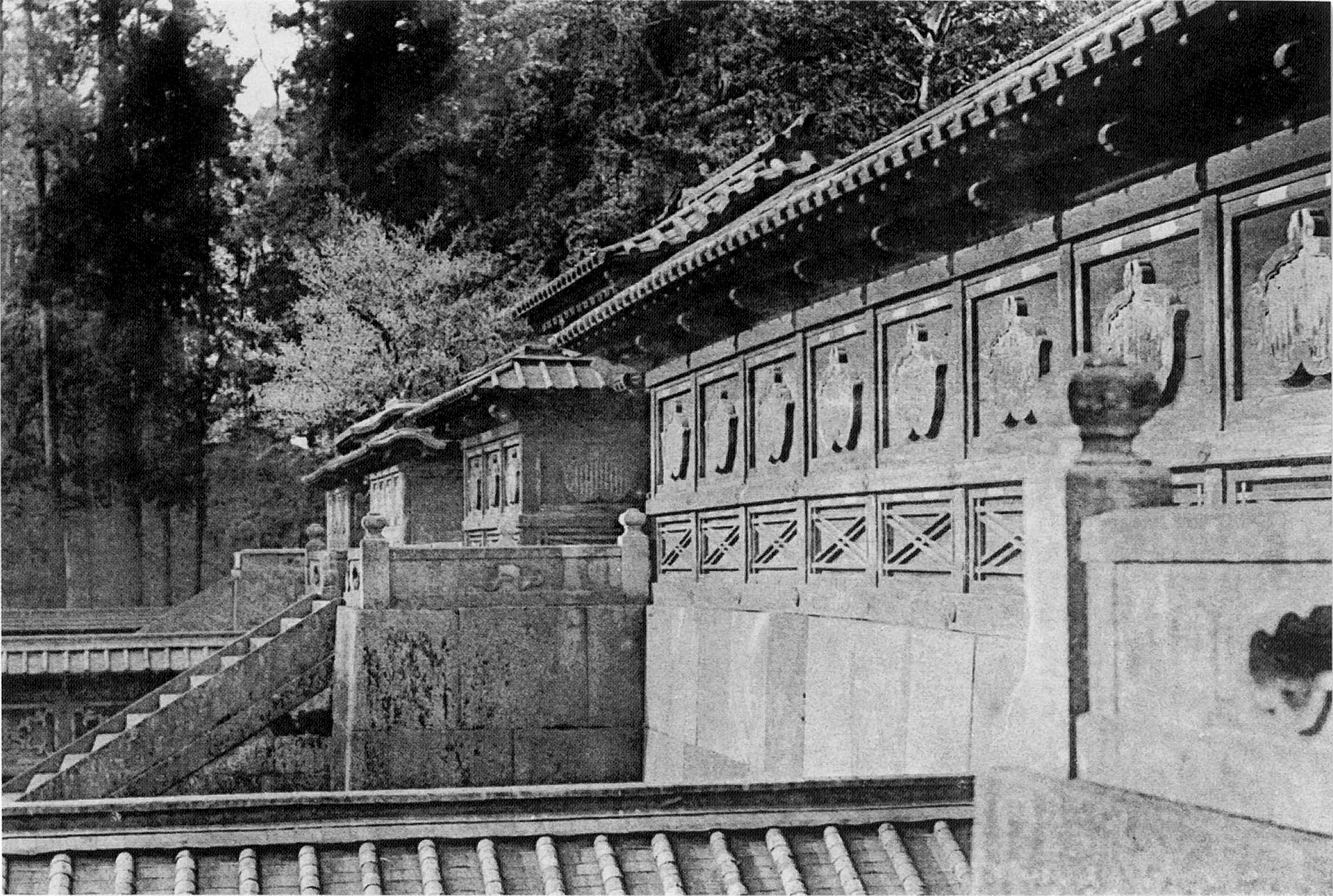
Six Tokugawa shoguns were buried at Zojoji: Hidetada, Ienobu, Ietsugu, Ieshige, Ieyoshi and Iemochi. Their mausoleums made Shiba one of the most important memorial landscapes of the shogunate.
These were not simple graves. Each complex included gates, worship halls, corridors and enclosed ceremonial spaces. They presented the Tokugawa family’s power through architecture as well as ritual.
The graves remain today in a reorganized cemetery, but most of the original mausoleum buildings were destroyed in 1945.
The Meiji Government Broke Up the Temple City
The Tokugawa shogunate ended in 1868. With it disappeared the political system that had financed and protected Zojoji.
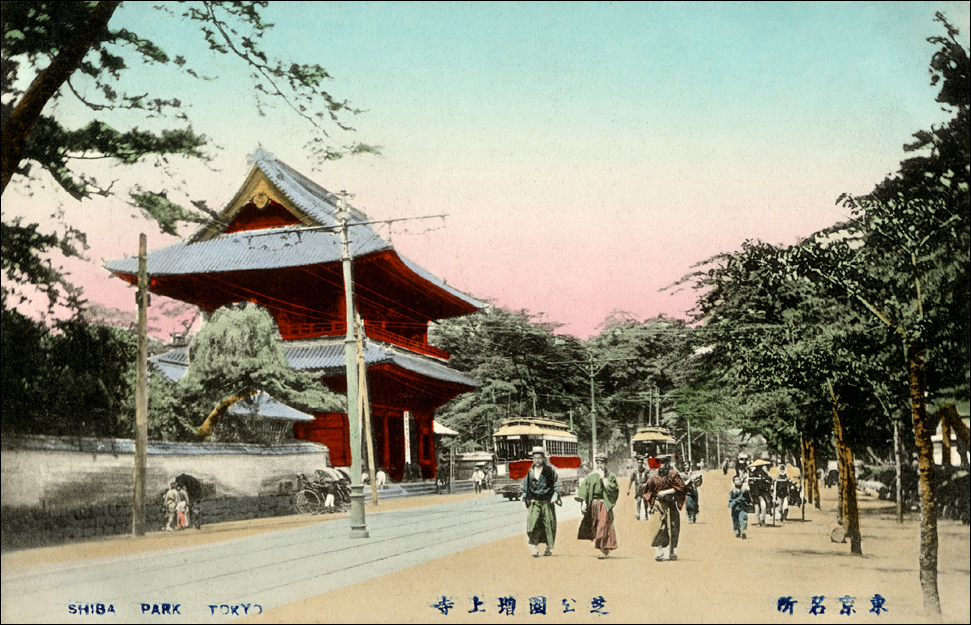
The new Meiji government reorganized religious institutions and former temple land. Zojoji lost territory, income and privilege. In 1873, part of the old precinct became Shiba Park, one of Japan’s first public parks.
This did not preserve the temple city intact. It divided it. Former religious land was reused for a park, roads, public institutions and private development.
Railways and Roads Shifted the Center of Movement
Modern transport changed Shiba again. Japan’s first railway opened between Shimbashi and Yokohama in 1872, passing east of the old temple precinct. Hamamatsucho Station opened in 1909, and later subway stations created new entrances around the district.
Road widening and new transit routes reduced the old temple approach’s practical importance. Yet the route from Daimon to Zojoji remained the district’s clearest symbolic entrance.
War Destroyed What the Meiji Reforms Had Left Behind
Air raids in 1945 caused the greatest physical destruction in Zojoji’s history. The main hall, most Tokugawa mausoleum buildings and large parts of the surrounding city burned.
After the war, Zojoji rebuilt its religious center and consolidated the shoguns’ graves. Some gates survived or were relocated, but the full ceremonial landscape could not be restored.
Tokyo Tower Reused the Old Visual Center
Tokyo Tower was completed in 1958 as a broadcasting tower and tourist landmark. It rose on higher ground near Zojoji, directly behind the temple when viewed from Daimon.
The result was not simply a contrast between old Japan and modern Japan. The new tower entered the same visual corridor that had once directed visitors into the temple city.
That is why the famous view matters. Modern Tokyo reused a historical line of sight instead of erasing it.
What to Look for in Shiba Today
1. The Street from Daimon to Zojoji
This is the surviving backbone of the old temple city. Follow it west and notice how the gate, temple and tower remain aligned.
2. Sangedatsumon
This large gate is more than an isolated monument. It once marked the entrance to a much larger religious precinct.
3. The Tokugawa Cemetery
The graves survive, but the present arrangement is postwar. The missing halls and corridors once made burial here part of a grand ceremonial landscape.
4. Shiba Park
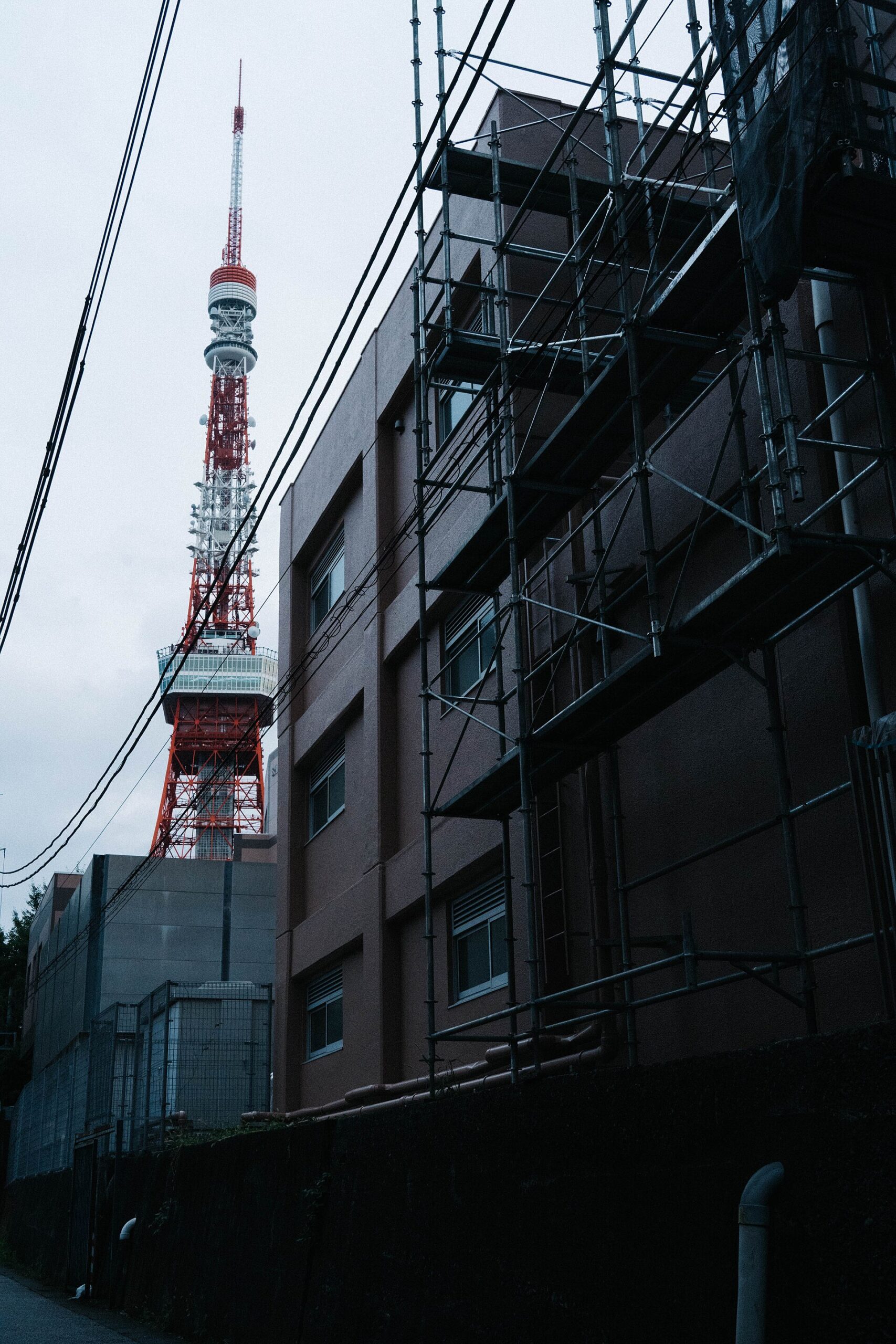
The park occupies parts of the former temple grounds, but roads and institutions divide it into separate sections. Its fragmented layout reflects the breakup of the old precinct.
5. Tokyo Tower behind Zojoji
The tower stands in a historical visual corridor. The view works because the modern landmark follows a direction established centuries earlier.
How Shiba Changed
| Period | What shaped Shiba | What remains today |
|---|---|---|
| Edo period | Zojoji, Tokugawa patronage and temple-town commerce | The main approach, gates, graves and place memory |
| Meiji period | Loss of temple land and creation of Shiba Park | Park fragments and reused religious land |
| Modern transport era | Railways, roads and new stations | Daimon remains the symbolic entrance |
| 1945 | Wartime destruction | Surviving graves, gates and archival evidence |
| Postwar period | Reconstruction and Tokyo Tower | The old axis inside a modern skyline |
Timeline
| Date | Event | Why it mattered |
|---|---|---|
| 1393 | Zojoji is founded | The institution that later shaped Shiba begins elsewhere in Edo |
| 1598 | Zojoji moves to Shiba | The area gains its dominant religious center |
| 1603 onward | Tokugawa patronage expands the temple | Shiba develops into a major temple city |
| 1868 | The Tokugawa shogunate ends | Zojoji loses its political foundation |
| 1873 | Shiba Park is created | Former temple land is reorganized for public use |
| 1909 | Hamamatsucho Station opens | Movement shifts toward the eastern side of Shiba |
| 1945 | Air raids destroy much of Zojoji | The old ceremonial landscape is broken apart |
| 1958 | Tokyo Tower is completed | A modern landmark enters the historic axis |
| 1974 | The present main hall is completed | Zojoji restores its religious center |
Frequently Asked Questions
What is Shiba?
Shiba is a district in Minato City, central Tokyo. It includes Zojoji, Shiba Park and the area around Tokyo Tower.
Who were the Tokugawa?
The Tokugawa were the family of shoguns who ruled Japan from 1603 to 1868.
Why is Zojoji important?
Zojoji was one of the Tokugawa family’s principal ancestral temples and the center of a large religious district.
Is Shiba Park part of the old temple grounds?
Parts of it are, but the park was created after the temple’s land was divided and reorganized in the Meiji period.
Why does Tokyo Tower appear behind Zojoji?
The tower stands on nearby higher ground, while the old approach from Daimon still directs the view toward the temple and tower.
The Lost City Is Still Visible
Shiba no longer preserves the complete temple city that once surrounded Zojoji. Government reform divided its land, modern transport redirected movement, war destroyed its grandest buildings, and postwar redevelopment introduced a new skyline.
Yet the old city did not disappear completely. The road from Daimon, the temple gate, the Tokugawa graves, the fragments of Shiba Park and the position of Tokyo Tower still reveal its structure.
Shiba’s most important historical monument is therefore not a single building. It is the surviving direction that still leads visitors through the remains of a vanished city.
Related Neighborhood Histories
Compare Shiba with the history of Takanawa, where the old Tokaido and Japan’s first railway created another southern gateway. For the railway and commercial corridor to the north, see the history of Shinbashi and Shiodome.
Sources and References
- Zojoji official website
- Tokyo Metropolitan Park Association: Shiba Park
- Minato City historical and cultural-property resources
- Tokyo Tower official website
- National Diet Library historical maps and images
Walk through Tokyo’s History with Us
TimeWalk Japan hosts history walks and cultural events for English-speaking visitors and residents. See upcoming activities on the TimeWalk Japan Meetup page.