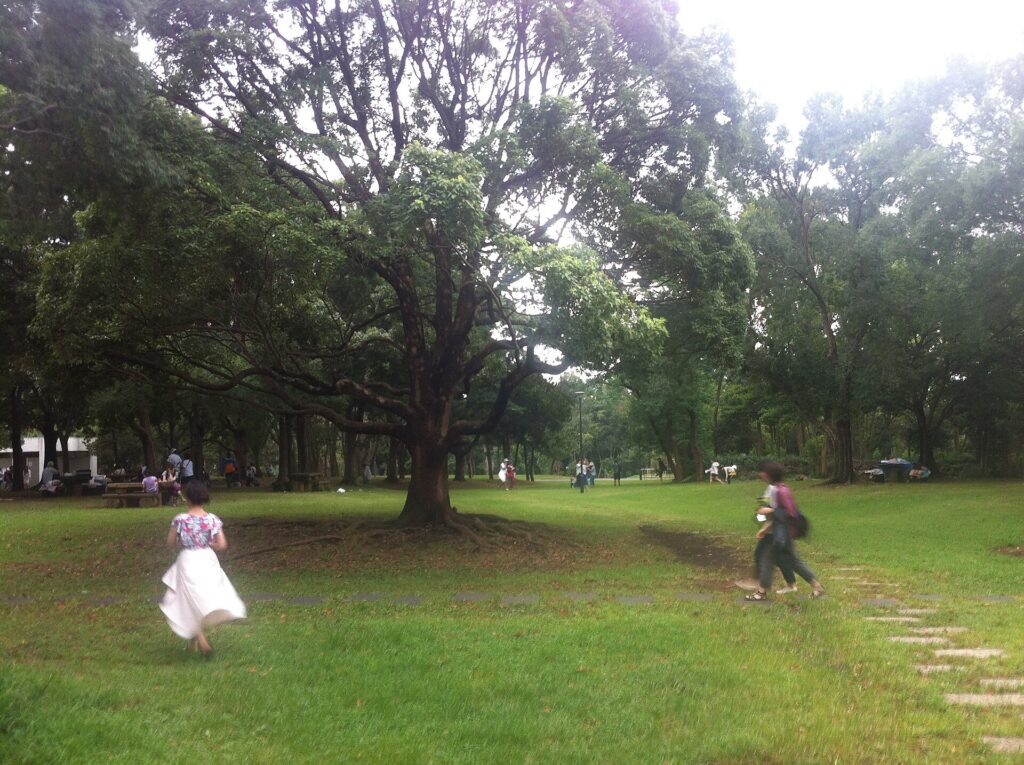
At first glance, Yumenoshima looks like one of Tokyo’s gentlest waterfront parks. Palm trees rise above broad lawns. Athletes use the sports grounds. Families visit the tropical greenhouse, while boats sit quietly in the marina beyond the canals.
Yet beneath this green landscape lies one of the most revealing layers of modern Tokyo’s history.
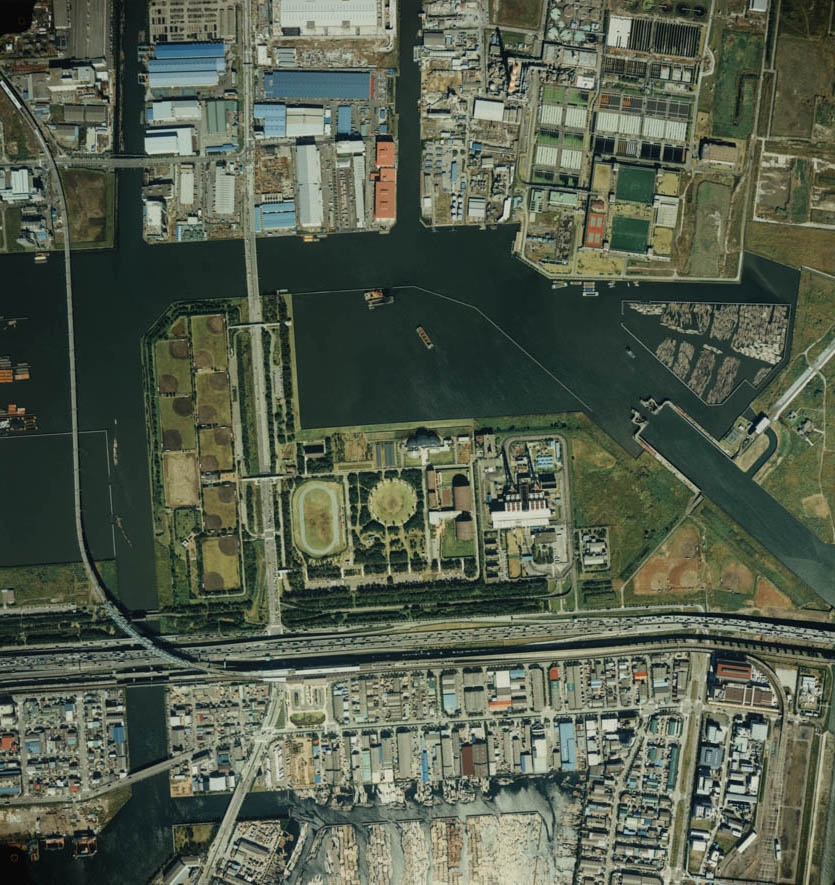
Yes, much of Yumenoshima was created on reclaimed land and later used as Tokyo Bay Reclamation Area No. 14, where about 10.34 million tons of municipal waste were deposited over roughly 45 hectares from fiscal 1957 through fiscal 1966. But Yumenoshima was not originally planned as a garbage dump. Before becoming a landfill, it was connected to an unrealized airport project and a short-lived postwar bathing beach. Today, the buried waste is covered by soil and vegetation, and the island contains parkland, sports facilities, a greenhouse, an incineration plant and other public uses.
It is also important not to confuse Yumenoshima with Tokyo’s present disposal sites. After Area No. 14 closed, dumping moved to Area No. 15, now called Wakasu, and later to the Inner and Outer Central Breakwater landfills and the New Sea Surface Disposal Site. Yumenoshima is a former landfill, not the place where Tokyo simply dumps all of its garbage today.
Before the Garbage: An Airport That Never Opened
The story began before the landfill era. In the late 1930s, Tokyo City started reclaiming part of Tokyo Bay for an airfield. The new land was identified administratively as Reclamation Area No. 14. Work was disrupted during the war, and the airport was never completed.
This first stage matters because it corrects a common misconception: Yumenoshima was not conceived from the beginning as an island made from household refuse. It was an artificial land project whose intended purpose changed as Tokyo’s needs changed.
Tokyo’s Short-Lived “Hawaii”
After the war, the reclaimed shoreline took on a very different identity. A bathing beach opened in 1947, and the hopeful name “Yumenoshima,” meaning “Dream Island,” became associated with the area. For residents of a city still recovering from wartime destruction, the beach represented leisure, openness and a glimpse of resort life close to home.
The beach did not last. Water quality deteriorated and the facility closed. The contrast between the name “Dream Island” and what came next is one of the sharpest turns in Tokyo’s urban history: a place marketed as recreation would soon become a symbol of the city’s waste crisis.
Why Tokyo Began Dumping Garbage Here in 1957
Tokyo’s population and consumption rose rapidly during the high-growth decades after the war. More households, more packaging and more mass-produced goods meant more waste. Incineration capacity did not keep pace. Large amounts of refuse, including food waste, were therefore carried without adequate burning or treatment to waterfront disposal areas.
From fiscal 1957, Yumenoshima became the city’s Area No. 14 disposal site. Trucks arrived in large numbers through Koto, the eastern ward that already hosted much of Tokyo’s heavy infrastructure. Waste was spread, compacted and covered, but the system was crude by present standards. Wet organic refuse attracted insects and rats. Liquid leaked from trucks and loads. Roads filled with collection vehicles serving neighborhoods far beyond Koto.
What Koto Residents Lived Through
The burden was not limited to the landfill itself. For Koto residents, Tokyo’s waste passed through daily life. Garbage trucks caused congestion and added traffic danger. Refuse and dirty liquid fell onto roads. Odors spread through nearby communities. Flies and rats moved beyond the disposal site.
The political issue was therefore larger than sanitation. Koto was receiving garbage generated across Tokyo’s other wards while many of those wards resisted the construction of local incineration plants. Residents increasingly asked why one area should bear the environmental and social cost of a citywide system.
This sense of unequal sacrifice later became central to the Tokyo Garbage War. Koto’s position was not merely “keep garbage away.” It was a demand that every ward accept a fairer share of responsibility for treating the waste its residents produced.
The 1965 Fly Disaster
The crisis reached a notorious peak in 1965. Huge numbers of flies bred in the exposed and decomposing waste. Official histories record that the infestation continued for months and disrupted schools and households in nearby areas. Yumenoshima was described at the time as a “fly heaven,” a historical label that should not be mistaken for the island’s condition today.
Authorities responded with extraordinary measures. Insecticide was sprayed from helicopters. Oil was used in an attempt to burn sections of the refuse in what became known as the “scorched-earth operation.” Poison bait was deployed against rats. These actions reduced an emergency, but they also revealed how far Tokyo had allowed disposal policy to fall behind urban growth.
The fly outbreak was not simply a freak natural event. It resulted from a treatment system that deposited large volumes of organic waste without sufficient incineration, sealing or control. In that sense, the insects exposed a failure of urban planning.
Yumenoshima Closed, but the Burden Moved Next Door
Disposal at Area No. 14 ended in fiscal 1966, with official chronologies placing the end in March 1967. Yet this did not end Koto’s waste burden. Tokyo shifted dumping to Area No. 15, then commonly called “New Yumenoshima” and now known as Wakasu.
Later disposal moved farther south to the Inner Central Breakwater, the Outer Central Breakwater and the New Sea Surface Disposal Site. These are separate reclaimed areas with different construction periods and functions. Calling all of them “Yumenoshima” erases both geography and history.
Why the Tokyo “Garbage War” Began
On September 28, 1971, Tokyo Governor Ryokichi Minobe publicly declared a “garbage war.” The word “war” was metaphorical, not military. It described a citywide political conflict over who would host waste facilities, how decisions would be made and how long Koto would be expected to accept the consequences of other wards’ resistance.
The conflict involved the Tokyo Metropolitan Government, the 23 special wards, local assemblies, residents’ groups and the rapidly expanding waste stream of the metropolis itself. Koto demanded a more equitable system. Tokyo promoted the principle that wards should process their own combustible waste locally, mainly through new incineration plants.
That policy sounded straightforward, but building plants in densely populated neighborhoods was politically difficult. Residents feared air pollution, odors, traffic and the loss of local control. The most famous confrontation developed in Takaido, Suginami.
Suginami’s Side: A Plant Announced by Flyer
According to Suginami’s official history, local residents learned of the proposed Takaido incineration plant on November 14, 1966, through a newspaper insert. That method of announcement became a symbol of top-down administration.
Residents objected not only to the existence of a waste facility but also to the decision-making process. They raised concerns about the lack of prior consultation, proximity to schools and kindergartens, pollution risks, traffic and surveying work. Opposition hardened because the plan appeared to have been settled before meaningful public discussion began.
Reducing this movement to selfish “not in my backyard” politics misses an important part of the story. The protests helped force greater attention to environmental standards, disclosure and participation. At the same time, the delay in creating local treatment capacity prolonged the concentration of waste traffic and disposal burdens in Koto. Both facts must be held together.
When Koto Blocked Suginami’s Garbage Trucks
Koto escalated its protest by stopping trucks carrying Suginami’s garbage from entering disposal facilities. The first blockade took place on December 22, 1972. A second followed on May 22, 1973. The action made a distant policy dispute immediate: if a ward would not accept a treatment plant, where should its garbage go?
On May 23, 1973, the metropolitan government again formally selected Takaido as the construction site. Negotiations continued, and a settlement was reached on November 25, 1974. Construction of the main Suginami plant began in 1979. The first plant was completed in 1982 and entered full operation in January 1983.
The settlement did not prove that one side had been entirely right. Koto’s blockade exposed the injustice of transferring metropolitan waste costs to one area. Suginami’s movement exposed the danger of imposing major infrastructure without credible consultation. The eventual plant emerged from conflict, technical redesign and a more participatory process.
What Changed After the Garbage War
Tokyo gradually moved away from directly burying large quantities of untreated combustible waste. More incineration plants were built across the 23 wards. Burning reduced waste volume, and the remaining ash and non-combustible residues were sent to final disposal sites in Tokyo Bay.
Modern plants also recover energy. Heat can be used for electricity generation and supplied to nearby public facilities. Environmental monitoring, public reporting and community agreements became more important, partly because the conflicts of the Garbage War showed that technical projects could not be separated from public trust.
Today, waste treatment for the 23 wards is coordinated through the Clean Authority of TOKYO, while ward governments manage collection and recycling functions. Combustible waste is incinerated, but incineration does not make the waste problem disappear. Ash still requires disposal space, recycling has limits, combustion produces carbon emissions, and Tokyo Bay’s final disposal capacity is finite.
A Park Created Through Political Settlement
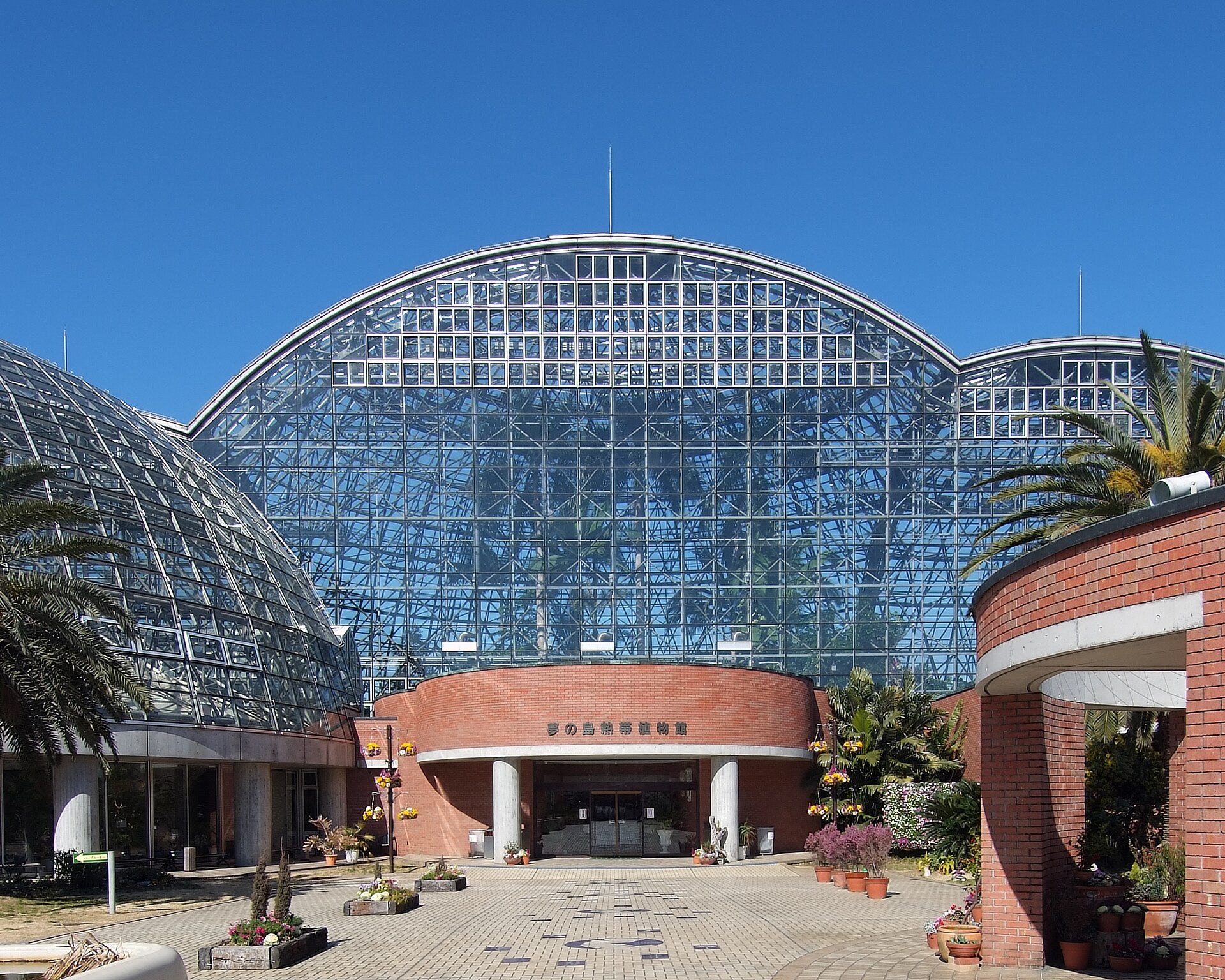
The former landfill was gradually transformed. The Koto Incineration Plant was completed in 1974. “Yumenoshima” became the official place name in 1975. Yumenoshima Park opened in 1978, and the Yumenoshima Tropical Greenhouse followed in 1988.
Sports grounds, a swimming facility, gymnasium, parkland and other public amenities were developed in connection with Koto’s acceptance of waste infrastructure. Such projects were often described as return facilities: benefits provided to a community hosting an undesirable metropolitan facility.
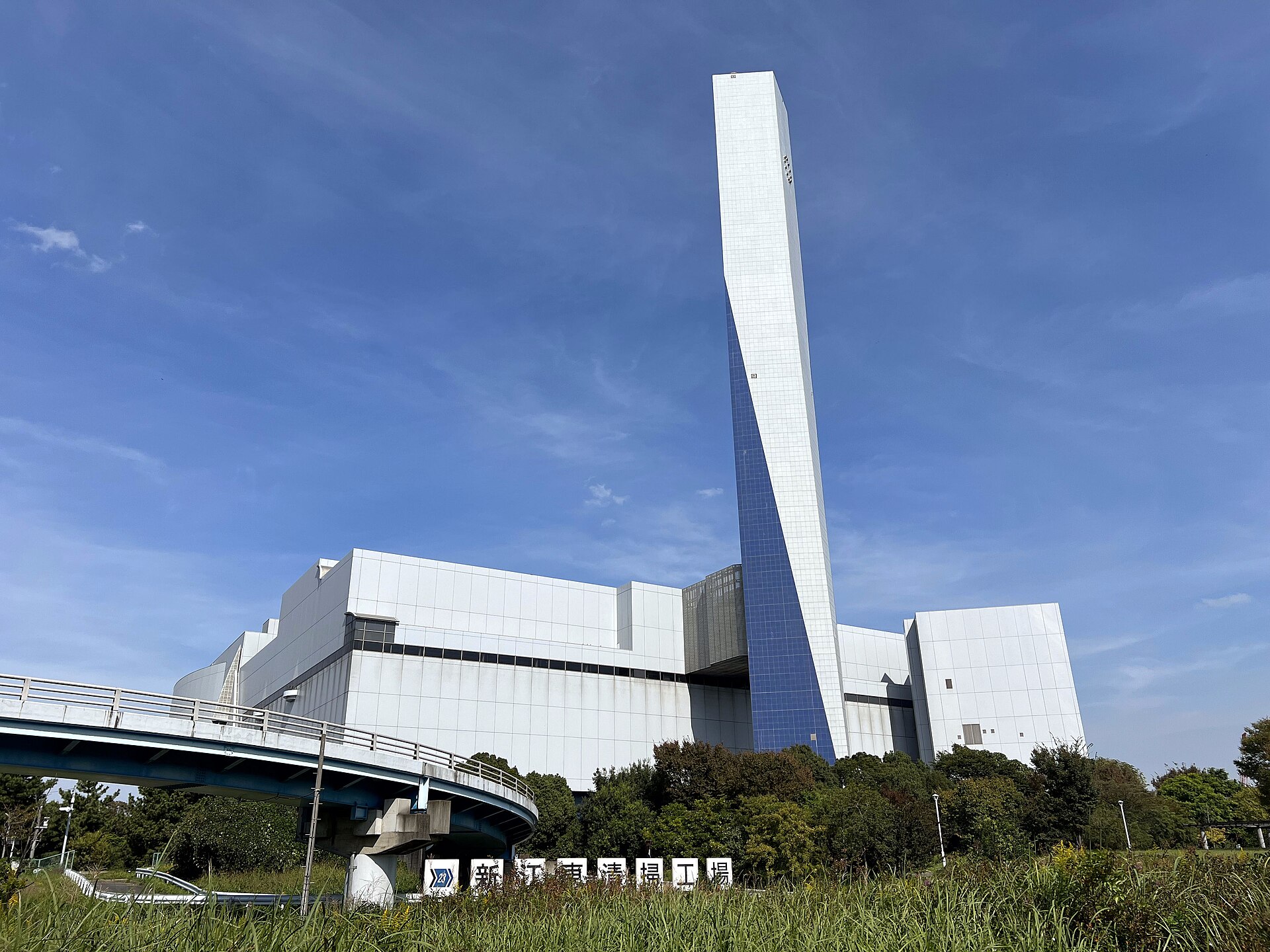
The present Shin-Koto Incineration Plant is not the same building as the 1974 Koto plant. The current facility belongs to a later generation of waste infrastructure. Its heat is used by nearby facilities, including the greenhouse, linking present-day recreation directly to the island’s continuing role in Tokyo’s sanitation system.
Yumenoshima Today
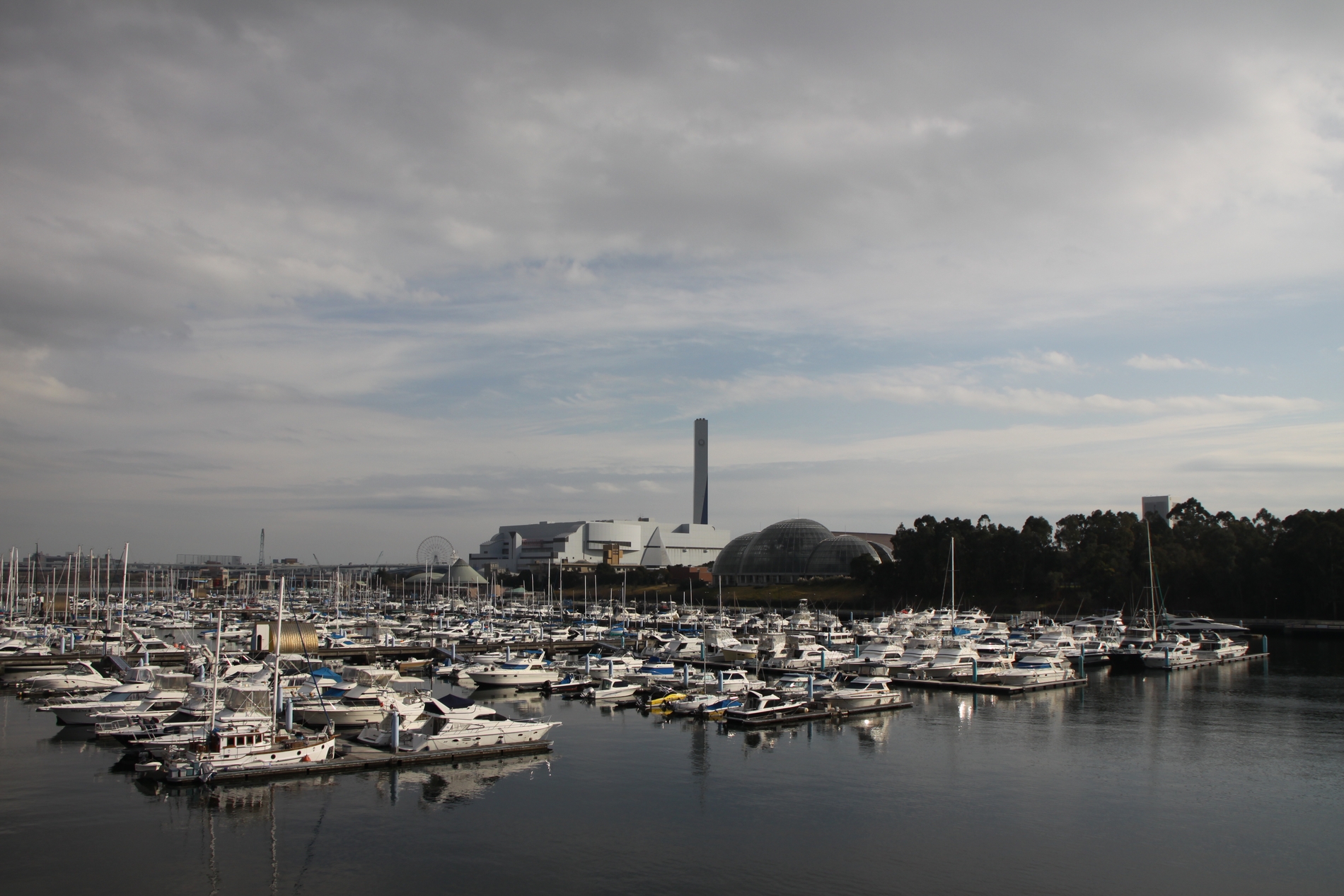
Yumenoshima is now a layered urban landscape rather than a visible dump. Yumenoshima Park contains lawns, wooded areas and sports facilities. The tropical greenhouse interprets plant life in a set of glass domes. The Daigo Fukuryu Maru Exhibition Hall preserves a fishing vessel affected by the 1954 Bikini Atoll hydrogen bomb test, adding another major story of postwar history to the island.
The Shin-Koto Incineration Plant, the Tokyo Yumenoshima Marina, canals, bridges and nearby reclaimed districts show that the island remains part of Tokyo’s working waterfront. Its peaceful appearance does not erase the past. Instead, the park sits directly on top of the material consequences of metropolitan growth.
What to Notice When You Visit
From Shin-Kiba Station, the approach to Yumenoshima is short, but it is worth paying attention to the geography. You cross into a district surrounded by canals rather than a natural island framed by open sea. Bridges, embankments and broad roads reveal the engineered character of the area.
- Notice the height and broad, level shape of the parkland, formed through reclamation, waste deposition, cover soil and later landscaping.
- Look for the incineration plant stack and consider how closely public recreation and waste infrastructure coexist.
- At the greenhouse, remember that waste heat has been used as part of the facility’s energy system.
- From the waterfront and marina, compare Yumenoshima with Shin-Kiba and the more distant reclaimed areas toward Wakasu and the Central Breakwater.
- Do not enter restricted plant grounds or service areas. The history can be understood from public facilities and public paths.
Practical Visit Information
Yumenoshima Park: The park is about a 7-minute walk from Shin-Kiba Station, served by the JR Keiyo Line, Tokyo Metro Yurakucho Line and Rinkai Line. The general park grounds are open and free, although individual facilities have their own hours, closure days and fees.
Yumenoshima Tropical Greenhouse: Check the official greenhouse website before visiting for current opening hours, closure dates and admission fees. Seasonal schedules can change.
Daigo Fukuryu Maru Exhibition Hall: The exhibition hall is located inside Yumenoshima Park. Confirm current opening information on the official website.
Tokyo Garbage War History and Future Museum: The museum is inside the Suginami Incineration Plant area in Takaido. It presents the Suginami side of the conflict, the negotiations and the development of the plant. Yumenoshima and Takaido are far apart, so treat them as two separate visits rather than one walking route.
Shin-Koto Incineration Plant: Regular plant tours are suspended during life-extension construction from September 2024 through the end of March 2029 according to the current official notice. Do not plan a tour without checking the official plant page.
Frequently Asked Questions
Is Yumenoshima really made of garbage?
Partly. It is reclaimed land, and about 45 hectares of Area No. 14 received approximately 10.34 million tons of municipal waste from fiscal 1957 through fiscal 1966. The waste is now covered beneath soil, vegetation and public facilities.
Was Yumenoshima originally planned as a landfill?
No. The area was first reclaimed for an airport project. It later hosted a postwar bathing beach before becoming a disposal site.
Is garbage still dumped at Yumenoshima today?
No. Disposal at Yumenoshima ended in March 1967. Tokyo’s later and current final disposal areas are farther south in Tokyo Bay.
What caused the 1965 fly outbreak?
Large volumes of untreated organic waste created ideal breeding conditions. Inadequate incineration and landfill control allowed flies to multiply on a massive scale.
What was the Tokyo Garbage War?
It was a political and social conflict over the unequal concentration of waste burdens in Koto, opposition to new incineration plants in other wards, and the way Tokyo made infrastructure decisions. The term “war” was metaphorical.
Why did Koto block Suginami’s garbage?
Koto argued that it was unfair to keep accepting waste from a ward where local treatment facilities had been delayed. The blockades were meant to force Tokyo and Suginami to confront that imbalance.
Was Suginami simply refusing responsibility?
No. Some opposition concerned the facility itself, but residents also challenged an opaque planning process and raised environmental and safety concerns. Their resistance nevertheless had the effect of prolonging Koto’s burden.
What is the difference between Yumenoshima, Wakasu and the Central Breakwater?
They are different reclaimed areas built and used at different times. Yumenoshima was Area No. 14. Wakasu was Area No. 15. The Central Breakwater landfills lie farther south and belong to a later stage of Tokyo’s disposal history.
Can visitors safely walk around Yumenoshima Park?
Yes. It is a public metropolitan park with sports, cultural and recreational facilities. Visitors should follow ordinary park rules and avoid restricted infrastructure areas.
How does Tokyo dispose of garbage today?
Combustible waste from the 23 wards is mainly incinerated. Energy is recovered at many plants, while ash and other residues are transported to final disposal sites in Tokyo Bay. Recycling and waste reduction remain essential because disposal space is limited.
Conclusion: The Garbage Did Not Disappear
Yumenoshima is often presented as a simple transformation story: a garbage island became a beautiful park. That is true only in the most superficial sense.
The deeper history is about how Tokyo’s prosperity and mass consumption placed disproportionate costs on one district. It is about how local resistance in Suginami delayed infrastructure while also forcing government to improve consultation and environmental safeguards. It is about the difference between making waste invisible and making it cease to exist.
The lawns and palms of Yumenoshima are real, but so is the buried material beneath them. Tokyo still burns waste, transports residue and depends on finite land in the bay. The island’s quietness should not be read as the erasure of conflict. It is a landscape created by that conflict.
The next time you cross a Tokyo bridge, enter a waterfront park or see an incineration plant stack, Yumenoshima offers a useful question: what hidden systems made this city possible, and which communities paid the greatest price for them?
Sources and Further Reading
- Yumenoshima Park: History of Yumenoshima
- Tokyo Metropolitan Government: History and Limits of Tokyo Bay Disposal Sites
- Tokyo Metropolitan Government: Changes in Waste Landfilling
- Suginami City: The Tokyo Garbage War
- Clean Authority of TOKYO: Yumenoshima, Once Called a “Fly Heaven”
- Clean Authority of TOKYO: The Urban Conflict Caused by Garbage
- Clean Authority of TOKYO: Shin-Koto Incineration Plant
Image Credits
Featured image: Photo by nesnad, via Wikimedia Commons, CC BY 3.0. Other image credits are shown in the captions beneath each image.