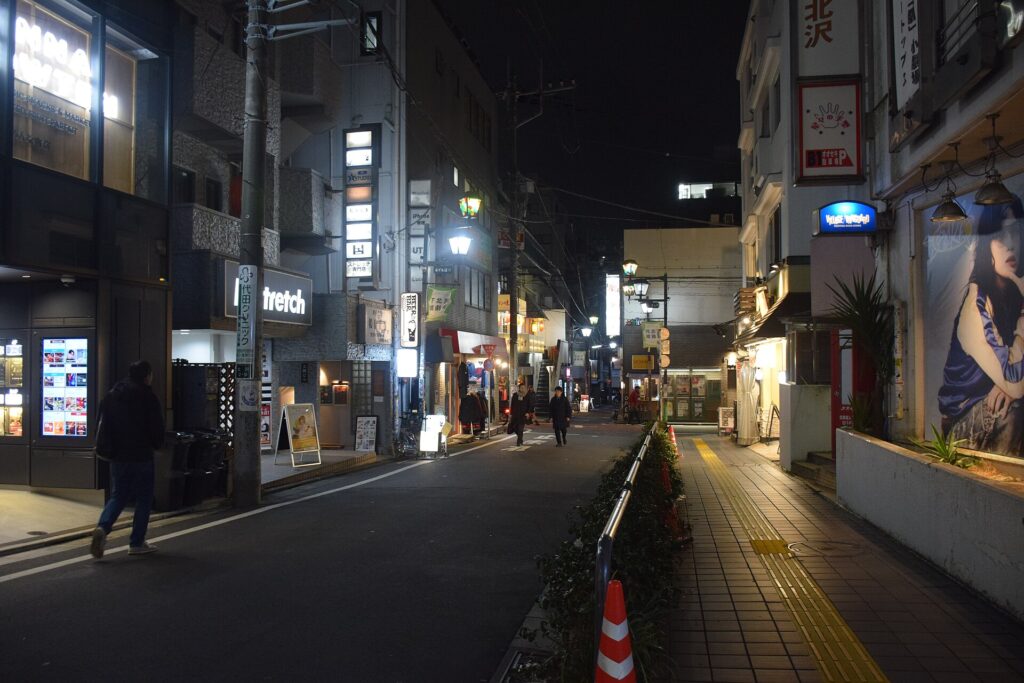
One of Tokyo’s coolest neighborhoods was created by a railway barrier—and reinvented when that railway vanished underground.
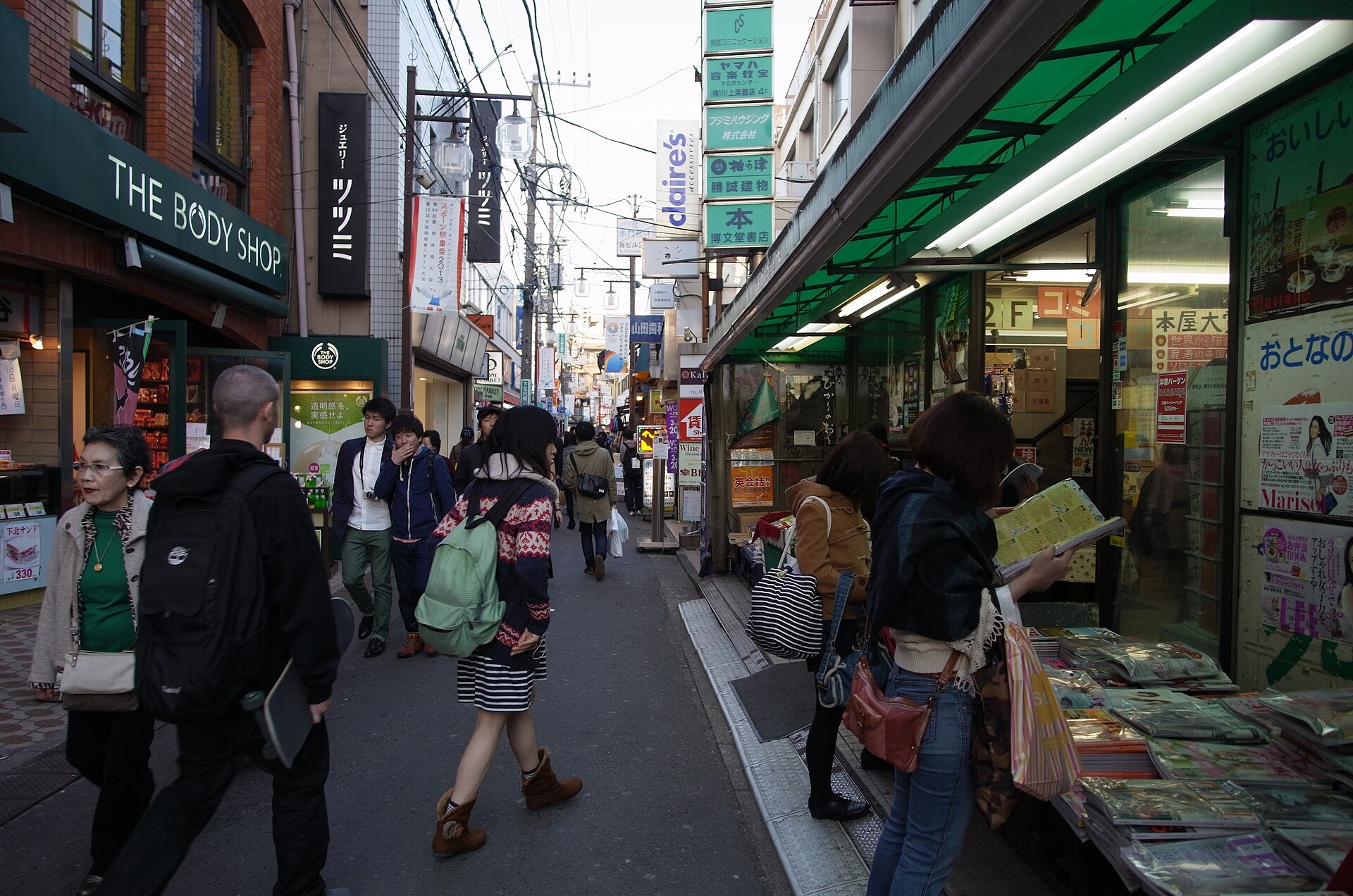
Today, Shimokitazawa is famous for basement music clubs, tiny theaters, vintage shops, cafés and narrow streets packed with independent businesses. To many overseas visitors, it can seem like a naturally bohemian quarter that somehow escaped Tokyo’s large-scale development. In reality, its character was built by transport infrastructure, postwar scarcity and decades of incremental urban growth.
Modern Shimokitazawa exists because two private railways created a major transfer point without producing a single planned commercial center. Shops spread through small streets on several sides of the station. A postwar market reinforced small-scale retail. Theaters and live-music venues later occupied basements, upper floors and compact buildings. Then, in 2013, the Odakyu Line moved underground, removing the physical barrier that had shaped the district for generations and creating an entirely new corridor above the former tracks.
Quick Facts
- Japanese name: 下北沢
- Common nickname: Shimokita
- Municipality: Setagaya City, Tokyo
- Main station: Shimokitazawa Station
- Railways: Odakyu Line and Keio Inokashira Line
- Known for: small theaters, live houses, vintage clothing, cafés and independent shops
- Major turning point: the Odakyu Line moved underground in 2013
Why Shimokitazawa Became What It Is Today
Shimokitazawa’s identity came from the interaction of transport, property and culture. The Odakyu and Inokashira lines brought passengers from both Shinjuku and Shibuya. Because shops developed incrementally around several station approaches, no single department store or planned plaza dominated the area. Small plots and mixed-use buildings provided spaces for restaurants, secondhand clothing stores, rehearsal studios, theaters and basement music venues.
The railway was both an advantage and an obstacle. It delivered customers while surface tracks and level crossings divided the neighborhood. That tension shaped commercial routes for most of the twentieth century. When the Odakyu tracks disappeared underground, the district gained new pedestrian connections and development land—but also faced the risk that coordinated redevelopment might erase the small-scale environment that had made Shimokitazawa distinctive.
Before the Station: Rural Kitazawa
Before suburban railways arrived, the wider Kitazawa area was part of the countryside west of central Edo. Fields, homes, temples, shrines and village roads occupied the Musashino uplands. The land was not empty, but its settlement was much less dense than the modern city.
Religious sites such as Kitazawa Hachiman Shrine and Moriganji preserve connections with this older landscape. Their present buildings have been repaired or rebuilt over time, yet their locations show that local community life existed long before “Shimokita” became a cultural brand.
The Earthquake and Tokyo’s Westward Growth
The Great Kanto Earthquake of 1923 devastated central and eastern Tokyo. Residential movement toward less damaged western districts accelerated afterward, but the disaster was only one part of a larger suburbanization process. Population growth, land subdivision and private railway expansion were already transforming Tokyo’s rural fringe.
Kitazawa became attractive because it offered land for housing within reach of the expanding city. The decisive change came when two railway companies connected the area directly to major urban terminals.
Two Railways Create a New Center
The Odawara Express Railway, predecessor of today’s Odakyu Electric Railway, opened its Shinjuku–Odawara line in 1927. Shimokitazawa Station connected the area to Shinjuku and to developing suburbs farther west. In 1933, the Teito Electric Railway opened the Inokashira Line between Shibuya and Inokashira Park; it reached Kichijoji the following year.
At Shimokitazawa, the two lines crossed. The district became a transfer point between the Shinjuku and Shibuya corridors, while nearby stations such as Higashi-kitazawa and Ikenoue remained more local in function. Housing expanded, and shops gathered along the paths passengers used between trains, homes and surrounding neighborhoods.
War, Shortages and the Station-front Market
Air raids caused serious but uneven damage across Setagaya. After the war, shortages encouraged informal trading near stations throughout Tokyo. At Shimokitazawa, a north-side black market gradually developed into a station-front food market selling everyday necessities.
The market did not create every shopping street in the district, but it strengthened a commercial pattern based on small units, close pedestrian contact and rapid turnover. Around it, merchant associations and neighborhood shopping streets expanded as the population grew.
Most remaining market structures were removed by 2017. The physical market largely disappeared, yet its small-scale logic survived in other parts of Shimokitazawa.
Why Small Businesses Could Thrive
Shimokitazawa is often explained as a district of cheap rent, but price alone is not enough. Its deeper advantage was the availability of many different kinds of small premises: narrow storefronts, second floors, basements, converted houses and buildings on side streets.
These spaces supported businesses that did not need a department-store floor or a major-road address. A visitor could move from a record shop to a café, theater, bar or clothing store within a few minutes. Audiences, performers, musicians and shoppers overlapped, allowing separate cultural activities to reinforce one another.
The same urban form also created problems. Narrow streets complicated emergency access and deliveries. Level crossings caused congestion. Older buildings required maintenance, and small tenants remained vulnerable to redevelopment and rising rents.
How Shimokitazawa Became a Theater District
Shimokitazawa’s theater identity became especially visible in the early 1980s. The Suzunari opened in 1981, followed by Honda Theater in 1982. Additional venues in the Honda Theater Group created rooms of different sizes for different productions.
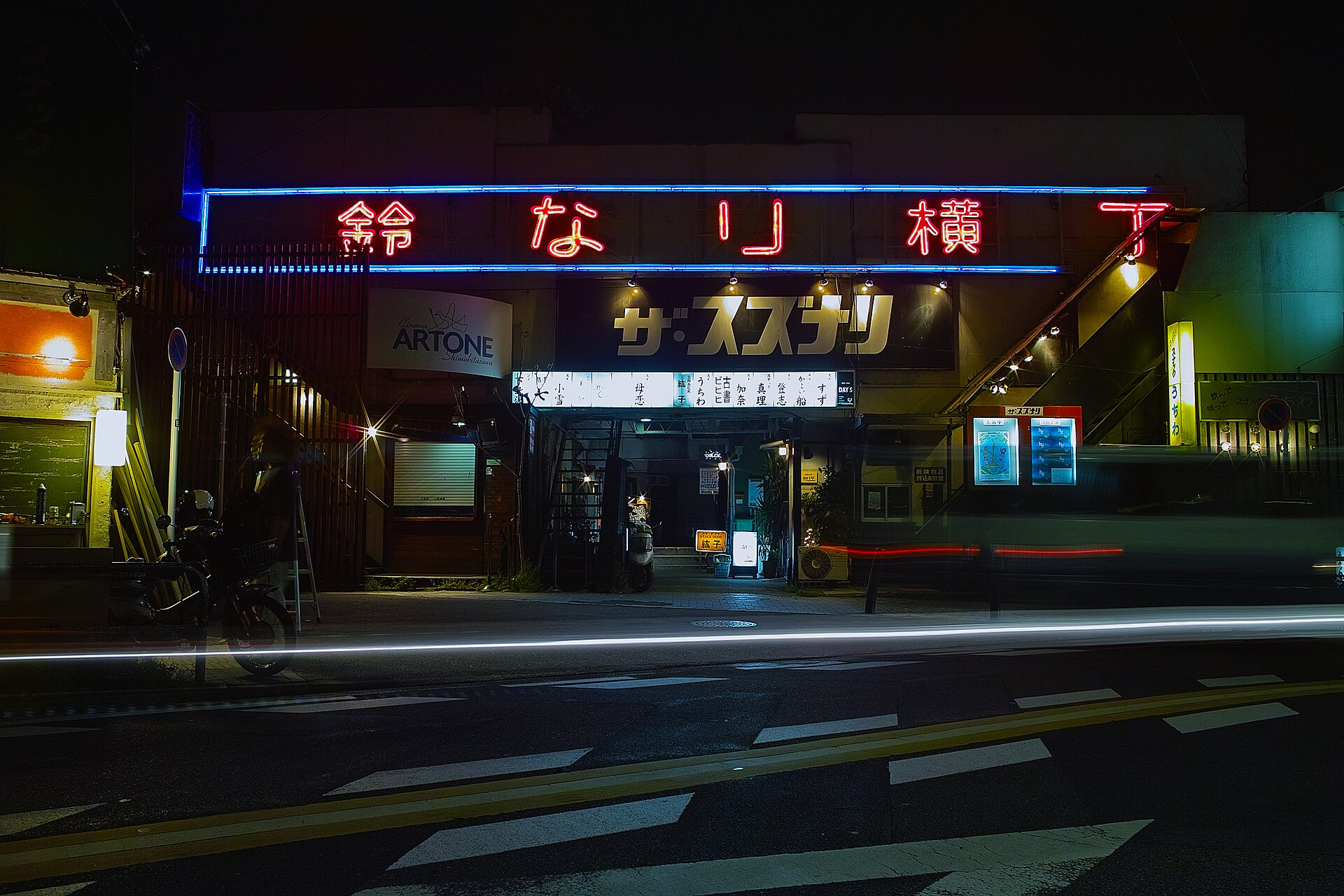
The theaters succeeded because the district already had strong rail access, evening businesses and compact streets. Audiences could eat or drink before and after performances, while posters, queues and performers made theater visible in everyday public space. The venues did not replace the shopping district; they became part of its economic ecosystem.
Live Houses and Independent Music
Music developed through a related but separate network. Shimokitazawa LOFT opened in 1975, before the major theater cluster. SHELTER followed in 1991 and became one of the district’s best-known basement live houses.
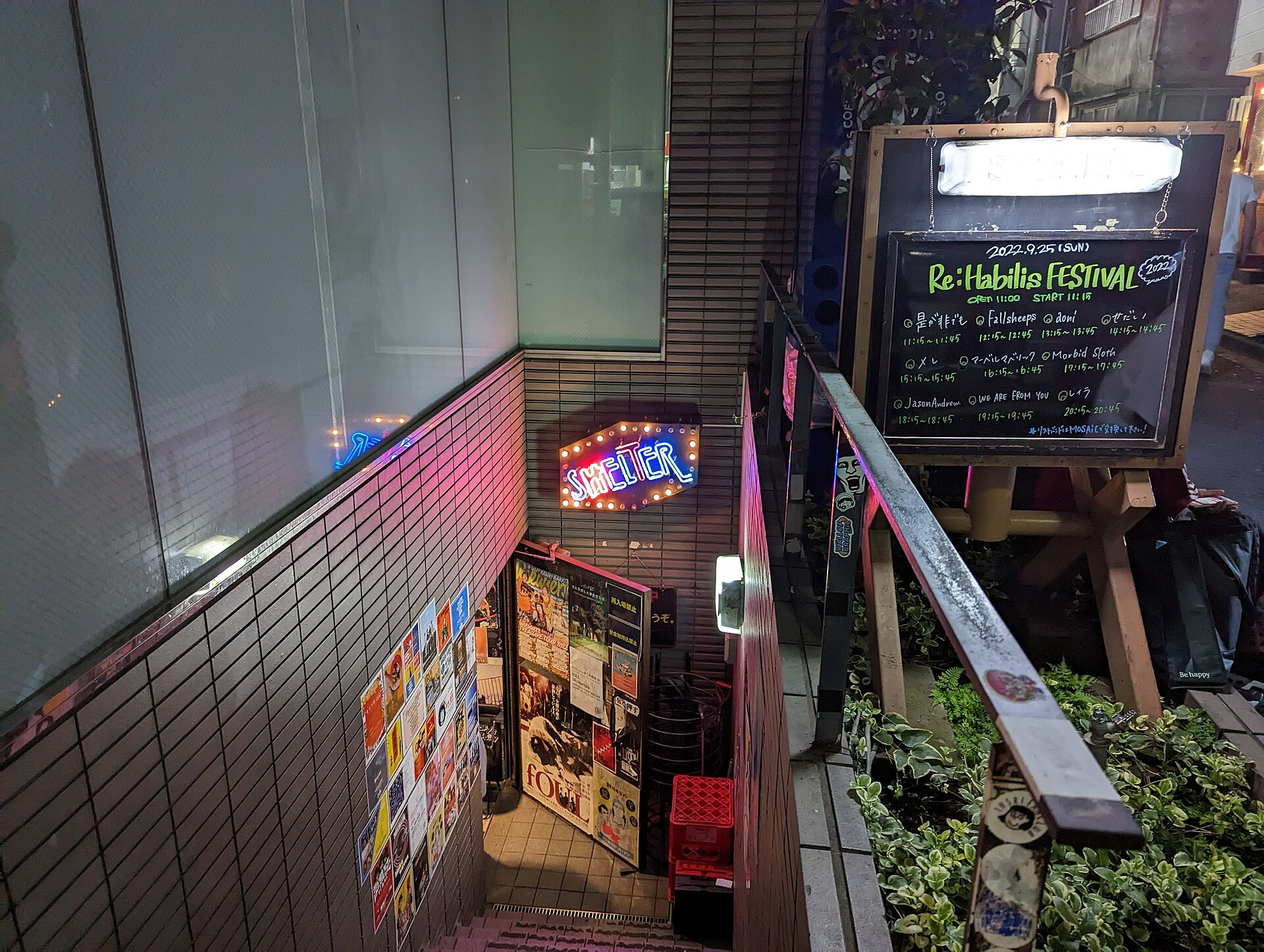
No single venue created Shimokitazawa’s music culture. Its strength came from concentration. Bands could rehearse nearby, play venues of different sizes, distribute music through local shops and attract audiences already accustomed to visiting the district for independent culture. Promoters, photographers, designers and sound engineers also circulated through this network.
Vintage Clothing and the Global Image of “Shimokita”
Secondhand and youth-oriented clothing shops appeared from the 1980s and expanded strongly in the 1990s and 2000s. Small storefronts suited specialized stock, while the district’s music and theater audiences were receptive to styles outside mainstream department-store fashion.
Cafés, record shops, bars and bookstores helped turn “Shimokita” into a media image of informal, independent Tokyo. Films, television, magazines and later social media carried that image overseas. The reputation was real but incomplete: Shimokitazawa remained a residential neighborhood with clinics, supermarkets, schools, temples and ordinary services.
The Railway Barrier Disappears
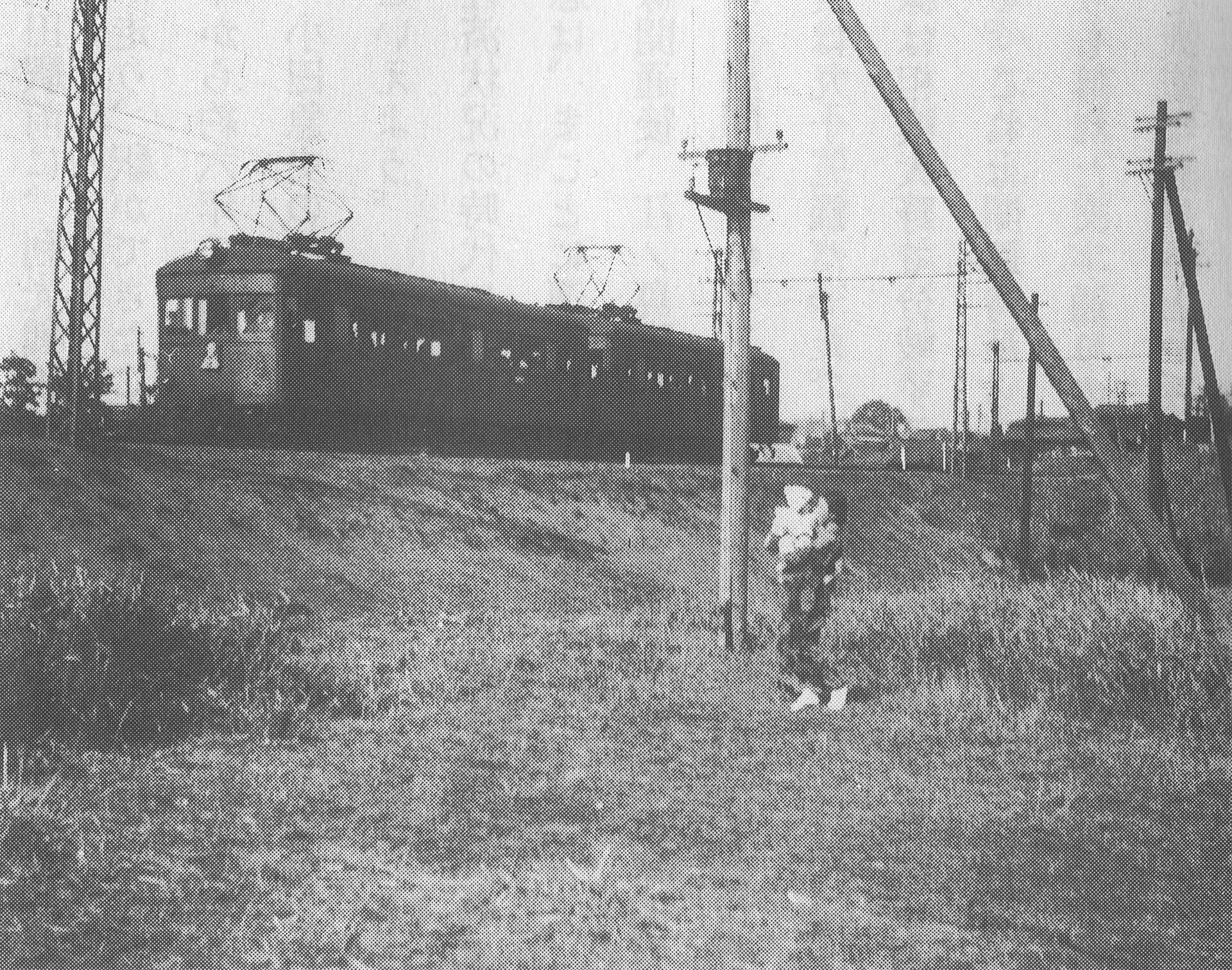
For most of the twentieth century, Odakyu trains ran through Shimokitazawa at ground level. Tracks and level crossings divided the station area and shaped pedestrian routes. The railway created the district’s accessibility while physically separating its streets.
On March 23, 2013, the Odakyu Line between Higashi-kitazawa and Setagaya-Daita moved underground. Level crossings disappeared, old routes reconnected and land above the former tracks became available for new uses.
Shimokita Senrogai: A New District on the Old Tracks
The former railway corridor became Shimokita Senrogai, an approximately 1.7-kilometer sequence of housing, shops, workspaces, lodging, plazas and landscaped passages. All thirteen areas were open by May 2022.
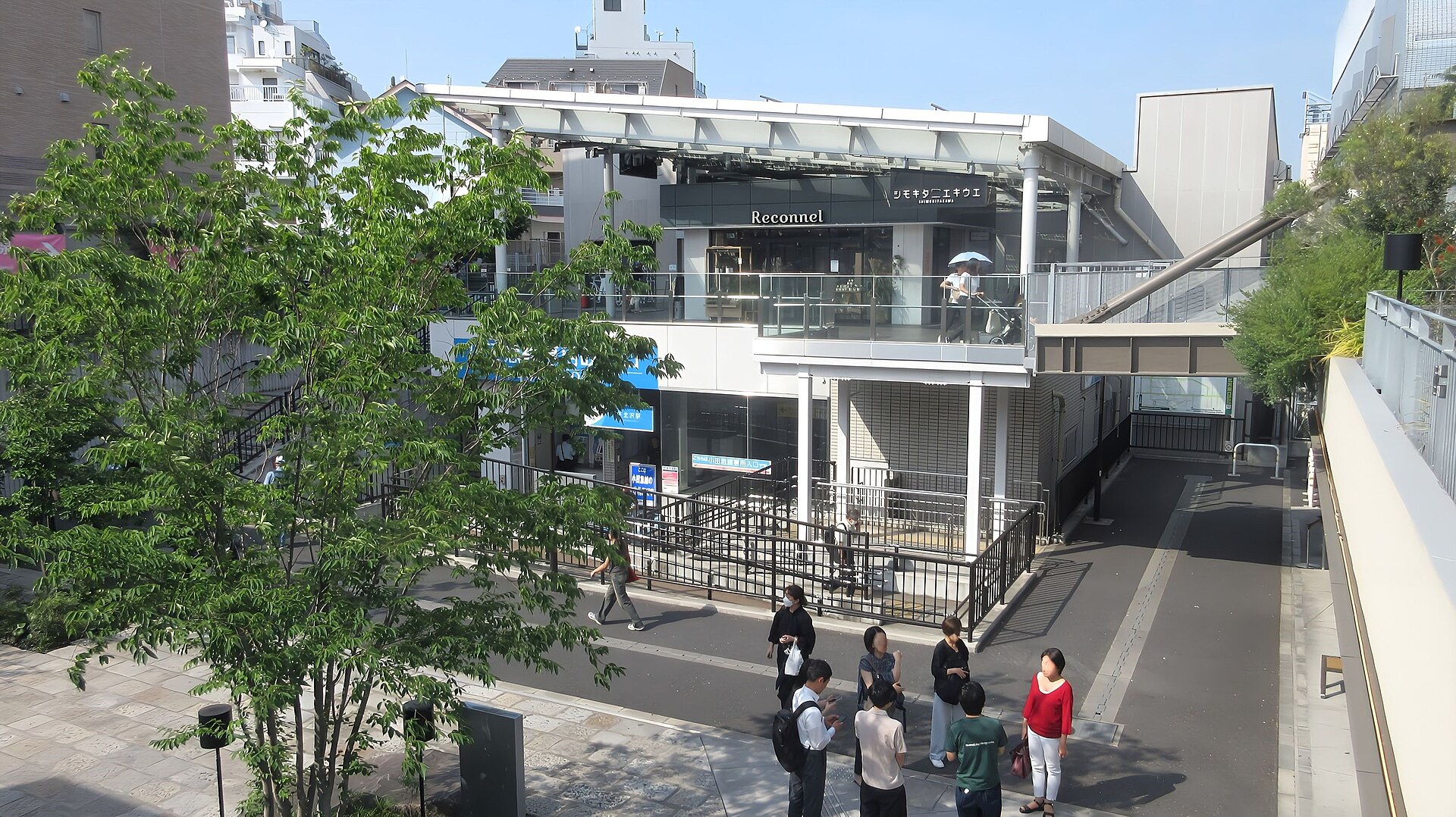
The new corridor improved pedestrian movement and added places to sit, meet and hold events. It also introduced coordinated development beside older streets. Shimokitazawa now contains two urban systems at once: the fine-grained district that accumulated around the surface railway and the planned landscape created after the tracks disappeared.
What Remains—and What Is at Risk
Shimokitazawa’s identity is not protected simply because some streets remain narrow. It depends on rents, ownership, building size, local customers and the survival of networks among venues and businesses. A district can keep its visual style while losing the economic conditions that supported independent culture.
Yet important continuities remain. Several shopping streets still converge on the station. Small theaters and live houses continue to attract evening audiences. Independent shops remain common away from the largest new developments. Religious sites and residential streets still reveal the neighborhood beyond its global youth-culture image.
What to Look For Today
- The Odakyu–Inokashira interchange: the transport crossing that made Shimokitazawa a major local center.
- Radiating shopping streets: evidence of incremental growth around several station approaches.
- The Suzunari and Honda Theater: anchors of the district’s small-theater culture.
- SHELTER, Shimokitazawa LOFT and other live houses: parts of a music network formed over several decades.
- The former market area: a reminder of postwar station-front commerce.
- Shimokita Senrogai: the linear redevelopment built on the former Odakyu tracks.
- Kitazawa Hachiman Shrine: a link to the older settlement that existed before the railway suburb.
Timeline
| Edo period | Kitazawa is a rural settlement of fields, homes, roads, temples and shrines. |
| 1923 | The Great Kanto Earthquake accelerates westward suburban growth. |
| 1927 | The Odawara Express Railway opens through Shimokitazawa. |
| 1933 | The Inokashira Line makes Shimokitazawa a two-line transfer point. |
| Postwar years | A station-front market and expanding shopping streets support daily life. |
| 1975 | Shimokitazawa LOFT opens. |
| 1981–1982 | The Suzunari and Honda Theater open. |
| 1991 | SHELTER opens. |
| 2013 | The Odakyu Line moves underground. |
| 2022 | All thirteen areas of Shimokita Senrogai are open. |
Frequently Asked Questions
Why is Shimokitazawa famous?
It is known for small theaters, live houses, vintage clothing, cafés and independent shops. These developed on top of an older railway suburb and postwar shopping district.
Was Shimokitazawa always a youth district?
No. It was first rural countryside, then a commuter suburb and neighborhood shopping center. Its strong youth-culture image developed mainly from the 1970s onward.
Why are there so many theaters and live houses?
Two-line rail access brought audiences, while compact buildings, basements and small commercial units provided usable space for cultural businesses.
What changed when the Odakyu Line went underground?
Surface tracks and level crossings disappeared in 2013. New pedestrian routes opened, and former track land became available for Shimokita Senrogai and related development.
Related Neighborhood Histories
Compare Shimokitazawa with Koenji, another western Tokyo district where rail access, small shops and music developed through a different local history. Browse the full Tokyo Neighborhood Histories collection for more place-based histories.
Sources and Further Reading
- Setagaya City: history and characteristics of the Kitazawa area
- Setagaya City: Shimokitazawa Station area planning
- Odakyu Electric Railway: company history
- Odakyu Electric Railway: undergrounding and track expansion
- Odakyu Group: Shimokita Senrogai
- Honda Theater Group: theater history
- LOFT PROJECT: venue history
- GO TOKYO: Shimokitazawa
Conclusion: A Cultural District Built by Infrastructure
Shimokitazawa did not become distinctive by escaping urban change. Its identity was created by urban change: railways, suburban housing, postwar commerce, small buildings and cultural clustering. The same railway that delivered audiences also divided the district, and its undergrounding created the newest layer of development.
That is why Shimokitazawa remains more than a collection of fashionable shops. Its narrow streets, basement venues and new linear parks all record the changing relationship between transport infrastructure and independent city life.