A river carved for Edo Castle eventually helped create Tokyo’s greatest book district—and left a railway station abandoned beside today’s Akihabara.
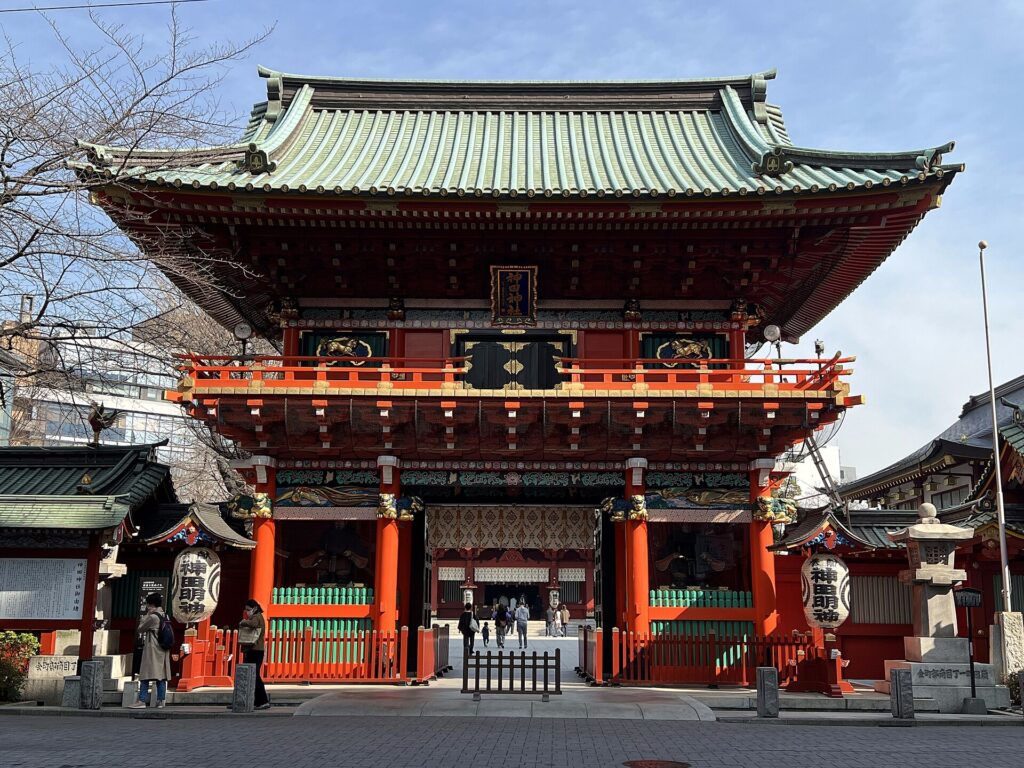
Kanda looks like several unrelated neighborhoods placed side by side. Kanda Myojin rises above the river as one of Edo’s great guardian shrines. Jimbocho is lined with specialist and secondhand bookshops. Ochanomizu is filled with universities and hospitals. Manseibashi preserves the brick arches of a station that closed in 1943, while the streets around Kanda Station are crowded with offices, restaurants and railway viaducts.
These districts share one history. Early Edo engineering cut a deep channel through the northern hills, separating high ground from merchant lowlands and creating new routes for water, bridges and transport. Shrines, markets, craft neighborhoods, schools, publishers and railways then occupied different parts of that terrain. Modern Kanda exists because each specialist district grew from the geography and institutions around it, producing a neighborhood whose unity is easier to understand through connections than through boundaries.
Quick Facts
- Japanese name: 神田
- Municipality: Chiyoda City, Tokyo
- Main stations: Kanda, Ochanomizu, Jimbocho and Awajicho
- Historical focus: Kanda Myojin, Surugadai, Jimbocho, Sudacho, Awajicho, Manseibashi and the streets around Kanda Station
- Key layers: Edo river engineering, shrine and festival networks, merchant and artisan districts, produce wholesaling, universities, publishing, railway development, earthquake reconstruction and postwar office culture
Why Kanda Is Not One Neighborhood
“Kanda” has never referred to one perfectly fixed area. Today it may mean the streets around Kanda Station, the territory of the former Kanda Ward or a wider historical district including Jimbocho, Surugadai, Ochanomizu, Awajicho, Sudacho, Manseibashi and parts of Sotokanda. Its boundaries change with the period and the subject.
The district became varied because several landscapes met here. The lowlands near Nihonbashi supported markets, warehouses and workshops. The higher ground of Surugadai held large samurai estates and later schools. The Kanda River separated plateaus but also connected neighborhoods through bridges and transport. Kanda Myojin stood above a broad parish of merchant communities whose festival linked streets far beyond the shrine itself.
The River That Redrew Northern Edo
The river below Ochanomizu is not simply a natural valley. During the early development of Edo Castle, workers cut through the high ground known as Kandayama. The project improved drainage, linked waterways and created a strong northern edge near the castle. It also separated the Surugadai plateau from the hills to the north.
This engineering influenced land use for centuries. Samurai estates occupied much of the high ground, while merchant and artisan districts developed across the flatter lowlands. Bridges became points of movement and commerce. From Hijiribashi, the sharp contrast between the plateau and the deep river channel still makes the scale of the project visible.
Kanda Myojin and the Communities of Edo
According to the shrine’s official history, Kanda Myojin was founded in 730 near present-day Otemachi. As Edo Castle expanded, it moved to Kanda-dai in 1603 and then to its present site in 1616. From the high ground northeast of the castle, it became one of Edo’s major guardian shrines.
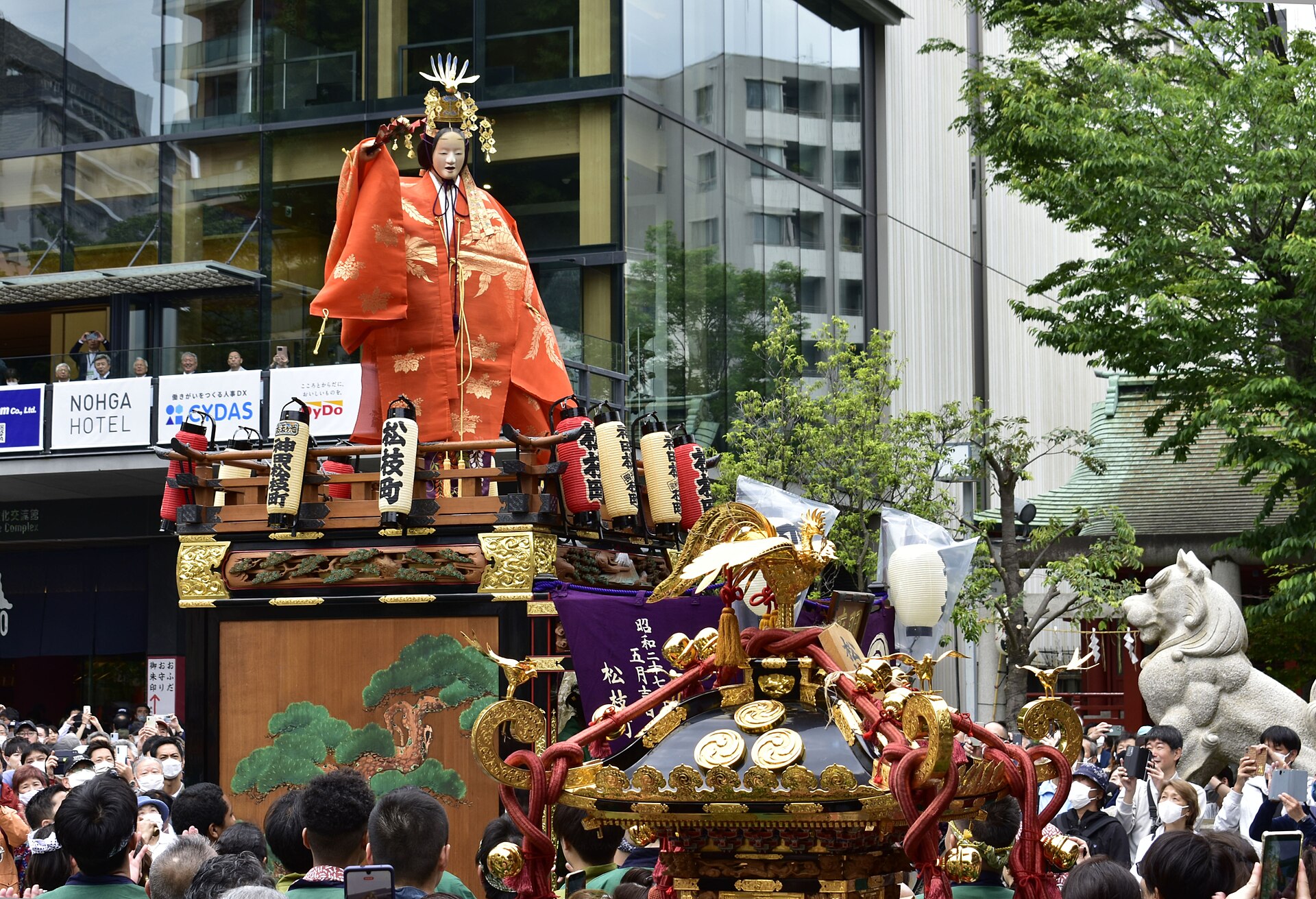
Its influence extended across many merchant and artisan neighborhoods in Kanda and Nihonbashi. The Kanda Matsuri joined these communities through processions, neighborhood groups, craft production and collective funding. Participation allowed individual districts to display both devotion and urban pride.
Merchants, Craftspeople and Specialist Streets
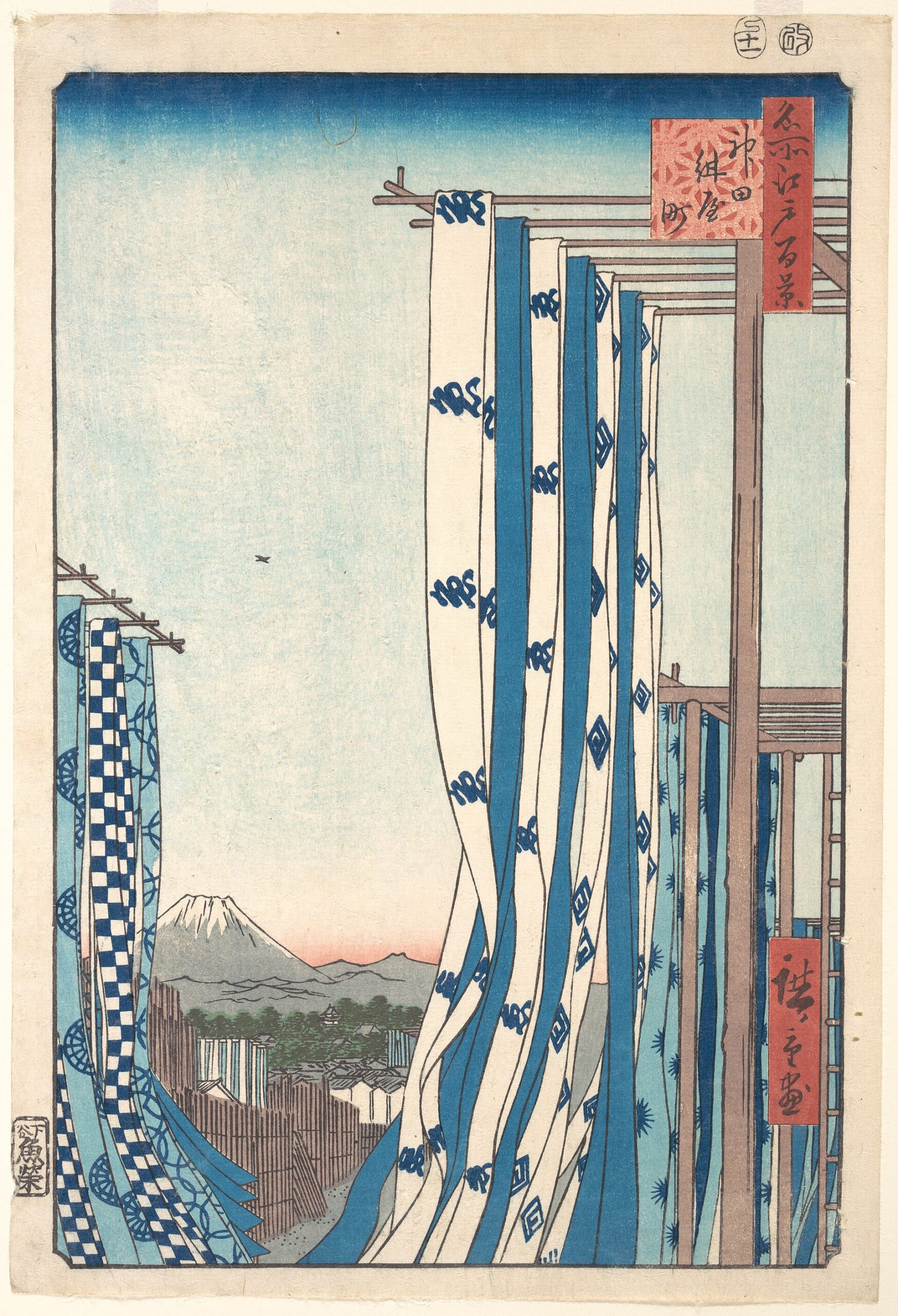
Much of Edo-period Kanda consisted of townspeople’s neighborhoods. Merchants sold food, cloth, tools and everyday goods, while craftspeople supplied the castle, samurai households and a vast wooden city. Place names still preserve parts of this occupational geography. Konyacho was associated with dyers, while Kajicho was linked with metalwork and smithing.
Keeping related businesses close together made suppliers, skilled workers and customers easier to find. It also supported regulation and collective organization. Shops moved and trades changed after fires and rebuilding, but the pattern of specialist commercial districts became one of Kanda’s lasting characteristics.
Kanda Market and Tokyo’s Food Supply
Kanda Tacho became famous for its vegetable market. Produce arrived from farming districts around Edo, was sorted and priced, and then moved to retailers across the city. Roads, waterways, brokers, porters, storage and credit made the market a complex distribution system rather than a simple row of stalls.
The market continued into modern Tokyo. After the 1923 earthquake, it was rebuilt and incorporated into the city’s central wholesale-market system. Its functions moved to Ota Market in 1989. Kanda lost one of its busiest daily industries, but the market’s history helps explain the district’s long tradition of concentrated specialist knowledge and rapid distribution.
Fire, Rebuilding and Urban Continuity
Edo’s dense wooden construction made fire a constant threat. Kanda’s commercial neighborhoods were rebuilt repeatedly, sometimes with wider roads, altered plots or new firebreaks. Businesses often returned because customers, transport and local networks remained valuable, but reconstruction rarely recreated the previous city exactly.
This is why Kanda can preserve very old place names while retaining little Edo-period architecture. Continuity survives in associations, street functions and commercial relationships as much as in buildings.
Yushima Seido and the Foundations of an Educational District
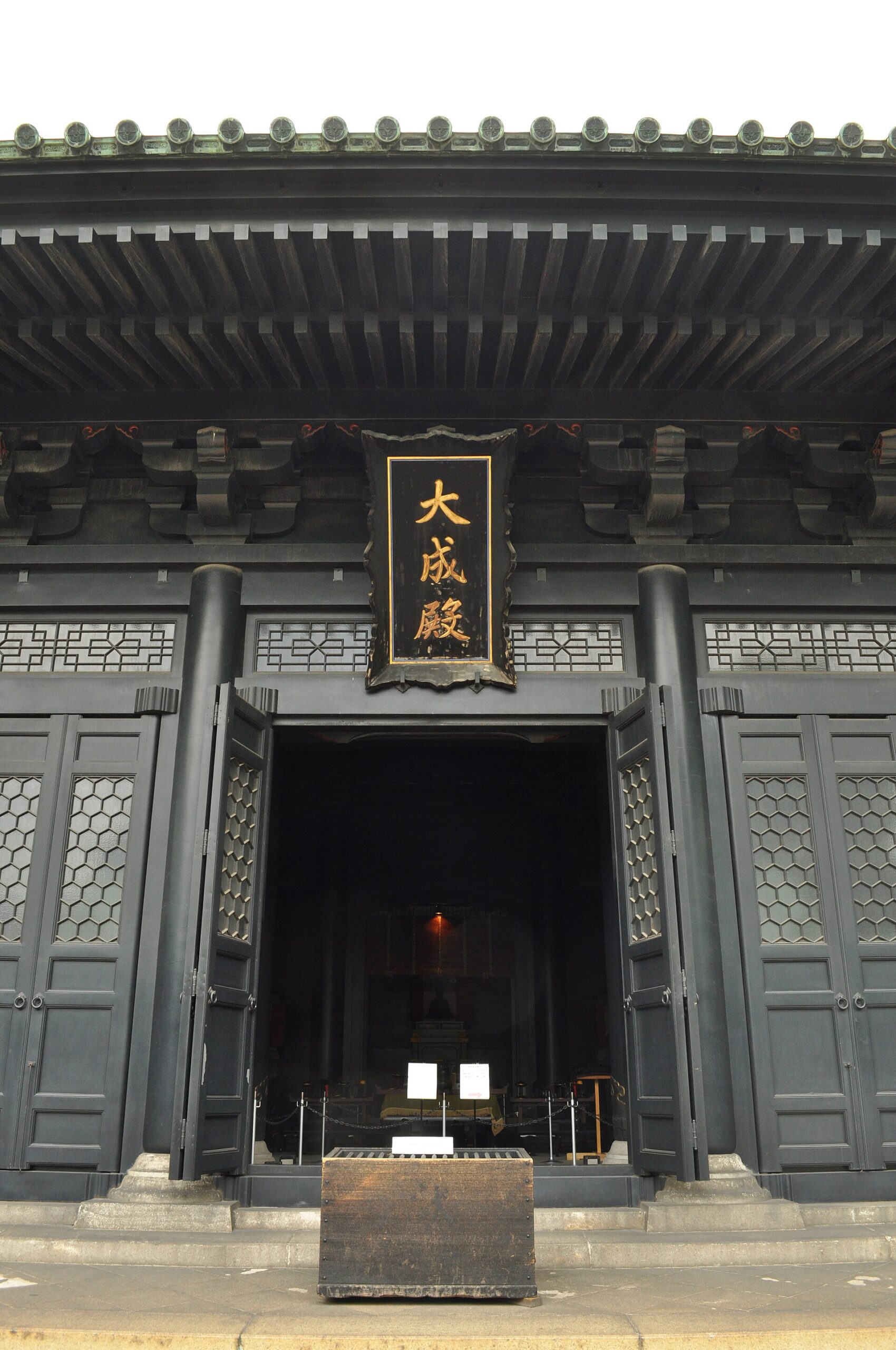
Across the river from Kanda stood Yushima Seido, a Confucian temple and center of official learning. In 1690, Tokugawa Tsunayoshi moved the temple associated with the Hayashi scholarly family to Yushima. In the late eighteenth century, reforms strengthened the school known as the Shoheizaka Gakumonjo.
The academy trained scholars and officials and gave the northern edge of Kanda a strong association with texts, teaching and government learning. Its presence did not directly create modern Jimbocho, but it formed an early educational layer in the same wider district.
Why Surugadai Became a University District
During the Edo period, much of Surugadai was occupied by samurai residences. After the Meiji Restoration, former estate land became available for schools, hospitals, churches and other institutions. The area was central, comparatively spacious and already associated with learning through nearby Yushima Seido.
Several institutions that became major universities were founded in or near Kanda. Meiji Law School, established in 1881, became Meiji University. Senshu School, founded in 1880, developed into Senshu University. Nihon Law School, founded in 1889, became Nihon University. Their students and teachers created demand for books, printing, rooms, food and stationery.
How Jimbocho Became Tokyo’s Book Town
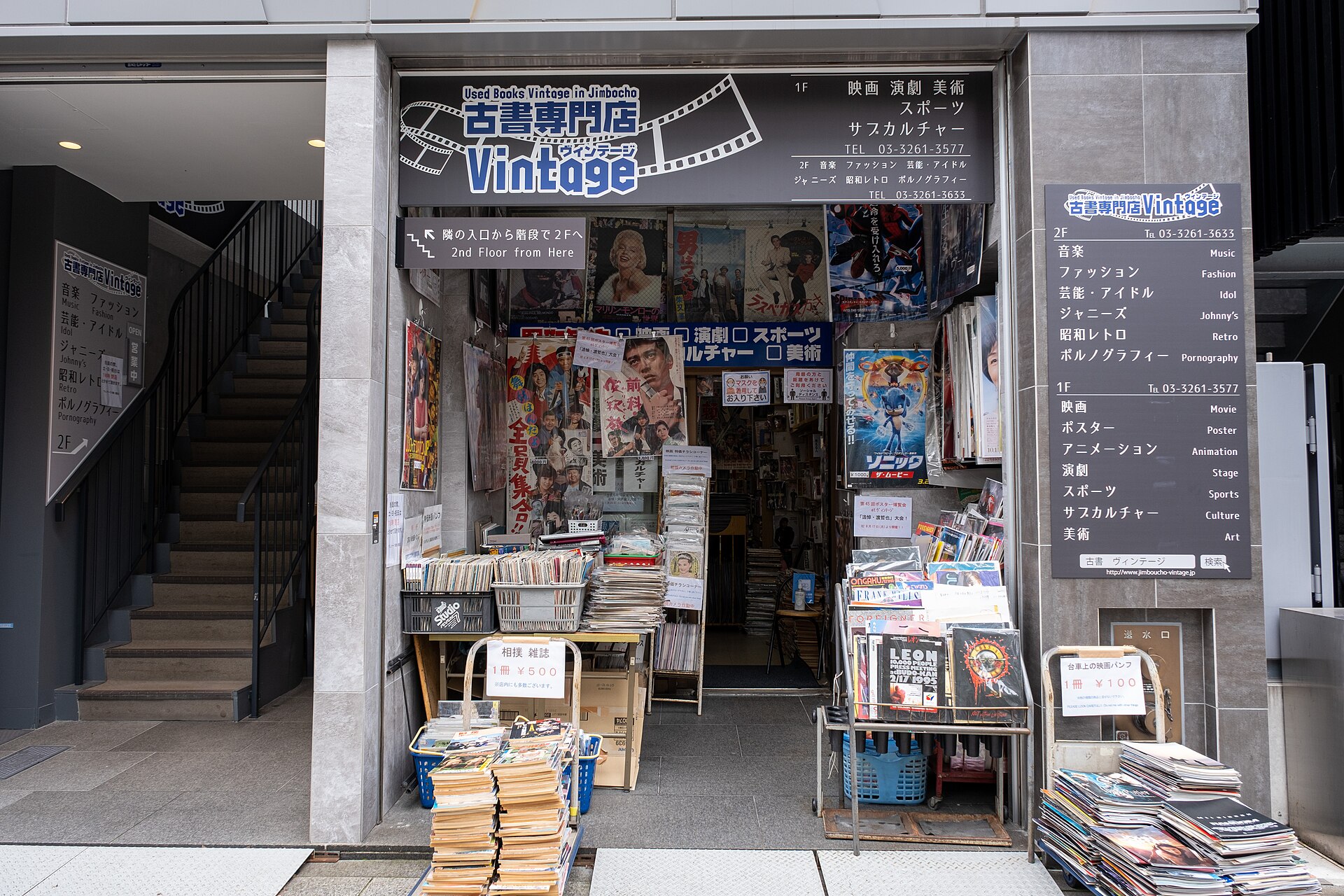
Jimbocho’s book culture emerged from the concentration of universities, publishers, printers and readers. Students needed affordable textbooks, researchers searched for specialist and out-of-print works, and publishers benefited from being close to authors, teachers and educational institutions.
A major Kanda fire in 1913 destroyed many buildings. Rebuilding created opportunities for booksellers and publishers to open or expand. Iwanami Shoten was founded in Jimbocho that year and later became one of Japan’s most influential publishers. Other firms and secondhand shops formed a dense network around it.
Specialization became the district’s strength. Shops focused on fields such as literature, foreign-language books, art, cinema, maps or the social sciences. Because many stores stood within walking distance, the entire neighborhood became a destination for readers who could compare collections in person.
Railways Create New Centers
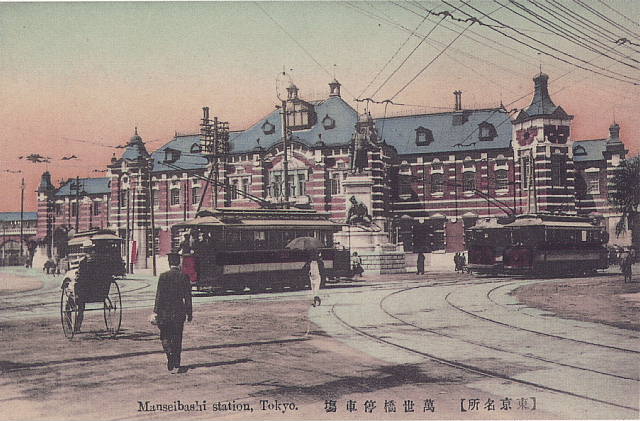
Railways added several new urban centers to the wider Kanda district. Manseibashi Station opened in 1912 as a major Chuo Line terminal beside a busy bridge and streetcar routes. Kanda Station opened in 1919 on the elevated railway. Ochanomizu developed as an interchange serving universities, hospitals and shops.
Manseibashi’s original station building was badly damaged in the 1923 earthquake. The station later lost importance as railway connections changed and Akihabara became a stronger interchange. Passenger service ended in 1943. Today, the surviving red-brick viaduct and former platform area have been adapted as mAAch ecute Kanda Manseibashi.
The 1923 Earthquake Remakes Kanda
The Great Kanto Earthquake and the fires that followed devastated much of Kanda on September 1, 1923. Commercial districts burned, markets were disrupted and Manseibashi Station was badly damaged. Government reconstruction widened roads, rebuilt bridges and reorganized land.
These changes improved movement and fire resistance but also erased older plots and streets. Kanda recovered because its schools, markets, businesses and central location remained valuable. The rebuilt district, however, was not a copy of the city before the disaster. Many of today’s wider roads preserve the scale of the reconstruction era.
War, Offices and Life under the Tracks
Air raids in 1945 destroyed further parts of Kanda. Postwar shortages produced temporary markets and makeshift businesses, followed by office construction and rapid economic growth. Universities reopened, Jimbocho’s book trade recovered and stations again filled with commuters.
Around Kanda Station, small restaurants and bars developed to serve office workers. Railway arches became commercial addresses for workshops, storage, bars and restaurants. This reuse of infrastructure helped preserve a finer-grained street life beneath the modern transport network.
Where Kanda Meets Akihabara
Parts of modern Akihabara, including Sotokanda, were historically connected with the wider Kanda area. Kanda Myojin’s parish and festival networks cross modern neighborhood boundaries, while Manseibashi and the railway viaduct physically connect the districts.
Akihabara nevertheless developed its own identity through a Meiji firebreak, freight and passenger railways, postwar electrical commerce and later media culture. Kanda and Akihabara are best understood as overlapping historical areas rather than either completely separate or perfectly identical neighborhoods.
What to Look For Today
- Kanda Myojin: the guardian shrine and festival center of a broad urban community.
- Yushima Seido: a reminder of the area’s early association with official learning.
- Hijiribashi: the best viewpoint for understanding the engineered river valley and surrounding plateaus.
- Surugadai: former samurai land transformed into a university and medical district.
- Jimbocho: a dense network of specialist and secondhand bookshops shaped by education and publishing.
- Manseibashi: the red-brick remains of a railway terminal that lost its role to changing transport routes.
- Kanda Station: elevated tracks, office streets and postwar restaurants concentrated around a modern commuter center.
Timeline
| Date | Turning point |
|---|---|
| 730 | Kanda Myojin’s official tradition dates the shrine’s foundation near present-day Otemachi to this year. |
| 1603–1616 | The shrine moves first to Kanda-dai and then to its present site. |
| Early 1600s | Workers cut through Kandayama, helping create the deep Kanda River channel. |
| 1690 | The Confucian temple associated with the Hayashi scholarly family moves to Yushima. |
| Late Edo period | Kanda develops as a district of markets, merchants and specialist craftspeople. |
| 1880s | Schools that later become major universities are founded in and around Kanda and Surugadai. |
| 1912 | Manseibashi Station opens. |
| 1913 | A major fire reshapes Jimbocho, and Iwanami Shoten is founded. |
| 1919 | Kanda Station opens. |
| 1923 | The Great Kanto Earthquake and fires devastate much of the district. |
| 1943 | Passenger service at Manseibashi Station ends. |
| 1945 | Air raids destroy large areas, followed by postwar recovery. |
| 1989 | Kanda Market’s wholesale functions move to Ota Market. |
| 2013 | The former Manseibashi railway viaduct reopens as mAAch ecute Kanda Manseibashi. |
Frequently Asked Questions
Is Kanda one neighborhood?
No single boundary covers every historical and modern use of the name. Present addresses, the former Kanda Ward and the wider cultural district do not match exactly.
Why is Kanda Myojin important?
It became one of Edo’s major guardian shrines and connected merchant and artisan neighborhoods through worship and festival life.
Was Jimbocho a book town in the Edo period?
No. Its modern book district developed mainly from the Meiji period onward through universities, publishers, printers, booksellers and repeated rebuilding.
Can you still see Manseibashi Station?
The original station building is gone, but the red-brick railway viaduct and former platforms survive in adapted form at mAAch ecute Kanda Manseibashi.
Related Stories and Walks
Read The History of Akihabara to follow the neighboring district’s transformation from firebreak and freight zone to electronics and media center. Compare Kanda’s merchant networks with The History of Nihonbashi, or browse the complete Tokyo Neighborhood Histories directory.