Tokyo’s famous electronics and anime district began as a firebreak—and spent decades moving vegetables before it sold computers.
Akihabara’s transformation was not a sudden leap from old Tokyo to otaku culture. The district first became important because goods could move easily between railways, roads, waterways and wholesale markets. Freight trains, produce traders and warehouses created a landscape of transfer, sorting and specialist knowledge. After wartime destruction, radio-parts sellers and electrical wholesalers reused the same transport advantages. Household appliances, audio equipment, computers, games and character merchandise followed in overlapping waves.
Modern Akihabara exists because each new industry inherited the commercial habits and urban spaces of the one before it. Small shops prospered by stocking rare goods and offering expert advice, while the later closure of the freight station and produce market released unusually large plots for offices, plazas and high-rise redevelopment. Today’s contrast between tiny component counters and enormous commercial blocks is therefore a visible record of Akihabara’s history.
Quick Facts
- Japanese name: 秋葉原
- Main municipality: Chiyoda City, with an official Akihabara neighborhood also in Taito City
- Main station: Akihabara Station
- Historical layers: Edo transport routes, Meiji firebreak, freight station, produce market, postwar radio stalls, Electric Town, computer and game retail, otaku culture and station-area redevelopment
- Freight station opened: 1890
- Passenger service began: 1925
- Kanda market functions moved: 1989
What “Akihabara” Means
For visitors, Akihabara usually means the commercial district around Akihabara Station, especially Sotokanda west of the tracks and the streets toward Manseibashi. That everyday district is not identical to a single official address. Taito City also has a neighborhood formally named Akihabara north of the station. The station, the historic firebreak, the shopping district and the modern administrative boundaries overlap, but they are not the same place.
The name developed after a major fire in 1869. The Meiji government cleared broad open land to reduce the danger of another conflagration, and a shrine associated with protection from fire was established there. Popular memory connected the place with Akiba, a fire-protective deity. Names such as Akibagahara and Akihabara circulated before the railway station helped fix the nationally familiar modern pronunciation.
Before Electric Town
During the Edo period, the area around present-day Akihabara lay between several urban zones. Kanda and Nihonbashi formed major commercial districts to the south. The Kanda River carried goods through the city, while roads and bridges near Sujikai Gate connected Edo with routes leading north. Samurai residences, commoner neighborhoods, temple and shrine lands and transport corridors created a patchwork rather than one unified quarter.
Fire prevention was already an important part of Edo planning. Dense wooden buildings made large fires difficult to contain, so authorities created open spaces, widened roads and relocated institutions. The Meiji firebreak that later gave Akihabara its name continued this logic. Its broad open ground would eventually make possible railway and freight facilities on a scale that ordinary neighborhood streets could not accommodate.
Freight Came Before Passengers
Akihabara entered railway history as a freight station rather than as the passenger stop familiar today. It opened in 1890 as part of the rail network connecting central Tokyo with lines running north. Sidings, platforms, docks and handling areas allowed goods to move between trains and the city. The nearby Kanda River and canals strengthened this logistics role by linking waterborne cargo with the railway.
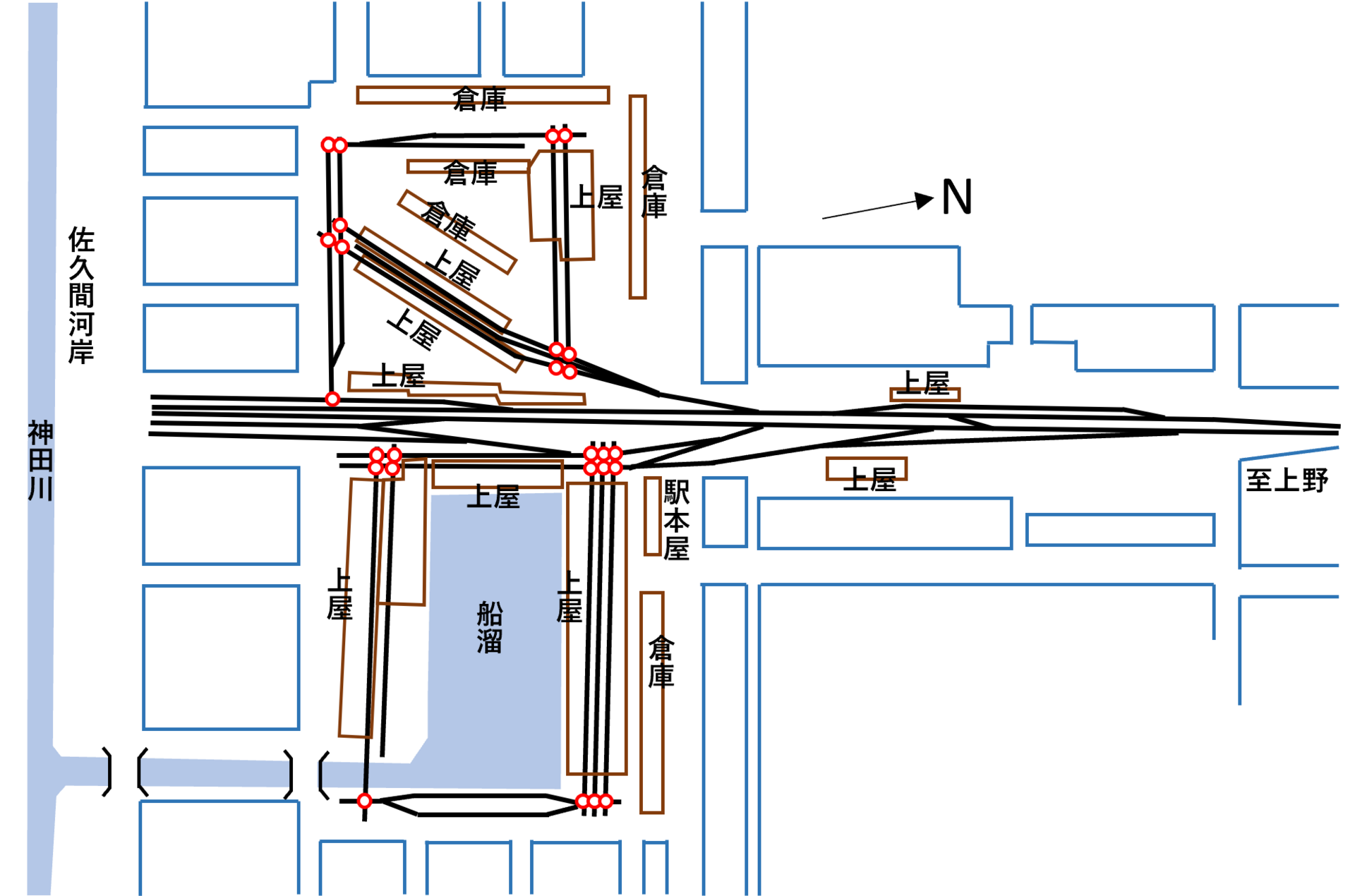
The reconstructed track plan above shows why the district differed from an ordinary city station. Freight tracks spread across a wide zone, and wagons could be positioned for loading and transfer. This broad railway landscape later became crucial for redevelopment. Once freight operations ended, large connected parcels remained beside one of Tokyo’s busiest stations.
The Produce Market and Tokyo’s Food Supply
Kanda had long been one of Edo and Tokyo’s most important produce-trading areas. Wholesalers around Kanda-Tacho, Sudacho and neighboring streets received vegetables and fruit from surrounding farming districts and redistributed them across the city. This commercial world existed before the large market facilities beside Akihabara Station.
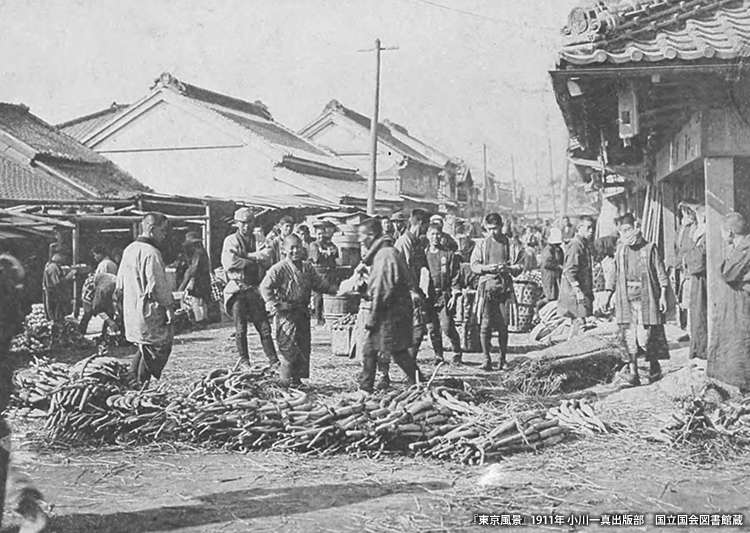
After the Great Kanto Earthquake of 1923, urban reconstruction reorganized produce wholesaling into modern facilities. Market operations shifted toward the broad railway-side land at Akihabara, where rail access and loading space supported high-volume distribution. The market and freight station were separate institutions, but together they made the district a workplace of porters, wholesalers, railway employees, carts, trucks and early-morning trade.
Vegetables may appear unrelated to electronics, yet the two commercial systems shared important traits. Both depended on concentrated knowledge, rapid comparison, dense supplier networks and easy access for professional buyers. Akihabara’s later specialist retail culture grew in a district already accustomed to moving large quantities of highly differentiated goods.
Passenger Trains Change the District
Passenger service began at Akihabara in 1925, when elevated railway connections transformed movement through central Tokyo. Freight had brought goods; passenger trains now brought shoppers, workers and commuters. Akihabara became both a logistics zone and a transfer point.
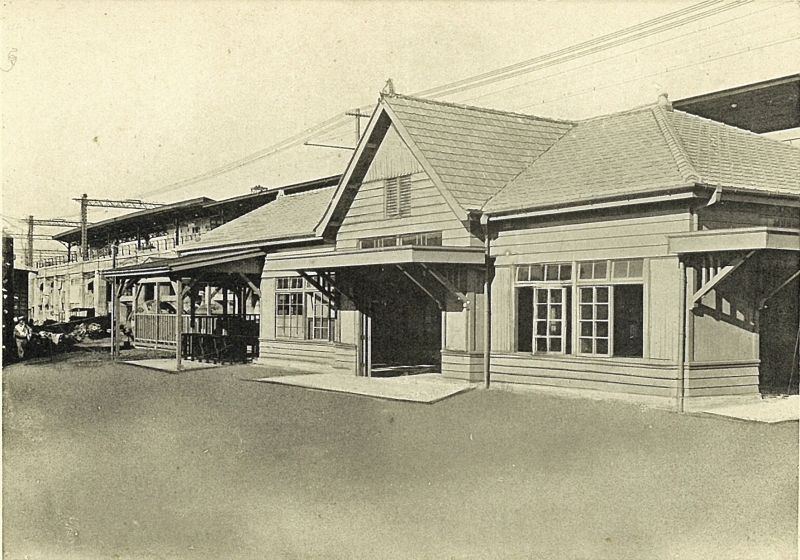
The elevated tracks also created compact spaces beneath the railway. These would later become central to Akihabara’s commercial geography. Small units under and beside the tracks were well suited to businesses that needed little display space but carried specialized inventory. Their physical limits encouraged dense clusters of expert retailers.
Earthquake, War and Postwar Rupture
The Great Kanto Earthquake devastated Kanda and much of central Tokyo in 1923. Reconstruction widened streets, changed transport routes and accelerated the modernization of markets and railway infrastructure. The district that emerged still combined narrow commercial streets with large transport facilities.
Air raids in 1945 produced a more violent break. Buildings, businesses and homes across Kanda and Sotokanda were destroyed. Postwar Akihabara developed amid shortages, damaged infrastructure and displaced traders. Yet it was not created from nothing. Electrical wholesalers and radio-related businesses had already given the wider Kanda area technical knowledge and supplier networks.
Radio Parts beneath the Tracks
After the war, radio was one of Japan’s most desirable and practical technologies. Complete sets were expensive, but radios could be assembled or repaired from components. Vendors selling vacuum tubes, resistors, transformers, wire and other parts gathered around Kanda, Sudacho and the railway approaches. Their customers included technicians, hobbyists, students and families trying to build affordable receivers.
Street-stall clearance pushed many traders into permanent spaces beneath and beside the railway. Commercial clusters such as Radio Center and Radio Store came to symbolize the transition. Not every electrical business descended from a black-market stall; established wholesalers were also important. What unified the district was technical density. Customers could compare suppliers within a short walk and obtain advice unavailable in an ordinary department store.
From Radios to Household Appliances
Rapid economic growth changed what visitors came to buy. Radios were joined by televisions, refrigerators, washing machines and air conditioners. Akihabara expanded from a component district into Electric Town, where households could compare the latest appliances and bargain among competing retailers.
Large stores appeared along major streets, while smaller shops continued to sell parts, lighting, tools and specialist equipment. Audio equipment became another important field. Amplifiers, speakers and turntables attracted enthusiasts who valued expert advice and model comparison. Mass-market retail drew crowds, while specialist shops gave the district depth.
Computers, Games and Specialist Knowledge
From the late 1970s, microcomputers entered a district already built for hobby electronics. Customers accustomed to buying individual parts were well prepared for kits, circuit boards, peripherals and early personal computers. Shops could explain specifications, sell components separately and serve both professionals and enthusiasts.
During the 1980s and 1990s, computers, software and games took a larger share of storefronts. Junk shops sold used or untested components; specialist retailers carried memory, storage devices and cables; large chains displayed complete systems. Game software and home consoles brought new customers without eliminating older electronics trades. Akihabara became a place not only to buy technology but also to exchange information about it.
How Otaku Culture Grew
Akihabara’s association with manga, anime and otaku culture developed gradually. Computer and game shops already attracted customers willing to travel for specialized products. Retailers learned to stock many variations, limited releases, used goods and niche titles. The same commercial habits suited model kits, figures, trading cards, manga, dōjinshi and character merchandise.
As ordinary consumer electronics became available everywhere, Akihabara’s distinctiveness shifted toward goods that still rewarded physical browsing and expert knowledge. Character media, hobby goods and collectibles filled that role. Idol venues, themed cafés and promotional events added experiences that could not be downloaded. Electronics did not disappear; components, computers, games and fan culture occupied overlapping layers of the same ecosystem.
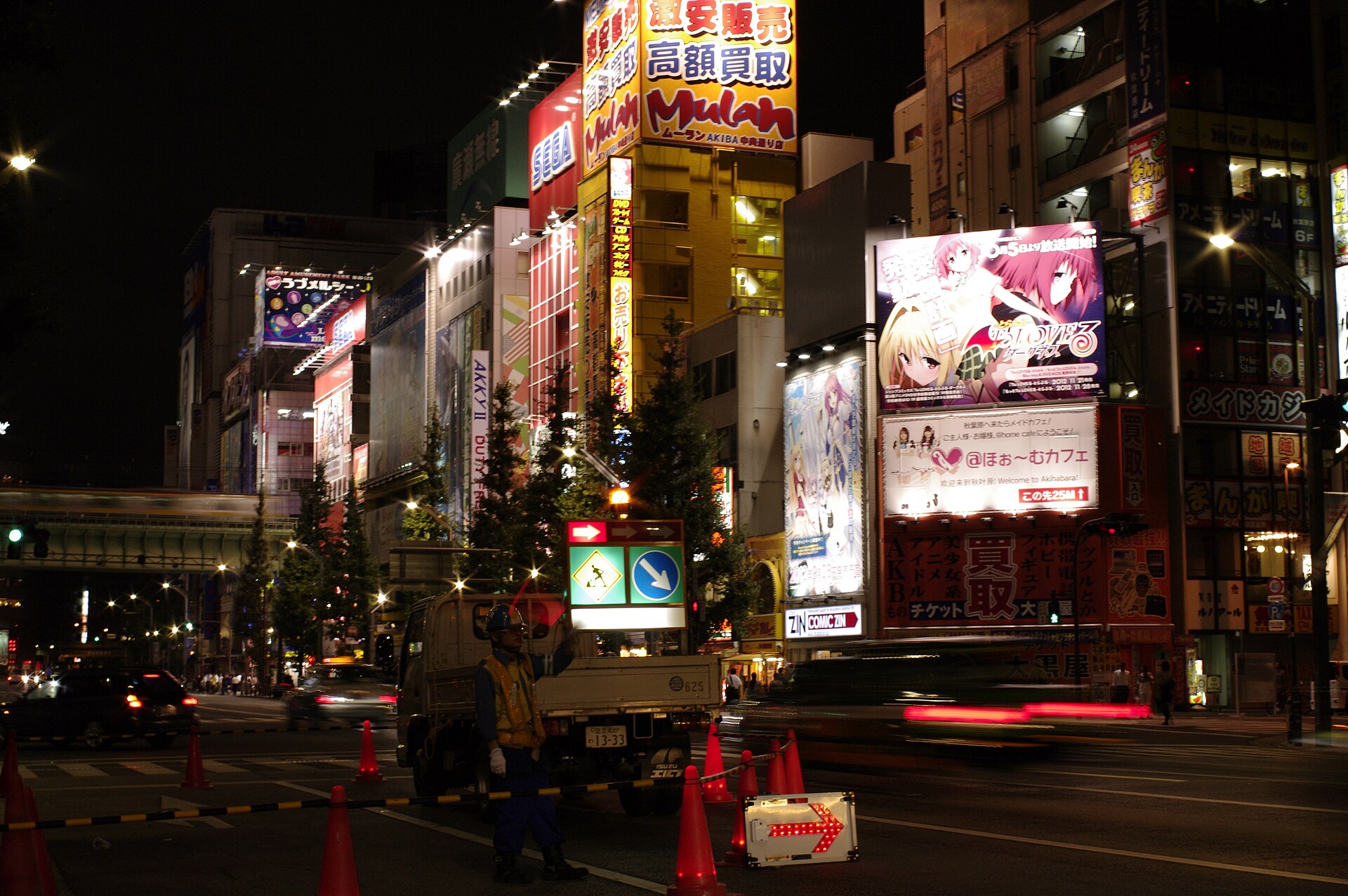
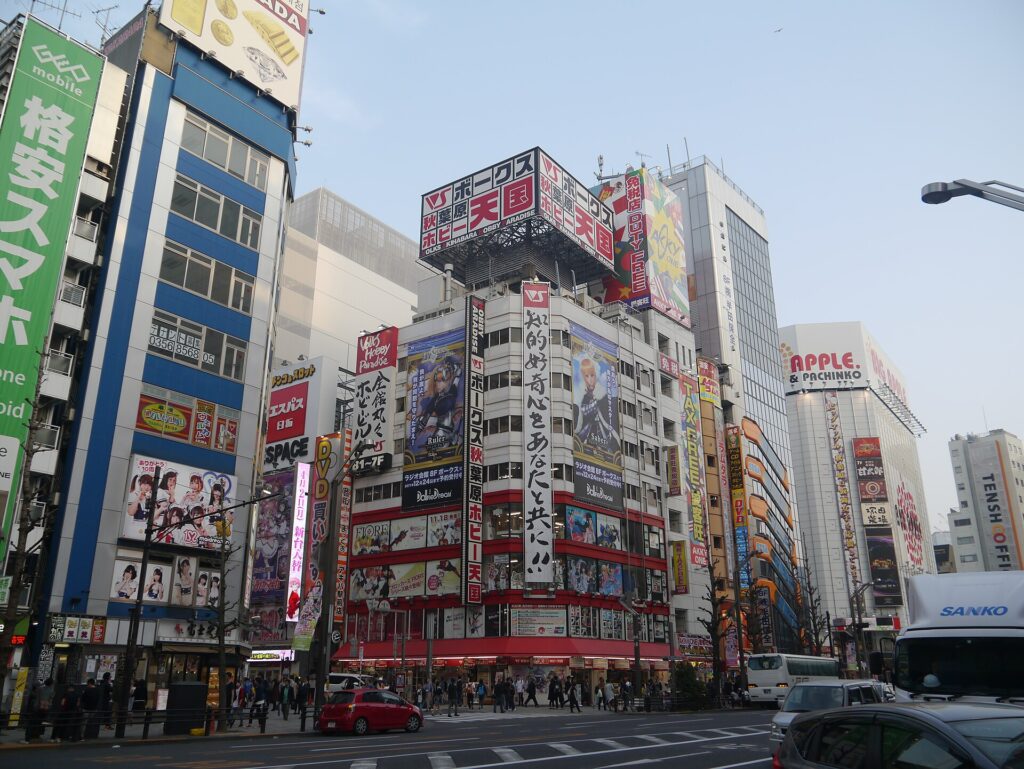
The streetscape above records the visual prominence of anime advertising at one moment; it does not mark a single beginning. Games, computer magazines, model retail, used media, dōjin culture, figures, idols and maid cafés followed different commercial paths. Their convergence became possible because Akihabara already knew how to turn specialist knowledge into a destination.
When Logistics Land Became Redevelopment Land
The logistics system that created Akihabara eventually outgrew central Tokyo. Rail freight shifted to facilities better suited to modern trains and trucking, and Akihabara’s freight role ended in the 1970s. The Kanda market continued longer, but its wholesale functions moved to Ota Market in 1989.
These were separate changes, but together they released an exceptional amount of land beside the station. Most traditional shopping districts are divided among many small owners, making large redevelopment difficult. The former railway and market sites offered broad connected plots where roads, plazas, offices and commercial buildings could be planned at a new scale.
Crossfield, UDX and the New Station District
In the early 2000s, redevelopment transformed the former market and freight area north and east of the station. Akihabara Crossfield introduced offices, conference facilities and commercial space linked to technology industries. Akihabara UDX became one of its most visible landmarks. The Tsukuba Express opened in 2005, strengthening Akihabara’s role as a regional gateway.
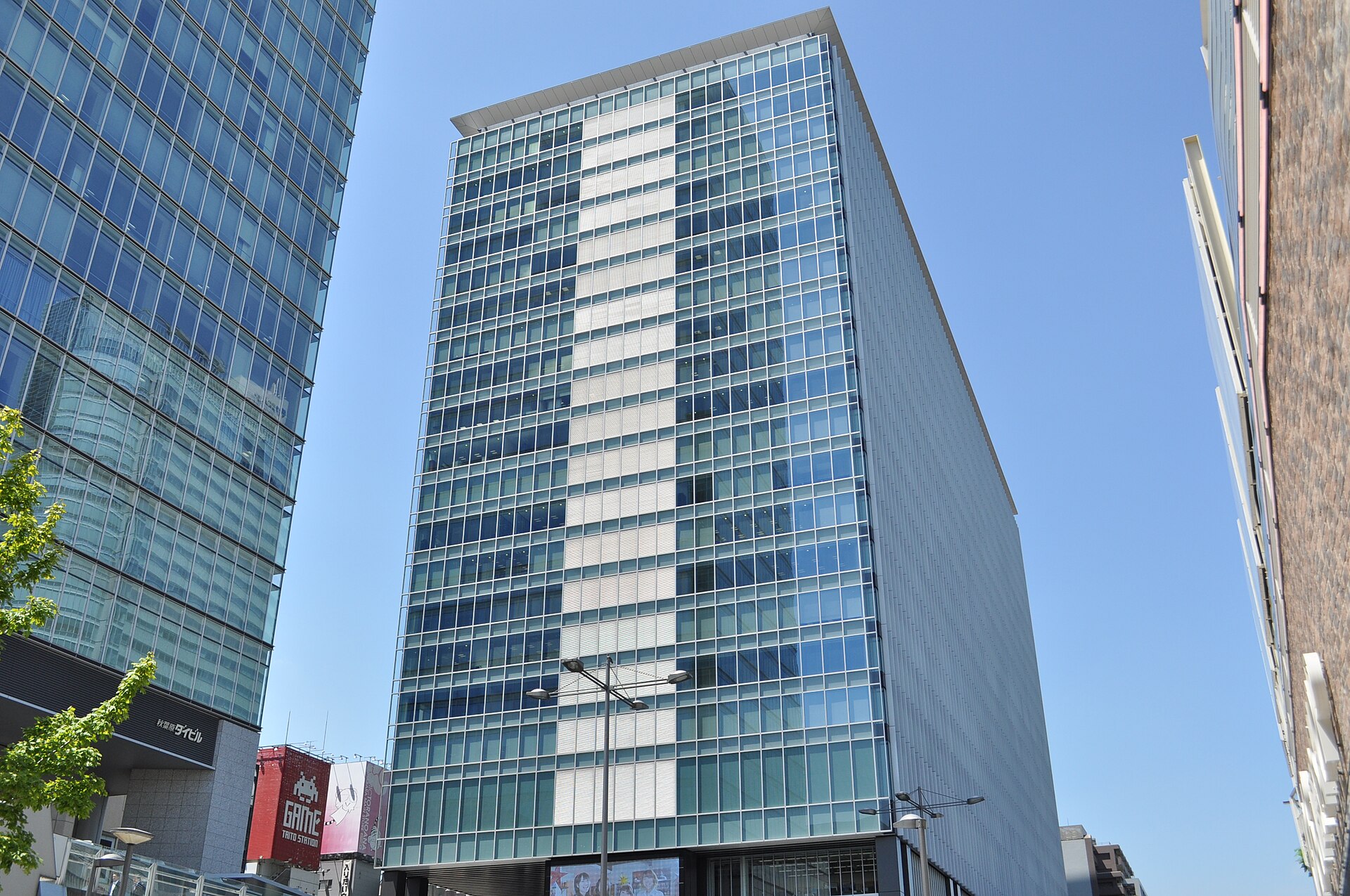
UDX represents a new scale, but its location is historical. It stands where wholesale and freight operations once required broad plots. By contrast, the Electric Town west of the station retained many smaller lots and railway-arch units. The visual difference between towers and tiny specialist shops is therefore a map of earlier land use.
Akihabara Today
Today’s Akihabara contains several districts within a few minutes’ walk. Chuo-dori and Sotokanda remain the best-known retail zone. Railway arches preserve compact specialist premises. West of the station, electronics, hobby and entertainment businesses occupy buildings of many sizes. North and east of the station, former logistics land supports offices, plazas, hotels and mixed-use complexes.
This coexistence is not accidental. Small-lot commerce survived where the older street and property pattern remained fragmented. Large redevelopment occurred where railways and markets had assembled broad tracts. Akihabara’s identity comes from the friction between these scales: expert counters and global brands, parts bins and digital advertising, postwar arches and twenty-first-century towers.
Historical Traces You Can Still See
- Railway arches: compact shops beneath the tracks preserve the physical scale of specialist retail.
- Chuo-dori and the Electric Town Exit: large retailers coexist with smaller component, hobby and used-goods businesses.
- Akihabara UDX and station-front plazas: their generous scale marks the former market and freight zone.
- Manseibashi: the bridge and former station area connect Akihabara with older Kanda transport routes.
- The east–west contrast: the west side reflects fragmented retail streets, while the east and north contain broader redevelopment parcels.
- Place names: Sotokanda, Manseibashi and the official Taito City neighborhood of Akihabara preserve different parts of the district’s geography.
Timeline
| Date | Turning point |
|---|---|
| 1869 | A major fire leads to the creation of firebreak land associated with the Akihabara name. |
| 1890 | Akihabara opens as a freight station. |
| 1923 | The Great Kanto Earthquake destroys much of Kanda and accelerates reconstruction. |
| 1925 | Passenger service begins at Akihabara Station. |
| 1930s | The Kanda produce market becomes part of Tokyo’s modern central wholesale system. |
| 1945 | Air raids devastate surrounding neighborhoods. |
| Late 1940s–1950s | Radio-parts and electrical businesses consolidate around the station and railway arches. |
| 1950s–1970s | Household appliances and audio equipment establish Electric Town. |
| Late 1970s–1990s | Computers, software and games grow from the existing component-shopping culture. |
| 1970s | Akihabara’s freight role ends. |
| 1989 | Kanda market functions move to Ota Market. |
| 1990s–2000s | Manga, anime, figures, idols and themed retail become increasingly visible. |
| 2005 | The Tsukuba Express opens and Akihabara Crossfield helps redefine the station district. |
| 2006 | Akihabara UDX opens. |
Frequently Asked Questions
Why is Akihabara called Akihabara?
The name developed from a firebreak created after an 1869 fire and a shrine associated with protection from fire. Popular usage and the later railway station established the modern form.
Was Akihabara always an electronics district?
No. Before Electric Town, it was a firebreak, freight zone, passenger interchange and produce-wholesale district.
Why did radio-part shops gather here?
The area combined railway access, electrical wholesalers, compact spaces beneath the tracks and customers who came specifically for technical goods.
How did Akihabara become associated with anime?
Computer and game retail had already created a destination for specialized hobby consumption. Manga, figures, dōjin goods, idols and themed cafés later grew within the same ecology of expert shops and rare inventory.
What happened to the produce market?
Its wholesale functions moved to Ota Market in 1989 as Tokyo reorganized food distribution. The former market land became part of the station-area redevelopment zone.
Related Histories and Walks
Explore more central Tokyo history through Kanda, Nihonbashi and the full Neighborhood Histories directory. For route-based exploration, browse the Self-Guided Walks collection.
Sources and Further Reading
- Chiyoda City: Akihabara area urban development
- Chiyoda City: Manseibashi place-name history
- Tokyo Metropolitan Central Wholesale Market: institutional history
- Tokyo Metropolitan Central Wholesale Market: market history and chronology
- Akihabara Electric Town Organization: Akihabara Archives
- National Diet Library Digital Collections