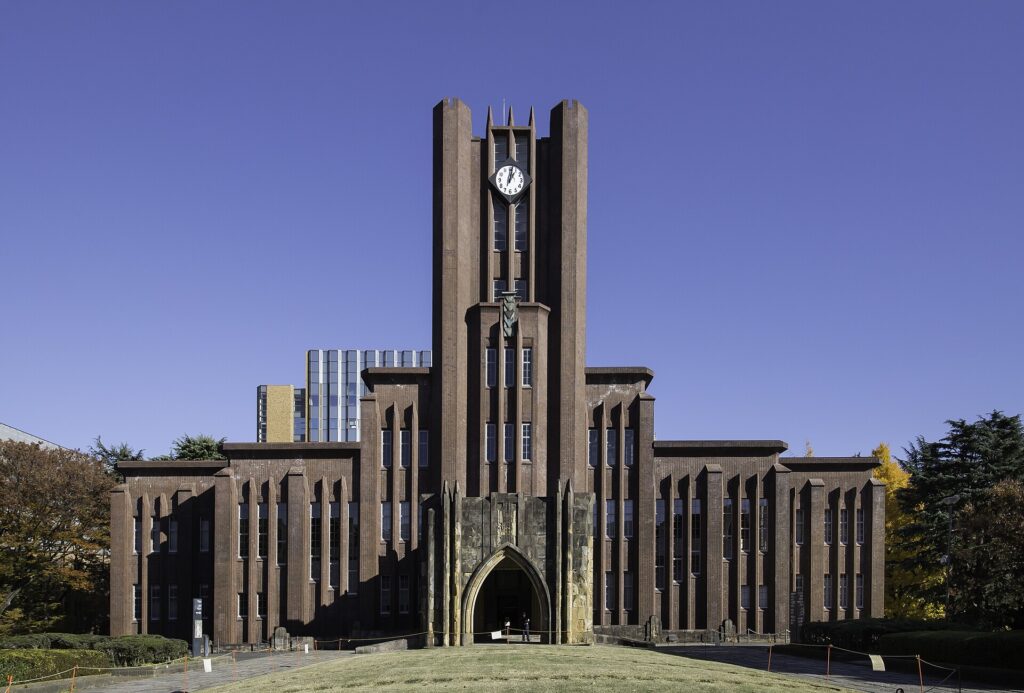
Japan’s most famous university stands on the former estate of one of the country’s richest samurai lords. Outside its gates, Nobel-level research, old boarding-house streets, medical suppliers and the memory of struggling novelists all occupy the same compact district. Hongo is not simply a university neighborhood—it is a place where feudal power was converted into modern knowledge.
The transformation was possible because the old city had already divided the landscape by height and function. The plateau held broad samurai compounds, while slopes and valleys such as Kikuzaka supported smaller homes, rented rooms, shops and workshops. After 1868, the new government reused elite land for schools, laboratories and hospitals, while the surrounding streets supplied everything those institutions needed.
Modern Hongo exists because a former daimyo estate became the University of Tokyo—and because the dense town outside the campus turned students, doctors and scholars into a local economy of books, medicine, meals, lodging and literature. The district’s present identity is the result of those two worlds continually feeding one another.
How a Samurai Estate Became Japan’s Intellectual Powerhouse
Hongo’s modern character rests on a chain of land-use decisions. Edo-period roads and estates organized the plateau. After the Meiji Restoration, the new government inherited or acquired large former daimyo compounds that could accommodate modern schools, laboratories and hospitals. Tokyo Medical School moved to Hongo in 1876, and the University of Tokyo was established in 1877. Other faculties and facilities gathered there in stages, turning the former estate zone into a major center of education, research and clinical medicine.
That institutional concentration created a daily economy outside the gates. Students needed rooms, meals and books. Professors and researchers needed printers, publishers, binders and specialist suppliers. Hospitals brought physicians, nurses, patients and families. Medical-instrument businesses benefited from proximity to teaching and clinical practice. Writers came not only because the university was prestigious, but because Hongo offered relatively accessible lodging, editorial networks, magazines, bookshops and an audience of educated readers.
Geography and Urban Form: Plateau, Road, Slopes and Valleys
Hongo occupies part of the Hongo plateau, a northern extension of the uplands west of the lowlands around Ueno and Shinobazu Pond. Hongo-dori follows the high ground as a durable north–south axis. From the ridge, streets descend toward valleys including Kikuzaka, producing sharp differences in slope, lot size and street width within a short walk.
This topography influenced land use. Large warrior compounds could occupy the relatively level plateau, while smaller residential and commercial plots developed along approaches, side streets and lower ground. The contrast remains legible today: institutional superblocks and formal gates face a finer-grained townscape of lanes, houses, shops and apartment buildings. Modern rebuilding has altered many parcels, but the relationship between ridge and valley still structures movement.
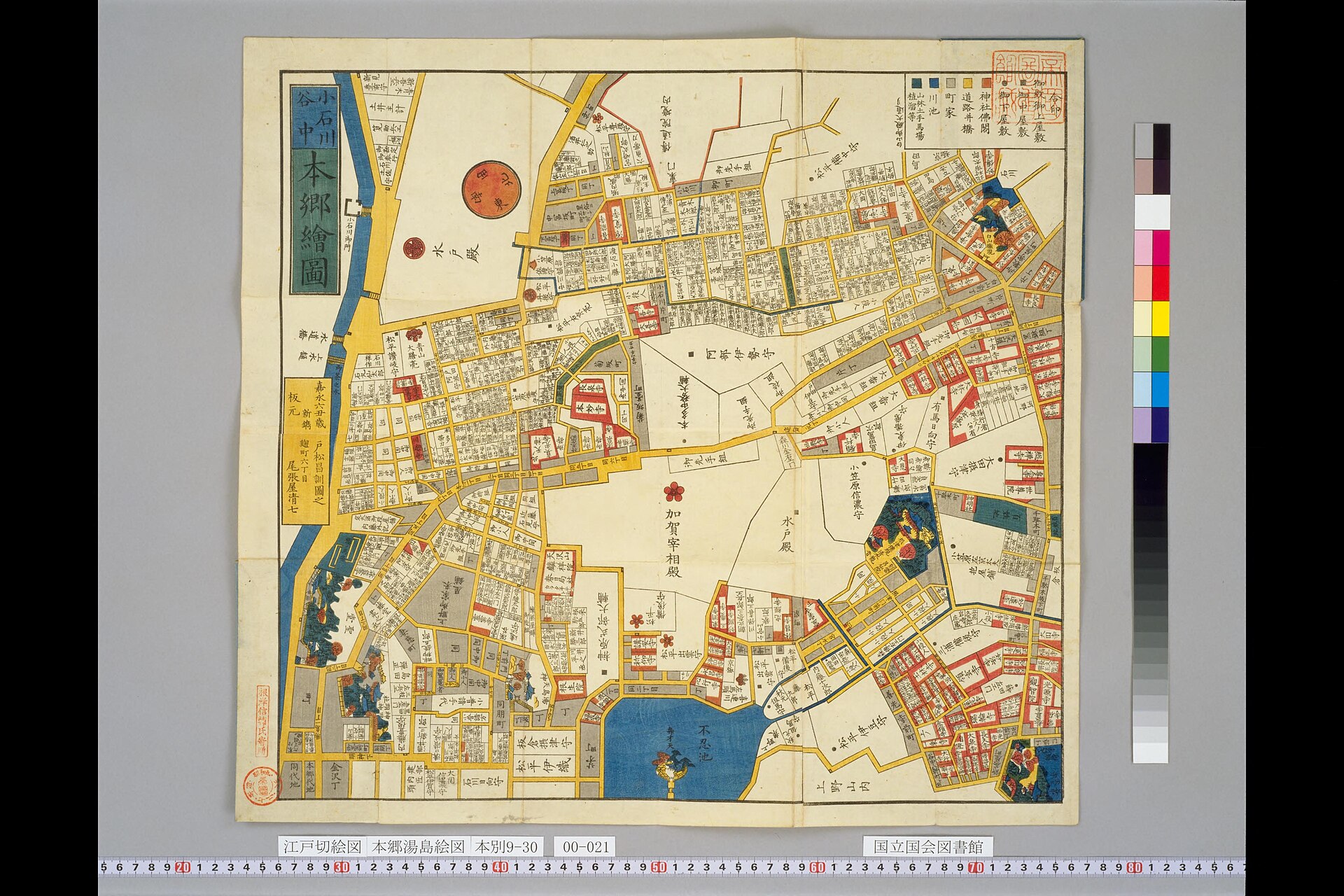
Kiriezu maps are not modern surveys, but they reveal the large pattern: roads, warrior estates, temple lands and commoner streets occupied adjoining zones. They are most useful for reading relationships, not for proving an exact present-day boundary.
From Village Edge to Edo District
Before Edo became a metropolis, the wider Hongo area contained villages and routes on the upland edge. As the Tokugawa castle town expanded during the seventeenth century, Hongo was absorbed into a more complex urban order. The road later known as Hongo-dori formed part of the route toward the north, associated with the Nikko Onari road used for shogunal travel. Samurai residences, temple lands and townspeople’s streets spread around this axis.
The name Hongo appeared in several historical place names and administrative units, including Hongo Village and later town names such as Hongo Motomachi, Yumi-cho, Haruki-cho and Morikawa-cho. These names did not describe one fixed boundary. They record the gradual conversion of a village-edge landscape into an urban district tied to Edo’s political and transport systems.
The Kaga Domain Residence and Akamon
The Maeda family of Kaga, one of the wealthiest daimyo houses, maintained an upper residence in Hongo. An upper residence was the principal Edo compound used for political attendance, family residence, administration and ceremony under the shogunate. It was not the whole of Hongo, but it occupied a major portion of the plateau and strongly shaped the area later used by the university.
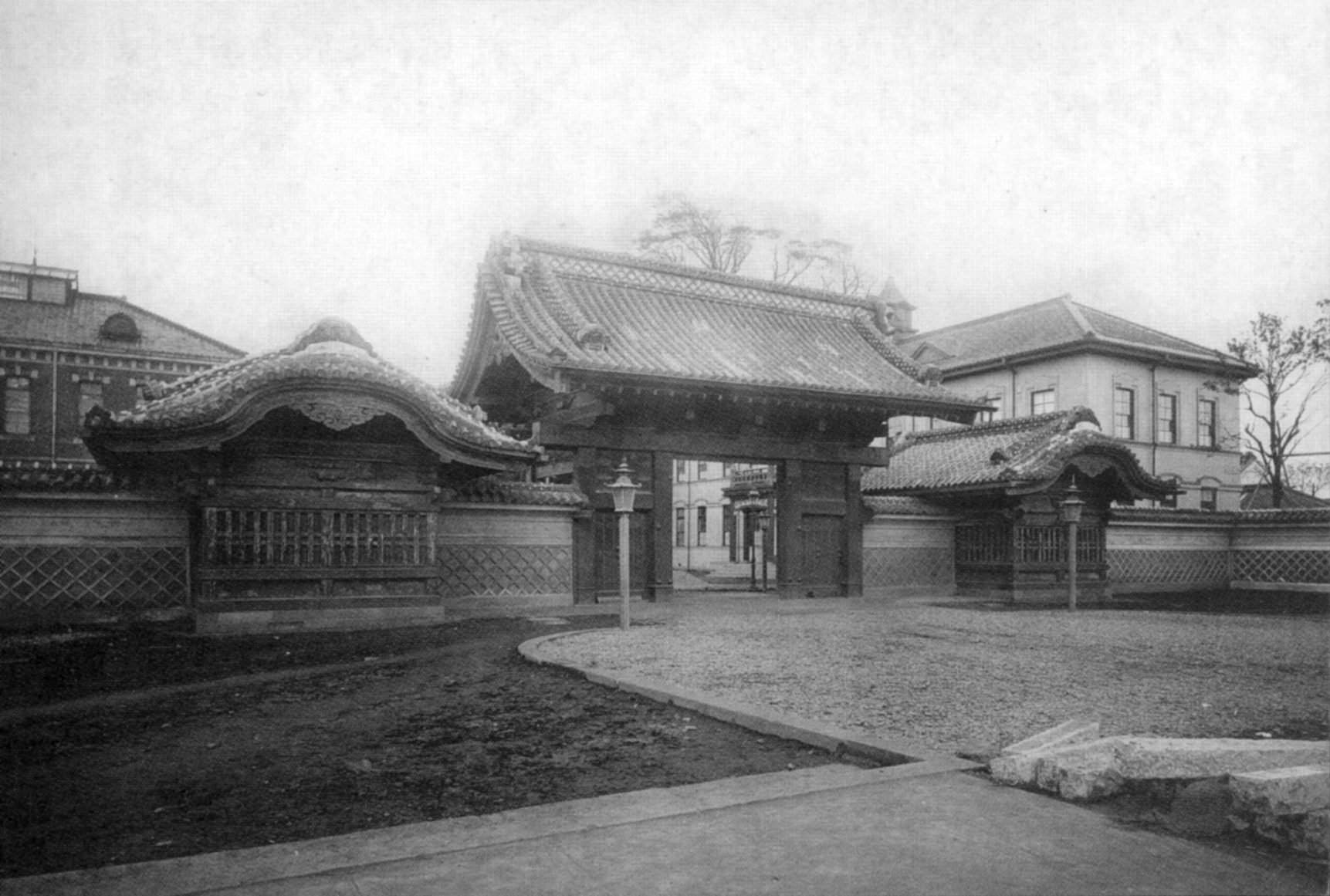
Akamon, the Red Gate, was built in 1827 for the marriage of Tokugawa Ienari’s daughter Yasuhime to Maeda Nariyasu. Its red color and formal design marked the status of a daimyo marriage gate. The surviving gate is an important remnant of the Maeda residence, but it does not mean that the entire estate survives intact. The campus contains later roads, laboratories, lecture halls, hospital buildings and reconstructed landscapes layered over the former compound.
From Feudal Estates to a Modern University Campus
The Meiji Restoration dissolved the political system that had sustained daimyo residences in Edo. Across Tokyo, the new state reused large former estates for ministries, military facilities, schools, hospitals and other public institutions. Hongo was one of the clearest examples of this metropolitan transformation.
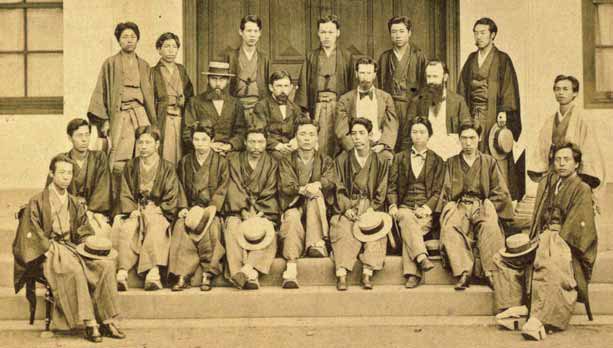
Tokyo Medical School moved to Hongo in 1876. The following year, the University of Tokyo was established through the reorganization and combination of predecessor institutions. The campus did not appear fully formed in 1877. Faculties, laboratories, collections and administrative buildings were transferred and expanded over time. In 1886 the institution became Imperial University, and in 1897 Tokyo Imperial University. These changes brought the campus into the center of Japan’s modern state-building project.
Modern Medicine, the University Hospital and Medical Industries
Medicine gave Hongo a particularly strong influence beyond academic life. Modern medical education required anatomy rooms, laboratories, collections, clinics and hospital wards, as well as a trained hierarchy of physicians, pharmacists, technicians and nurses. The university hospital concentrated research, teaching and patient care in one district.
This institutional demand encouraged related businesses nearby. Medical instruments had to be demonstrated, repaired and supplied; hospitals and practitioners needed glassware, surgical tools, measuring devices and later electrical equipment. Proximity reduced transaction time and allowed firms to respond to new clinical and research practices. Hongo’s medical economy therefore extended beyond the hospital gates into a cluster of specialist merchants and workshops.
Bookshops, Printing and Publishing
A university also consumes paper. Textbooks, lecture notes, journals, dictionaries, catalogues and scholarly monographs created steady demand for booksellers, printers, typesetters and binders. Hongo’s businesses connected with the larger publishing worlds of Kanda, Jimbocho and central Tokyo, but the local market was distinctive: students and faculty needed specialist and second-hand books close to campus.
Small publishers and editorial offices benefited from the concentration of authors, translators and readers. The surrounding streets became part of a knowledge-production chain in which ideas moved from seminar rooms and rented rooms to manuscript, print shop, bookshop and magazine. This ecosystem helps explain why literary activity flourished here without reducing Hongo to a list of famous residents.
Boarding Houses and the Student Town
Students arriving from outside Tokyo needed inexpensive places to live. Boarding houses, rented rooms, inns and family-run lodgings multiplied around the campus. Restaurants and shops adapted to limited budgets and irregular schedules. The result was a student town in the practical sense: an urban service area built around meals, rent, stationery, books, baths, laundry and social contact.
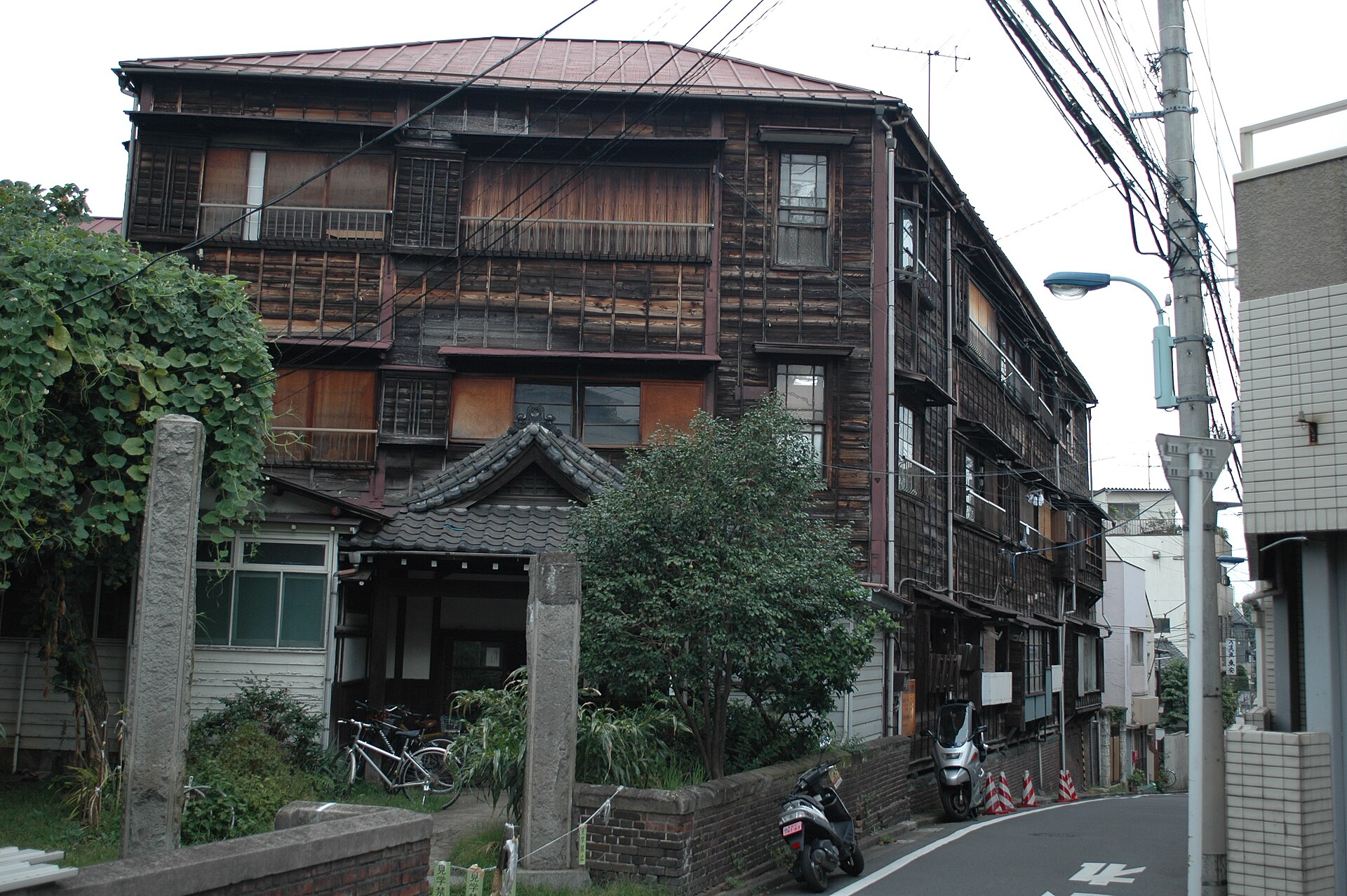
Hongo-kan, built in 1905, became a celebrated example of this boarding-house culture. Its long corridors and many small rooms embodied a social world in which students and intellectuals lived close together. It was demolished in 2011, so it should be understood as evidence of a lost building type rather than a surviving attraction.
Writers and Literary Networks in Hongo and Kikuzaka
Hongo’s literary reputation grew from the same urban ecology. Writers could rent rooms near publishers and editors, meet students and scholars, and move easily toward Kanda, Ueno and central Tokyo. Kikuzaka and its side streets offered a different scale from the university plateau: narrower lots, modest houses, shops and lodging created an environment where literary work was embedded in everyday neighborhood life.
Natsume Soseki lived at several addresses in the wider Hongo area during different periods. His best-known Hongo residence was in Sendagi on the edge of the district, where he wrote early works including I Am a Cat; the house itself was later moved and no longer stands on its original site. Hongo’s importance lies less in one preserved author’s house than in the network linking university education, English studies, magazines, publishers and rented housing.
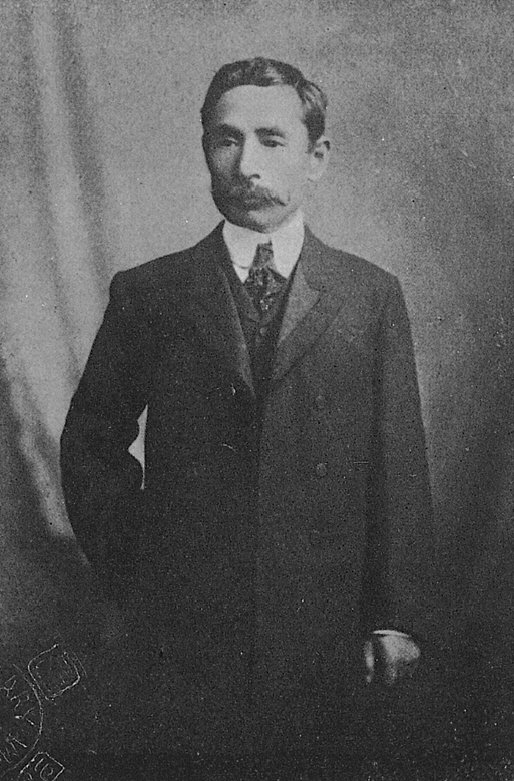
Higuchi Ichiyo also lived near Kikuzaka and experienced the pressures of rent, family support and precarious work that shaped literary life outside elite institutions. Other writers, including Ishikawa Takuboku and Tokuda Shusei, were connected to Hongo through lodging and publishing networks. Their presence was a consequence of the district’s housing and information economy as much as its prestige.
Earthquake, Reconstruction and the Uchida Campus
The Great Kanto Earthquake of 1 September 1923 damaged university buildings and surrounding streets unevenly. Fire devastated much of central and eastern Tokyo, while the Hongo plateau escaped the complete destruction seen in some lowland districts. The university nevertheless faced major rebuilding needs.
Architect Shozo Uchida played a central role in the reconstruction of the campus. The buildings associated with the “Uchida Gothic” style used reinforced concrete, vertical proportions and reddish-brown tile to create a coherent academic landscape. This architecture was modern construction presented with a monumental institutional identity. It did not restore the Kaga residence; it established the visual language of an imperial university.
Yasuda Auditorium and the Symbol of the University
Yasuda Auditorium was completed in 1925 with support from Yasuda Zenjiro’s donation and designs led by Uchida. Its tower terminates the central campus axis and became the university’s most recognizable building. The auditorium belongs to the Taisho-era and post-earthquake campus, not to the Edo estate.
Its symbolic role changed again during the 1968–69 university protests, when students occupied the building and police retook it. The episode made the auditorium a national image of conflict over higher education, authority and postwar politics. Today the building remains both an architectural landmark and a reminder that institutional symbols acquire meanings far beyond their original design.
War, Air Raids and Postwar Reconstruction
Wartime mobilization altered research, teaching and daily life. Air raids in 1945 damaged parts of Bunkyo and displaced residents, though destruction varied greatly by block. The campus and surrounding district did not experience one uniform fate. After the war, repairs, temporary buildings and rapid housing recovery changed both university and town.
Postwar expansion increased student numbers, research activity and medical specialization. Restaurants, bookshops and instrument firms continued to serve the university, while concrete apartments and offices replaced many wooden lodgings. The student-town economy survived, but its physical form became less visible.
Hongo Today: Uneven Historical Survival
Present-day Hongo contains traces from different periods, but they are unevenly distributed. Akamon survives from the Maeda residence. Sanshiro Pond, historically Ikutoku-en, preserves a garden landscape associated with the estate, though it has been adapted within the campus. Yasuda Auditorium and the Uchida buildings express the twentieth-century university. Hongo-dori preserves the road axis, while Kikuzaka and nearby slopes retain the topographic contrast that organized the surrounding town.
Outside the campus, medical-related companies, book businesses and small restaurants still point to the district’s institutional economy, even as many individual firms have changed. Apartment and office construction has erased numerous boarding houses and wooden rental homes. Hongo is therefore not a preserved university town but a living district where fragments of estate, campus, industry and neighborhood life remain side by side.
Historical Traces You Can See
- Akamon: a surviving 1827 daimyo marriage gate, not a complete preserved estate.
- Sanshiro Pond / Ikutoku-en: a former garden landscape incorporated into the university campus.
- Yasuda Auditorium: completed in 1925 and central to the modern campus axis.
- Uchida Gothic buildings: reinforced-concrete reconstruction architecture with a coordinated university identity.
- Hongo-dori: the high-ground road axis connecting the district north and south.
- Kikuzaka: a valley street where smaller plots, rented housing and literary memory contrast with the campus plateau.
- Medical and book trades: surviving businesses and institutional names that reflect long proximity to the university and hospitals.
- Hongo-kan site: the boarding house was demolished in 2011; its history survives through records and memory.
Timeline
| 17th century | Hongo is absorbed into the expanding city of Edo; roads, estates, temples and townspeople’s districts develop on the plateau and slopes. |
| 1827 | Akamon is built for the marriage of Yasuhime and Maeda Nariyasu. |
| 1868 onward | Former daimyo estates are reorganized under the Meiji government. |
| 1876 | Tokyo Medical School moves to Hongo. |
| 1877 | The University of Tokyo is established. |
| 1886 | The institution becomes Imperial University. |
| 1897 | It is renamed Tokyo Imperial University. |
| 1905 | Hongo-kan boarding house is built. |
| 1923 | The Great Kanto Earthquake damages the campus and surrounding city. |
| 1925 | Yasuda Auditorium is completed. |
| 1945 | Air raids and wartime disruption affect Bunkyo and the university district. |
| 1947 | The university resumes the name University of Tokyo. |
| 1968–69 | University protests culminate in the occupation and police retaking of Yasuda Auditorium. |
| 2011 | Hongo-kan is demolished. |
| Today | University, medicine, publishing, housing and neighborhood commerce continue to overlap. |
Frequently Asked Questions
Why is the University of Tokyo located in Hongo?
The Meiji government reused large former daimyo estates for modern public institutions. Tokyo Medical School moved to Hongo in 1876, and the University of Tokyo was established in 1877, with other functions gathering there gradually.
What remains of the Kaga domain residence?
Akamon and the garden landscape now known as Sanshiro Pond are major traces, but the campus is not a complete preserved daimyo estate.
Why is Akamon called the Red Gate?
It is a formal red-painted marriage gate built in 1827 for a Tokugawa princess who married into the Maeda family.
How did Hongo become a center of modern medicine?
Medical education, laboratories and the university hospital concentrated physicians, researchers, students and patients, creating demand for specialist suppliers and services nearby.
Why did medical-equipment businesses gather in Hongo?
Proximity to teaching hospitals and laboratories allowed firms to supply, demonstrate and repair specialized instruments close to their users.
Why were so many writers connected with Hongo?
The district combined university culture with affordable rooms, boarding houses, publishers, magazines, bookshops and a dense network of educated readers and editors.
Was Hongo a student district?
Yes. Boarding houses, inns, restaurants and shops served generations of students, although much of that wooden built environment has been replaced.
What happened to Hongo-kan?
The large wooden boarding house built in 1905 was demolished in 2011.
Can visitors enter the University of Tokyo’s Hongo Campus?
Access conditions can change by gate, event and facility. Visitors should check the University of Tokyo’s official access and campus information before going.
Related Neighborhood Histories
Compare Hongo with Yushima, where shrine worship, Confucian education and temple streets produced a different culture of learning, and Ueno, where a Tokugawa temple complex became a park, museum district and railway gateway. Browse all Tokyo Neighborhood Histories.
Related Self-Guided Walks
No dedicated English Hongo self-guided walk has been confirmed as published. See the current Self-Guided Walks collection.
Sources and Further Reading
- The University of Tokyo: History of the Hongo Campus
- The University of Tokyo: Akamon
- The University of Tokyo: Yasuda Auditorium
- University of Tokyo Faculty of Medicine: History
- Bunkyo City: Hongo-dori and local history
- Bunkyo City: Local industries
- Bunkyo City: Writers associated with Bunkyo
- National Diet Library Digital Collections
- Bunkyo Furusato History Museum materials on Hongo, Kikuzaka, former town names and local industry.
Walk Tokyo with TimeWalk Japan
Hongo is best understood on foot, where the plateau, gates, hospital blocks and descent to Kikuzaka can be experienced as one connected landscape. For opportunities to explore Tokyo’s university districts, literary history, medicine, slopes and neighborhood change with others, see the Yuru Rekishi Sanpo Meetup page for current events.